

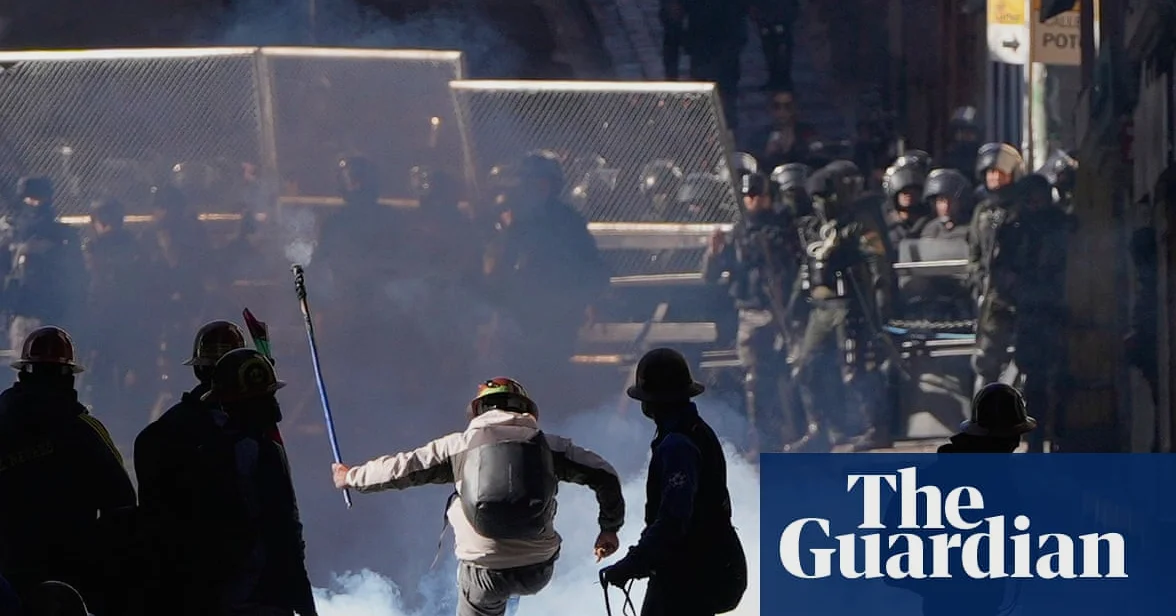
Bolivia’s foreign ministry announced the expulsion of U.S. ambassador Elizabeth García on Wednesday, stating the decision was intended to ‘preserve the principles of sovereignty and non-interference in internal affairs’. The move came amid escalating protests that have resulted in four deaths and more than 40 road blockades across the country, though One demonstrator was reportedly killed in clashes, while three others died after roadblocks prevented them from receiving proper medical treatment.
U.S. Officials Call Protests ‘Coup’
On Tuesday. U.S. deputy secretary of state Christopher Landau claimed the protests were ‘an ongoing coup d’état’. Speaking in Washington. Landau stated: ‘Let us not make any mistake about that; it is a coup financed by this perverse alliance between politics and organised crime across the region.’.
Secretary of state Marco Rubio echoed these remarks, posting: ‘Let there be no mistake: the United States stands squarely in support of Bolivia’s legitimate constitutional government. We will not allow criminals and drug traffickers to overthrow democratically elected leaders in our hemisphere.’
Protesters and Officials Clash Over Governance
Romer Cahuaza, a striking transport worker demanding improved fuel supplies, warned of ‘bloodshed’ if the government of President Luis Arce did not step aside — the foreign minister, Fernando Aramayo, accused the demonstrators of trying to ‘disrupt the democratic order’.
Bolivia is currently experiencing its worst economic crisis in four decades, marked by shortages of dollars and fuel, as well as rising inflation, though these conditions have persisted since at least the final years of the previous president Luis Arce’s term under the MAS party.
Regional Reactions and Economic Pressures
Colombian President Gustavo Petro, speaking to a radio station, stated that Bolivia was ‘sliding into extremism’. This observation highlights the regional concern over Bolivia’s political instability, with neighboring countries closely watching the situation. The protests are increasingly viewed as a reflection of broader discontent with the government’s handling of the economy and governance.
The ongoing unrest exposes the deepening challenges facing Bolivia, as it grapples with both internal and external pressures. The U.S. statements have added a layer of international attention to the crisis, with the government seeking to assert its authority while protesters demand change.






Comments
No comments yet
Be the first to share your thoughts