

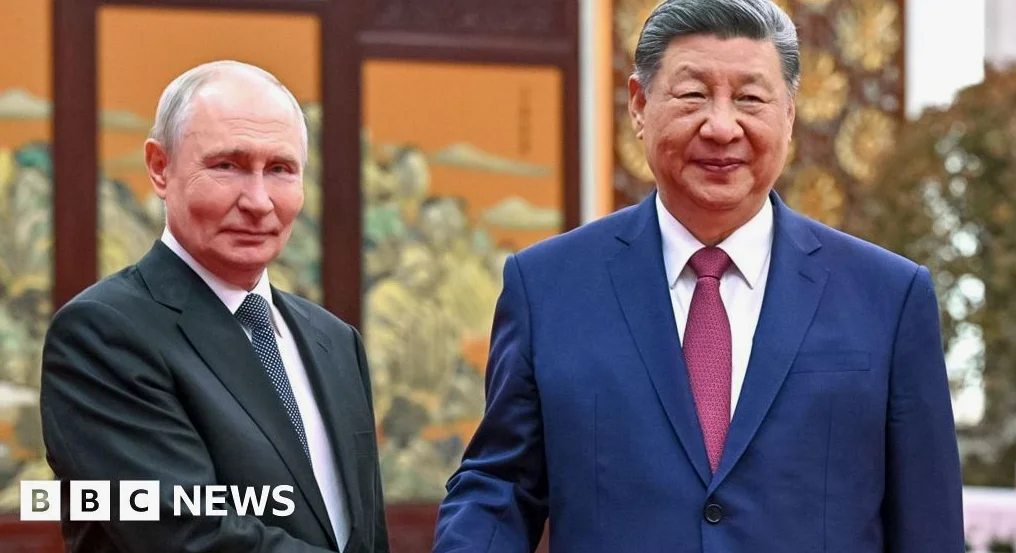
Russian President Vladimir Putin returned from China without securing a deal for the Power of Siberia 2 pipeline, despite more than 40 meetings with Chinese President Xi Jinping over the years. The two leaders used the occasion to emphasize their “strategic co-operation,” “partnership,” and “mutual respect.”
Geopolitical Rhetoric and Symbolism
During the summit. Putin and Xi spoke out against the “irresponsible” nuclear policy of the United States and jointly criticized Donald Trump’s plan for a Golden Dome missile defense shield. On the eve of the visit, the Russian government newspaper featured two prominent photos on its front page: one of a seemingly isolated Trump boarding Air Force One after his China trip, and another of Putin and Xi walking side by side. The images exposed the message that Russia and China are aligned on the global stage.
Energy Tensions and Self-Interest
Despite the warm rhetoric, the summit revealed limits to the relationship, particularly in the energy sector. Russia has been pushing for the Power of Siberia 2 pipeline, which would transport additional volumes of natural gas from Western Siberia to northern China via Mongolia. The project aims to offset declining European markets for Russian energy. While Russia and China had signed a memorandum of understanding for the project last year, Beijing has shown no urgency in finalizing the deal. According to the sources, pricing disagreements and concerns over over-reliance on Russian fossil fuels are key factors holding the negotiations back.
Strategic Messaging vs. Practical Realities
Russian and Chinese officials used the summit to reinforce the narrative of a strong bilateral relationship, with public statements full of phrases like “friendship,” “trust,” and “strategic partnership.” However, the absence of a new pipeline agreement highlighted the challenges of turning political rhetoric into tangible economic agreements. Analysts suggest that while the two nations share common geopolitical goals, their economic interests remain distinct and sometimes conflicting.
According to the BBC, the summit showed that in geopolitics, relationships are driven more by self-interest than affection. The Power of Siberia 2 deal remains a test of whether Russia and China can align their strategic and economic objectives in the long term.






Comments
No comments yet
Be the first to share your thoughts