

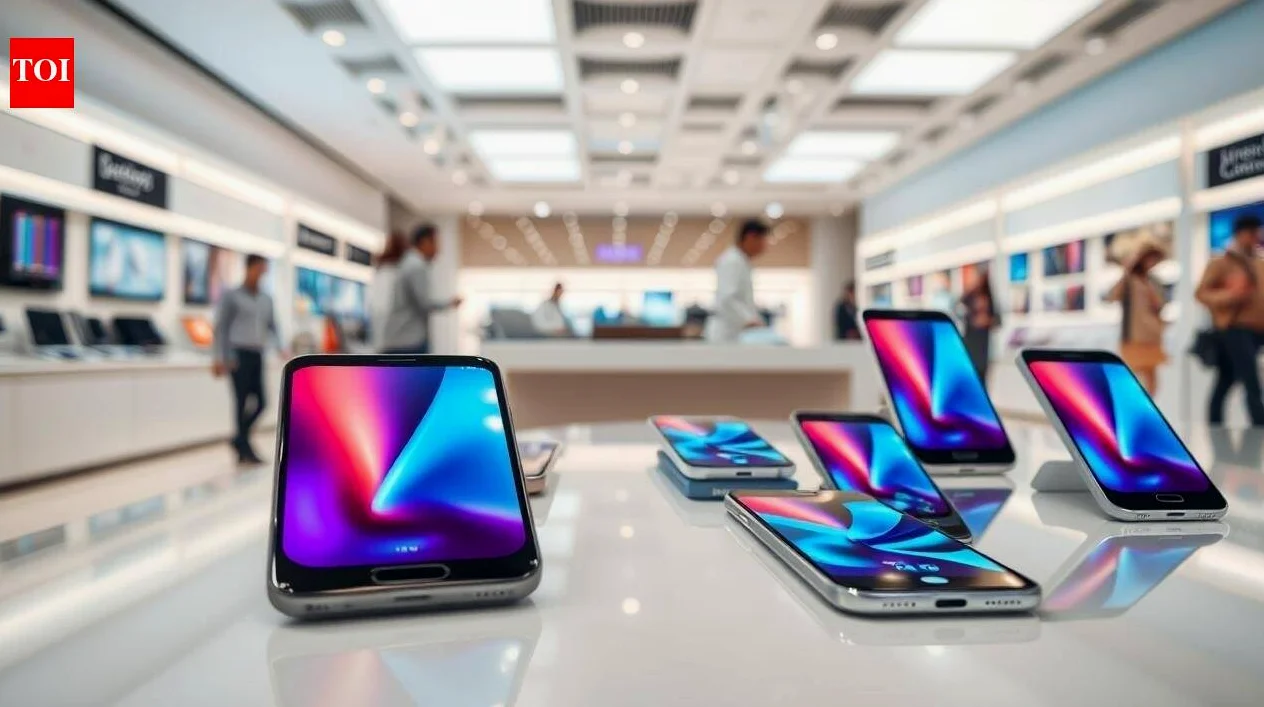
For the first time in almost a decade, the combined revenue of the nine largest Chinese electronics companies operating in India fell by 4.5% in the financial year 2025, according to regulatory filings analyzed by Economic Times. This marks a sharp reversal from the record 42% growth seen in the previous fiscal year. The decline is attributed to shifting consumer preferences toward premium smartphones, a trend that has benefited global brands like Apple and Samsung.
Shift to Premium Devices Drives Market Changes
The analysis reveals that the premium smartphone segment — priced above Rs 45,000 — has grown significantly, with its retail value share increasing from 36% in 2023 to 47% in 2025. This shift has allowed Apple and Samsung to capture a larger market share. Apple’s India sales rose 18% to Rs 79,378 crore in FY25, while Samsung’s revenue grew 12% to Rs 1.11 lakh crore.
Data from Counterpoint Research shows that the value share of smartphones priced below Rs 20,000 has dropped from 38% two years ago to 29% in 2025. Tarun Pathak, director of research at Counterpoint Research, said, ‘This has impacted Chinese brands in the most competitive price segment,’ as quoted by Economic Times.
The retail value share of Chinese smartphone brands, including Vivo and Lenovo-owned Motorola, fell from 54% in 2023 to 48% in 2025. However, in volume terms, their share remained strong at 73-75%, indicating that while they still sell in large numbers, higher-priced phones are contributing more to overall market value.
Rising Component Costs and Weaker Rupee May Impact Prices
Industry experts predict that smartphone prices are expected to rise soon due to higher component costs, especially memory chips, and the impact of a weaker rupee. Analysts noted that rising prices may reduce demand in lower price bands, which could continue to affect Chinese brands more than others.
The shift in consumer behavior is not only affecting revenue but also changing the competitive landscape in India’s smartphone market. With Chinese brands traditionally dominating the mid-range and entry-level segments, the growing preference for premium devices is challenging their market dominance.
Chinese companies like Xiaomi, Oppo, OnePlus, and Realme have reported a decline in sales for the first time in nearly a decade. This follows a period of rapid growth in the Indian market, where these brands had previously captured significant market share through aggressive pricing and marketing strategies.
The decline in revenue for Chinese electronics companies in India is a significant development that highlights the evolving dynamics of the smartphone market. As consumers increasingly opt for higher-end devices, the competition for market share is intensifying among global players.
What’s Next for the Market
Looking ahead, analysts predict that the smartphone market in India will continue to evolve, with a growing emphasis on premium products. This trend is expected to influence not only the revenue of existing players but also the strategies of new entrants entering the market.
With rising costs and a weaker rupee, smartphone manufacturers may need to adjust their pricing strategies to remain competitive. This could lead to further consolidation in the market, as smaller players struggle to keep up with the demands of a shifting consumer base.
The Indian market is a crucial growth area for global electronics companies, and the current trends are likely to shape the strategies of these firms in the coming years. As the demand for premium smartphones continues to rise, the impact on the overall market will be significant.




Comments
No comments yet
Be the first to share your thoughts