

 BBC
BBC 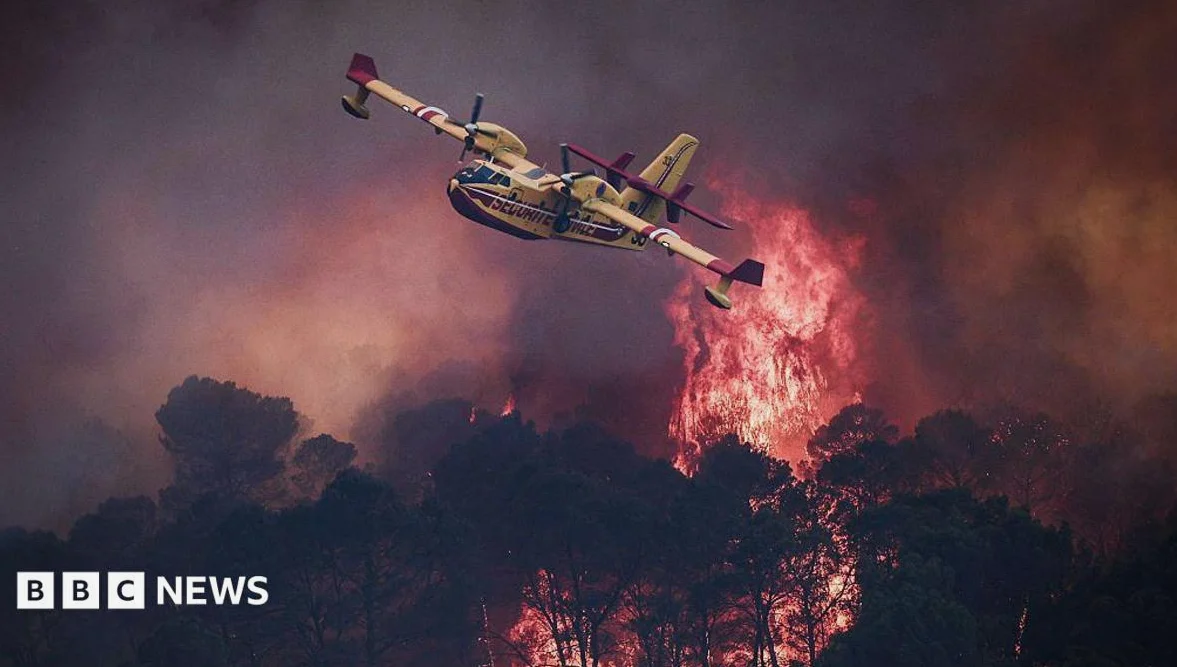
Unpredictable Fire Conditions and Climate Effects
As the air rises, it cools, and the water vapour condenses into a cloud. If the fire is powerful enough and the atmosphere is unstable, that cloud can grow into a cumulonimbus, the same type of cloud associated with thunderstorms. If these clouds then become large enough, they can produce their own lightning, which can then start new fires; they can also occasionally bring hail and rain. These extreme and unpredictable conditions make the fires all the more difficult to stop.
Aerial and Ground Firefighting Measures
To combat them. French firefighters have been using planes loaded with fire retardant, as well as planes like the Canadair, which can scoop 6,000 litres of water from lakes or the sea in 12 seconds and drop it directly on the fires. On dangerous days, loaded aircraft patrol high-risk areas before any fires have been reported, so they can drop within minutes of a sighting; Planes often fly in a continuous shuttle while retardant is laid along the edges of the fire and ground crews attack the flames directly.
Resources and Challenges in Gironde
In Gironde, about 2,500 firefighters, 1,500 military personnel, and 1,200 police officers and gendarmes have been involved in tackling the blaze. But even with these numbers, Gironde official Jean Luc Gleyze told the BBC that authorities don’t have enough people to combat the fires. “We don’t have enough people and enough trucks and even I think France don’t have enough,” he said. Around the town of Lacanau, bulldozers, diggers and mechanical shovels have been used to carve a firebreak that is 100m (328ft) wide at points, according to French media. A firebreak is essentially a stretch of land that has been stripped of all vegetation to stop the fire from spreading — removing any potential fuel before the fire has a chance to reach it.






Comments
No comments yet
Be the first to share your thoughts