

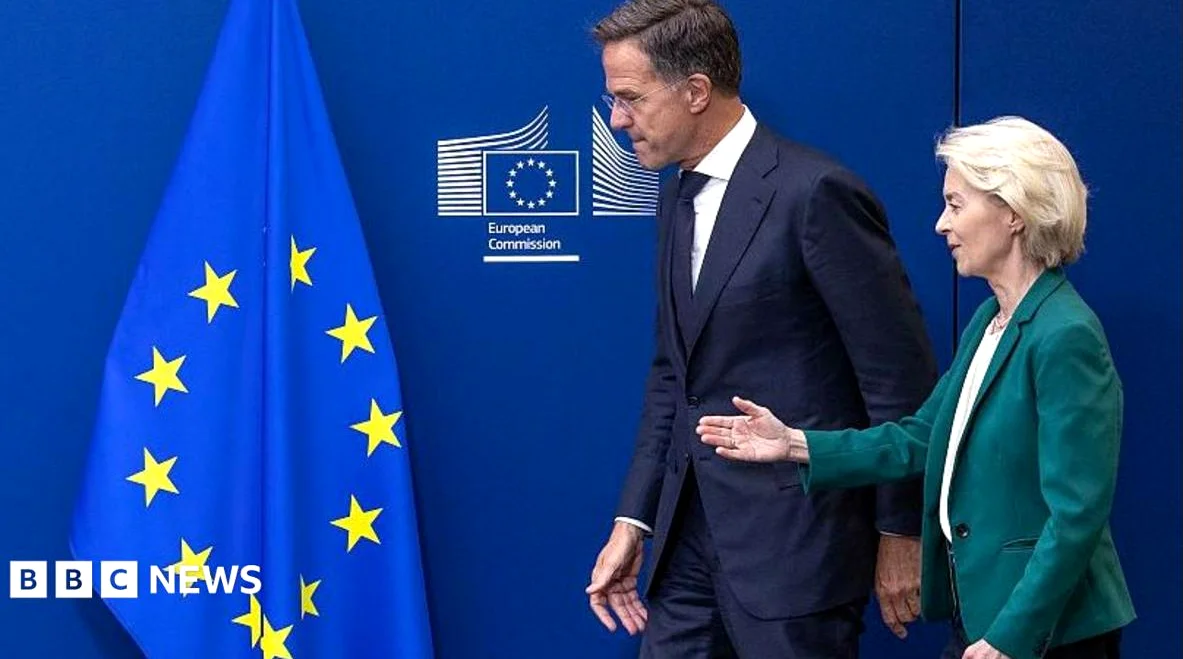
German Chancellor Ursula von der Leyen and NATO Secretary General Mark Rutte announced increased readiness to respond to Russian actions after a series of drone incidents at Leipzig/Halle airport. ‘We have to step up and that means being ready to respond to Russia’s recklessness faster and better,’ von der Leyen said, according to the BBC. Rutte emphasized that the alliance, including the United States, stands ‘in full solidarity with Germany.’
Drones and Explosives at German Airport
On 4 August, a drone carrying explosives was defused by a robot at Leipzig/Halle airport, a key NATO hub and a regular stop for Ukrainian Antonov transport aircraft. A second drone is believed to have collided with another cargo plane. A third drone was reportedly discovered 10 days later at the airport. German intelligence and police investigations have since concluded that Russia was behind the incidents. Interior Minister said the drone’s components and explosives were consistent with those used in other Russian hybrid operations, according to the BBC.
Diplomatic and Security Reactions
Germany has announced it will close the Russian consulate in Bonn and the Russian House cultural institution, which is suspected of acting as a propaganda outlet for the Kremlin. In response, Russia has promised to retaliate in ‘mirror-image’ fashion and summoned Germany’s chargé d’affaires, Bernd Finke, to reject what it called ‘entirely unfounded accusations.’
Russian President Vladimir Putin defended Moscow against the accusations, claiming the German government was using the incident to boost its struggling poll numbers. ‘I think this is another mistake, a grave mistake, and, in my view, it clearly runs counter to the interests of the German people,’ he said, according to The Irish Times.
Sanctions and Funding for Ukraine
On the sanctions front, the EU is preparing a new package targeting over 1,600 companies. However, Ukraine and its allies argue that more action is needed. Ukraine has also requested €90 billion in loans from the EU through the European Peace Facility, a fund used to reimburse countries for weapons donations to Ukraine. Ukrainian Defense Minister Evgeniy Khmara urged EU members to speed up payments, which are scheduled to be distributed through 2026 and 2027.
Ukraine is also seeking to use the loan to purchase US-made Patriot interceptors to counter Russian air strikes. This would require an exemption from rules that prioritize European purchases. EU countries are expected to vote on the issue next Monday. Separately, a proposal to use immobilized Russian assets to support Ukraine has resurfaced, but it stalled in 2023 due to opposition from Belgium, where most of the assets are located.

Comments
No comments yet
Be the first to share your thoughts