

 BBC
BBC 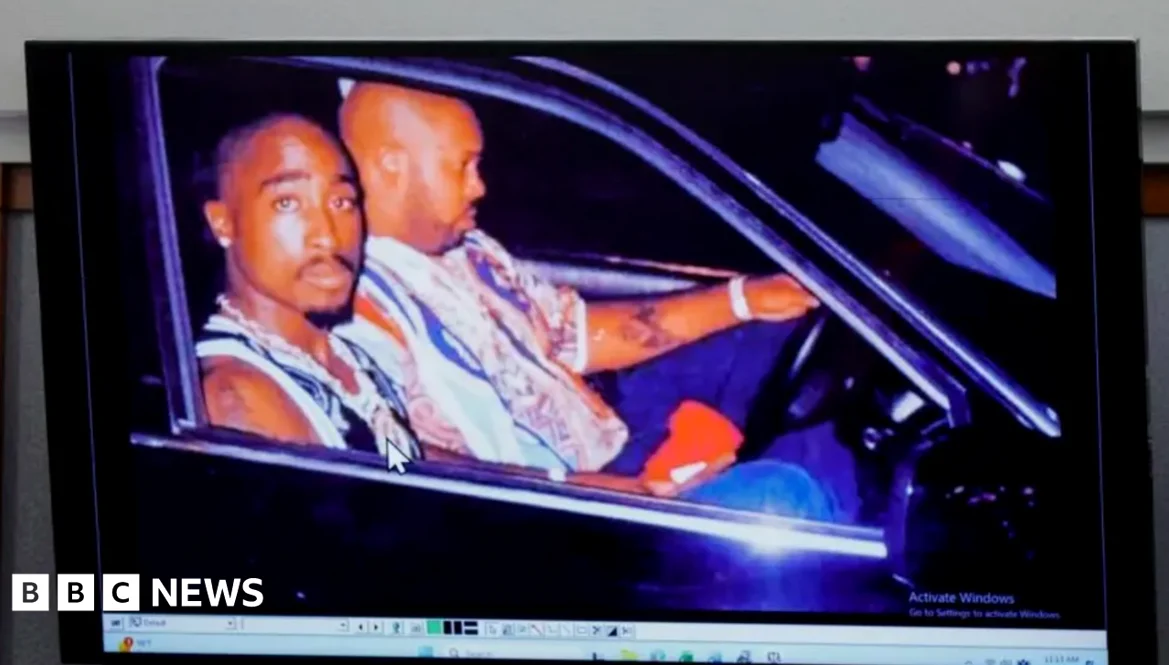
Former gang boss Duane ‘Keffe D’ Davis was found guilty of orchestrating the murder of Tupac Shakur in a Las Vegas court. The 63-year-old stood silently in court as the verdict was read out on Monday, with the jury convicting him of one count of murder with a deadly weapon for the rap icon’s death in a drive-by shooting on 7 September 1996.
Inside the White Cadillac
Davis, a former leader of the South Side Compton Crips, was not the one who fired the shots that killed Shakur but was found responsible for ordering the attack and supplying the weapon used by his nephew, Orlando Anderson. Anderson died in 1998 in an unrelated shooting and had denied involvement in Shakur’s death.
During the trial, the court heard a 2008 police interview in which Davis admitted being in the white Cadillac from which the deadly shots were fired. Prosecutors argued that his role as the “shot caller” made him culpable for the crime. Davis later detailed his involvement in a 2019 memoir, Compton Street Legend, and through media interviews.
A Cold Case That Remained Unsolved for 30 Years
Shakur’s death at age 25 marked the end of a significant era in hip-hop; he had sold more than 75 million records worldwide and was widely regarded as one of the genre’s most influential voices. His murder had fueled numerous conspiracy theories over the years but remained unsolved until this conviction.
Prosecutors stated that Davis’ motive for the attack stemmed from retaliation after his nephew, Anderson, was involved in a fight with Shakur and his crew just hours before the shooting. The incident occurred amid a period of intense rivalry between East Coast and West Coast rap scenes, and between the rival Crips and Bloods street gangs.
Legal Strategy and a Guilty Verdict
Although Davis had struck a deal with authorities in 2008 that protected him from prosecution, his memoir and media appearances voided that agreement, allowing the court to use his statements in the trial. Prosecutors emphasized that Davis had repeatedly acknowledged his role in the killing over the years through documentaries, interviews, and police records.
In closing arguments, prosecutor Binu Palal urged the jury to take Davis’ words seriously and find him guilty; “When you have the shot caller sitting shotgun when shots are fired, there’s no doubt he’s responsible,” Palal said.
Davis’ defense team, however, argued that his statements were exaggerated for personal gain; his lawyer, Michael Sanft, called him a “liar” who fabricated stories to sell books. “There’s no proof,” Sanft said during closing arguments.
Despite the defense’s arguments, the jury reached a guilty verdict within hours of receiving the case; Judge Carli Kierny set Davis’ sentencing for 13 October, with the court hearing procedural details before the session ended. Davis requested to retrieve personal items, including his phone, and stated he would appeal the conviction.




Comments
No comments yet
Be the first to share your thoughts