

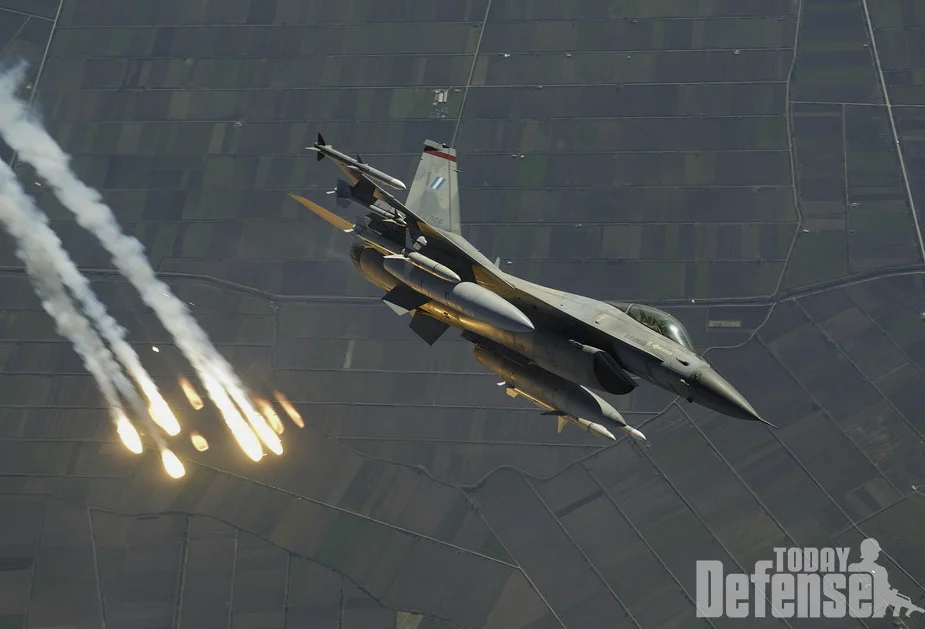
A Greek F-4 Phantom crashed during a flying display at the Athens Flying Week on September 5, 2026, killing both pilots, and the incident occurred at Tanagra Air Base, north of Athens, during the opening minutes of the aircraft’s performance. The twin-seat jet was seen losing altitude before impacting the ground and bursting into flames — Video footage shared on social media confirmed that the crew did not eject.
Details of the Crash
The Hellenic Air Force did not immediately release the status of the aircrew, but several eyewitness accounts and video footage suggest that the pilots did not have time to eject. The aircraft hit the ground near the air base and exploded, sending a large column of black smoke into the sky; Emergency services responded quickly, with a firefighting helicopter assisting in extinguishing the blaze.
The Hellenic Air Force has operated the F-4 Phantom for over 50 years, with the first six aircraft entering service in April 1974 — the jet has since become an iconic part of the country’s military aviation history. Prior to the crash, the Hellenic Air Force operated 17 F-4s, but the number is now reduced to 16 following the incident.
Political and Strategic Context
Greece remains one of the last NATO members to operate the F-4 Phantom, alongside Turkey. The two countries have historically maintained a tense relationship, and the coexistence of both nations’ Phantom fleets at air shows has drawn attention from aviation enthusiasts and political observers alike. The Hellenic Air Force has modernized its Phantom fleet through programs like “Peace Icarus 2000,” which upgraded avionics and radar systems to extend the aircraft’s service life. The incident, however, raises questions about the continued use of aging aircraft in high-profile displays.
Greece has also been actively lobbying against U.S; F-16 sales to Turkey, citing concerns over regional stability and sovereignty; Defense Minister Nikos Mitsotakis recently warned U.S. lawmakers against allowing Turkey to purchase upgraded F-16s, emphasizing the need for NATO unity in the Eastern Mediterranean. The issue remains sensitive as tensions persist over airspace violations and NATO expansion, including Turkey’s recent opposition to Sweden and Finland’s NATO accession bids.
Aftermath and Investigation
The Athens Flying Week was suspended immediately following the crash, and spectators were asked to leave the air base; no injuries were reported among the audience. The Greek Ministry of Defense has not yet released an official statement on the cause of the accident, and investigations are ongoing; the crash site was located near an electrical pole and a pine tree, with wreckage scattered over a 500-meter area. As the Hellenic Air Force continues to operate its aging Phantom fleet, the incident may prompt renewed discussions about aircraft modernization and safety protocols.





Comments
No comments yet
Be the first to share your thoughts