

DH2 Energy’s Hysencia project has been designated as a regional interest by the Government of Aragón, and to top it off, it clinched €8 million in the first-ever EU Hydrogen Bank auction. This combination of public endorsement and financial backing unlocks the path to build a advanced production plant in Plasencia del Monte — right on cue with Spain’s drive to decarbonize heavy transport, industrial hubs and key mobility corridors. Even better, this project isn’t just another data point — it’s ready to ramp up local manufacturing, boost energy security and lay down the tracks for a zero-emissions fuel network in the region.
Technological Innovation and Environmental Impact
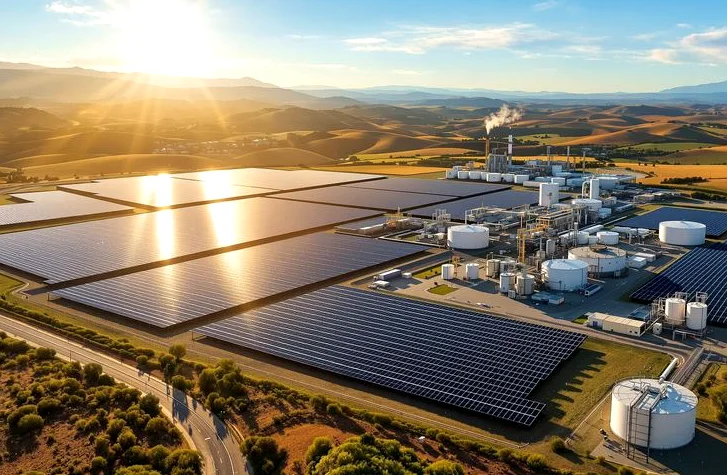
What really sets the Hysencia project apart is how it marries a 49 MWp solar PV array with a 35 MW water electrolyzer to power electrolysis using pure sunshine. this system splits H₂O into hydrogen and oxygen without a whiff of carbon — just water vapor. Over a typical year, it’s slated to capture roughly 99 GWh of renewable energy, feeding the electrolyzer so it can churn out an estimated 1,700 to 2,075 tonnes of green hydrogen. Plus, relying on sun-driven power sidesteps volatile electricity prices, giving production a steady cost profile.
The oxygen byproduct? That’s clean enough to support local industrial or even medical uses, making this setup a double win for the environment and community. The project is expected to avoid roughly 16,000 tonnes of CO₂ emissions every year. Stretch that over a standard 20-year operational life, and you’re looking at more than 300,000 tonnes of greenhouse gases kept out of the atmosphere. Cleaner air around heavy-duty transport and industrial sites means fewer particulates and NOₓ, tangibly improving local public health.
Economic and Regional Benefits
By tapping into Aragón’s abundant sunshine and using the Huesca-Canfranc railway — and other key transport arteries — the Hysencia project is tackling some of the toughest decarbonization puzzles. Imagine heavy-duty trucks, regional bus lines and freight trains powered by green hydrogen, pulling into refueling stations sprinkled along their routes. Factories, from steel mills to chemical plants, could swap out fossil fuel burners for this clean gas in high-temperature processes, cutting CO₂ footprints and reducing reliance on overseas imports.
Even remote sites that lack stable grid connections can benefit — think mines, quarries or rural logistics hubs. With on-site hydrogen production, you get off-grid reliability, fewer transport emissions and a blueprint for energy resilience in challenging environments. It’s a Made in Aragón, made for Aragón’s future moment. With around €78.7 million on the table, the Hysencia project is set to become a major economic engine for Huesca province.
During construction, you’ll see dozens of roles — engineers, technicians, skilled tradespeople — spreading skills and know-how across the community. Once operational, a dedicated team will handle daily operations, maintenance and logistics. Local suppliers of solar modules, mounting structures and electrical equipment will land new contracts, while nearby towns can expect a bump in hospitality, catering and transport services as project staff and visiting experts pour in. Early projections even hint at a €130 million-plus uplift to the regional GDP across the plant’s lifetime, highlighting how green hydrogen can drive real economic growth.
Strategic Positioning and Future Development
Aragón isn’t starting from scratch when it comes to hydrogen. Back in 2007, the region rolled out its Hydrogen Director Plan and set up the Fundación Hidrógeno de Aragón to steer research, education and outreach. They even tested one of Spain’s first hydrogen-powered trains on regional tracks. Today, Angus Enterprise S.L., a subsidiary of DH2 Energy, is at the helm of the Hysencia project, ensuring decades of experience feed into everything from engineering blueprints to community workshops.
That regional interest declaration is more than a badge — it’s a nod to how public authorities, research institutions and private players are united under the Aragón hydrogen hub ambition, ready to turn theory into thriving, real-world applications. With the environmental permit in hand since last summer, the team is deep into finalizing detailed engineering before shovels hit the ground in the latter half of the year.
The build will unfold in two clear stages: first, the solar PV arrays, inverters and grid interconnection go up, forming the backbone of the plant’s power supply. Then, the electrolyzer units, compressors, storage tanks and hydrogen handling gear get installed. Spread over around 100 hectares — imagine about 140 football pitches — the site will also feature a dedicated 10 MW grid link as backup, smoothing out the highs and lows of intermittent solar production. Testing and commissioning are slated for early next year, with full hydrogen output expected by mid-decade, depending on weather cycles and grid integration timelines.
Out of 132 bids, the Hysencia project stood out in the EU’s debut Hydrogen Bank auction, bagging €8 million to help underwrite operating costs and narrow the price gap with conventional, carbon-intensive hydrogen. We all know early-stage green hydrogen ventures can be capital-intensive, so this funding acts as a crucial cushion against market uncertainties. It covers the initial years of production, giving the project room to stabilize costs before hitting its stride. Having that financial safety net not only de-risks the venture for DH2 Energy but also boosts confidence among private investors, smoothing the path toward a sustainable, long-term clean fuel supply.
By anchoring green hydrogen production right here, the Hysencia project cements Aragón’s standing as a strategic Aragón hydrogen hub in southern Europe. This isn’t just a win for local decarbonization — it feeds directly into Spain’s and the EU’s broader race to diversify energy sources and boost resilience. Beyond meeting homegrown demand, the plant aims to strike offtake agreements across the Mediterranean basin and into central Europe, showcasing how Spain’s sun-soaked, renewables-driven model can be exported to other regions.
Using existing pipelines and rail routes, this network could streamline transport, reduce costs and support new economic ties between member states, building a true pan-European clean fuel corridor. We’re genuinely excited about what the Hysencia project represents: a living blueprint for future green hydrogen plants that sync up with Spain’s energy transition and the EU’s climate-neutral targets. By tapping into local solar expertise, making the most of established transport routes, and securing strong funding, DH2 Energy is charting a clear course toward a zero-emissions fuel economy.
If all goes to plan — permits, construction and commissioning stay on schedule — we could see green hydrogen flowing from Plasencia del Monte by the end of this decade, powering vehicles, factories and communities with nothing but sunshine and water. And as that scalable model gets copied elsewhere, keep an eye on Aragón: it’s primed to lead the charge in proving that renewable energy-driven hydrogen isn’t just eco-friendly, it’s downright profitable.





Comments
No comments yet
Be the first to share your thoughts