

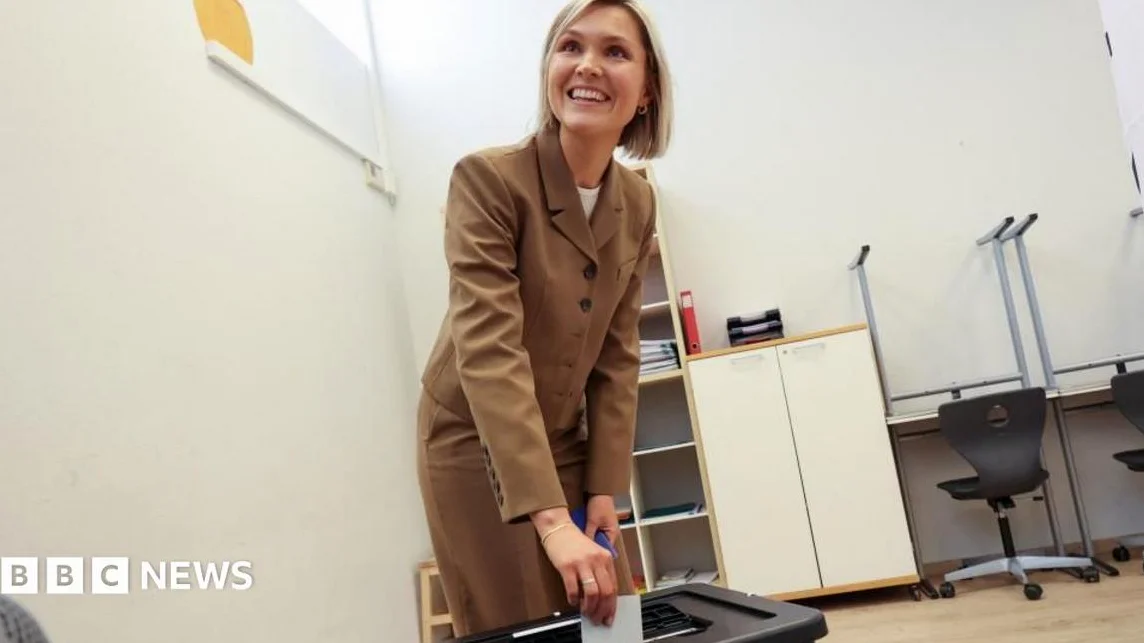
Iceland’s EU referendum is on a knife edge, with the ‘Yes’ camp at 51.2% and the ‘No’ at 48.8%, as 40% of the votes have already been scrutinised according to Euronews. With over 87,000 votes counted, the race is neck-to-neck.
Regional Divide Reflects Broader Concerns
As expected, rural constituencies are leaning decisively for the ‘No’ while Reykjavík’s two constituencies lean solidly ‘Yes’. In line with the opinion polls, the ‘No’ is heading toward 60% in more rural regions, whereas initial results from the capital Reykjavík point to around 58% for the ‘Yes’ according to Euronews.
The first nearly 10,000 votes scrutinised for the Southern Constituency give ‘No’ a significant advantage with 59.8% of the votes, against 40.2% for ‘Yes’. The Southwest Constituency was equally split with 9,900 votes for ‘Yes’, and 9,900 for ‘No’. Similarly, with a little less than 6,000 votes counted, the initial results from the Northwest Constituency see the Eurosceptic camp at 60.8%, and the ‘Yes’ camp at 39.2%, whilst the Northeast Constituency with nearly 10,000 votes has the ‘No’ at 56% and the ‘Yes’ at 44% according to Euronews.
By contrast, the initial results for Reykjavík’s south constituency with over 20,000 votes scrutinised have the ‘Yes’ at 55.9% and ‘No’ at 44.1%. The capital’s north constituency has nearly 21,000 votes scrutinised, with the ‘Yes’ at 59.4% and the ‘No’ at 40.6% according to Euronews.
Key Issues and Historical Context
Iceland’s application to join the EU was already well advanced when a eurosceptic government came to power in 2013 and put talks on hold. Fishing rights were the biggest obstacle then—and remain so today according to the BBC. Fish and marine industries account for almost 40% of Iceland’s exports and many No voters feared they would cede some control of their lucrative fishing grounds under the EU’s common fisheries policy.
The referendum campaign has fuelled debate about Iceland’s place in the world, according to voter Frostadottir, who cast her ballot in the capital on Saturday. ‘This is a great day, we’ve been waiting for this for years to be able to have a vote,’ she said, adding that her government would continue its work regardless of the outcome.
The question on the ballot was: ‘Should Iceland resume accession negotiations with the European Union?’ A Yes vote would not be a final decision on joining the EU, but a move towards an accession agreement, which would then have to be approved by a second referendum. Equally, the No vote would not rule out the chance of Iceland resuming talks in the future according to the BBC.
Security and Strategic Concerns
While economic issues dominated the referendum campaigns, security concerns also featured. Iceland is a founder member of Nato but it has no military and relies on its allies for defence. The country has backed Ukraine during Russia’s full-scale invasion and officials have been alarmed by Russia’s increased maritime manoeuvres near the island according to the BBC.
Trump’s expressed interest in taking over Greenland has also raised concerns. Polling stations closed at 10:00 pm local time on Saturday for Iceland’s high-stakes EU referendum according to Euronews.
With the partial results showing a razor-thin margin, the final outcome remains uncertain as more votes are scrutinised. The regional divide—particularly the contrast between rural and urban constituencies,reflects broader concerns about economic sovereignty and national identity in the context of EU membership.



Comments
No comments yet
Be the first to share your thoughts