

 Associated Press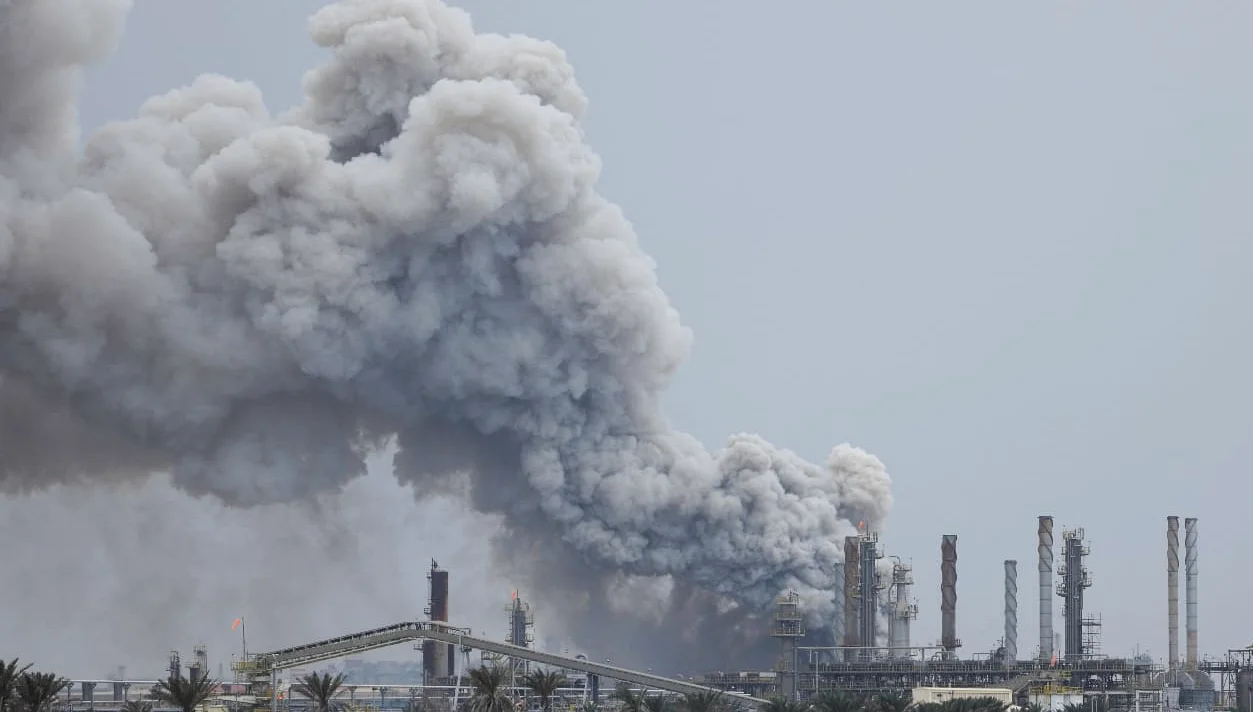
About ten days after the first US and Israeli strikes targeting Iran, global oil markets have eased slightly after briefly surging above $100 per barrel. The cooling, however, does not mean the threat has passed. Continued fighting and the possibility of a prolonged disruption in the Gulf could still send prices sharply higher.
A Blockade Rather Than an Embargo
The mechanics of the current crisis are very different from those that triggered the 1973 oil shock. At that time, the disruption was the result of a deliberate political decision. Arab members of OPEC imposed an embargo on Western countries perceived as supporting Israel during the Yom Kippur War, sharply curtailing supplies.
The present turmoil stems from a logistical chokepoint instead. Iran has threatened to block shipping through the Strait of Hormuz, the narrow waterway through which about one-fifth of global oil output normally travels. Because of this distinction, producers are not refusing to sell oil to certain countries. Instead, exports are being physically obstructed by the risk to shipping.
Energy analyst Francis Perrin of the French think tank IRIS described the constraint bluntly, noting that Gulf exporters remain heavily dependent on the strait. Saudi Arabia, Iraq, Kuwait and the United Arab Emirates could increase supply to calm markets, but the options are limited because, as Perrin said, “they are all dependent on Hormuz”.
The lack of sufficient alternative export routes means shipments cannot easily bypass the bottleneck. With limited storage capacity, some producers have already started to reduce output. Rystad Energy analyst Jorge Leon pointed out that companies cannot simply keep pumping indefinitely if crude cannot be shipped out.
“The current crisis could potentially become a major energy crisis if this is sustained over time,” Leon said.
US Politics and Oil Prices
Domestic politics in Washington is also influencing the energy picture. Iran’s warnings that oil flows to US and Israeli allies could be disrupted as long as the conflict continues appear designed to push energy prices higher. Elevated fuel costs would create economic and political pressure on the United States ahead of midterm elections scheduled for November.
For President Donald Trump, sustained price increases would quickly become a political vulnerability. This helps explain why the White House has moved to calm markets. Trump signalled that hostilities might not drag on indefinitely and suggested that some sanctions affecting Russian energy could be eased.
The administration has also allowed India to continue purchasing Russian oil temporarily, a move seen as part of efforts to keep global supply flowing and prevent prices from surging further.
Strategic Reserves as a Buffer
Another key difference from the 1970s is the existence of large emergency stockpiles. Following the first oil shock, Western countries established coordinated reserves designed to cushion supply disruptions. Members of the Organisation for Economic Co-operation and Development now hold strategic inventories equivalent to roughly three months of imports.
These reserves are coordinated through the International Energy Agency, which was created after the 1973 crisis precisely to handle such emergencies. If the disruption caused by tensions with Iran worsens, the IEA could release some of those reserves to the market. Such an intervention could help dampen speculation and temporarily offset shortages caused by a blockage in Hormuz.
Still, analysts caution that this buffer has limits. Perrin warned the mechanism remains effective “only if the conflict doesn’t last too long”.
Oil Dependence and the Energy Transition
The global energy landscape has also changed since the 1970s. Back then, oil exporters were able to take advantage of tight supply to impose steep price increases. Today, producers are aware that extremely high prices could accelerate the push toward alternative energy.
Another surge could strengthen the economic argument for renewables and electrification. Yet the world’s reliance on crude remains substantial. Oil continues to play a crucial role in transportation and petrochemical industries.
“We are still struggling to replace the king that is oil,” Perrin said. Although crude’s share in the global energy mix has declined over time, overall demand remains at record levels.
If the conflict persists for several weeks, markets could still react strongly. Leon warned that prolonged disruption could push prices much higher. “If the conflict drags on for a few more weeks, prices could easily climb to $140,” he predicted, a level that would place heavy strain on the global economy.






Comments
No comments yet
Be the first to share your thoughts