

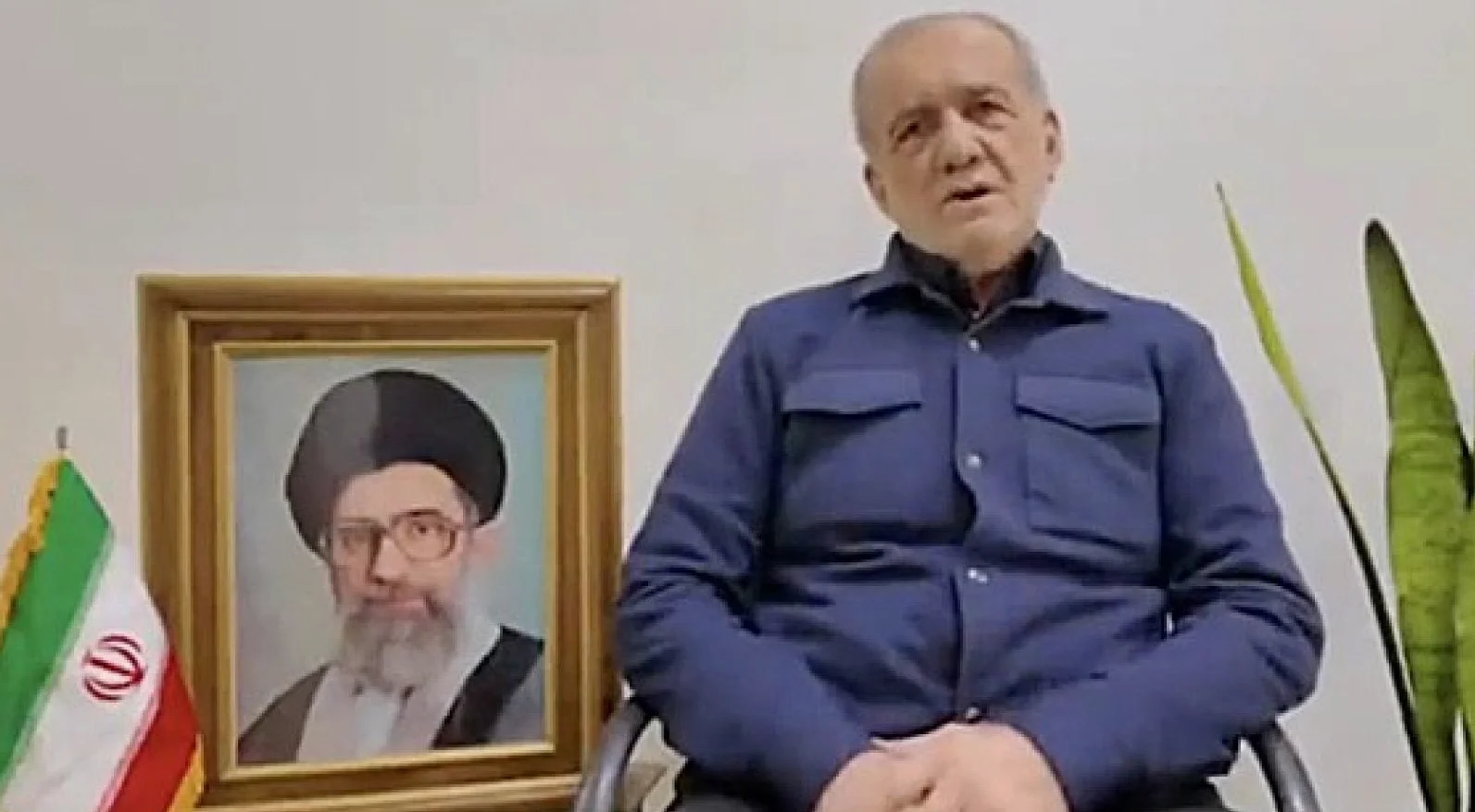
Iran’s president, Masoud Pezeshkian, delivered a televised address on Saturday as the ongoing conflict involving Iran, the United States, and Israel entered its eighth day. In a pre-recorded five-minute video statement aired on Iranian state television, Pezeshkian apologized for Iranian strikes on neighboring countries while simultaneously warning that Iran would never surrender to outside pressure.
Apology Amid Escalating Regional Tensions
The remarks come amid escalating regional tensions, U.S. military deployments, and an intensifying campaign against Iranian military infrastructure. Pezeshkian acknowledged that Iranian attacks had struck targets beyond its borders during the conflict and issued a direct apology to countries in the region.
According to the Iranian president, Tehran has now ordered a halt to attacks against neighboring nations unless those countries launch attacks against Iran first. The directive reportedly followed a decision by a Temporary Leadership Council after days of intense military exchanges across the Middle East.
While extending the apology, Pezeshkian attempted to frame the earlier attacks as actions carried out during a moment of chaos after senior Iranian leadership figures were killed during the conflict. He described the situation as a period of instability and confusion that led to the cross-border strikes.
Defiant Stance Toward the U.S. and Israel
Despite the conciliatory tone toward neighboring countries, Pezeshkian delivered a defiant message toward the United States and Israel, particularly in response to warnings from President Donald Trump demanding Iran’s “unconditional surrender.” The Iranian leader rejected the idea outright.
“Anyone who believes that we will surrender unconditionally should take that dream to their grave,” Pezeshkian declared. His comments were seen as a clear rejection of external pressures and a reaffirmation of Iran’s sovereignty and resistance.
The timing of the apology is significant, coming as the region faces an increasingly precarious situation. The conflict has already led to the displacement of thousands and the destruction of critical infrastructure in several countries. According to the United Nations, more than 500,000 people have been displaced in the region since the conflict began, with over 10,000 civilian casualties reported.
Regional analysts have noted that while Iran’s apology may be aimed at de-escalating tensions with its neighbors, it does not signal a broader shift in policy toward the U.S. and Israel. “This is a strategic move to buy time and avoid further escalation with Arab states while maintaining a hardline stance with the West,” said Dr. Amin Khoury, a Middle East analyst at the International Policy Institute.
The Iranian president’s statement also included a call for regional unity, urging neighboring countries to “join hands” in promoting stability and peace in the Middle East. However, the effectiveness of such calls remains uncertain, given the deep-seated mistrust and historical grievances between Iran and its neighbors.
What’s Next for the Region?
The coming weeks will be critical in determining the trajectory of the conflict. The U.S. has announced plans to increase military presence in the region, with a reported deployment of additional fighter jets and naval vessels to the Gulf. This move has raised concerns among regional powers about the potential for further escalation.
Iran’s military has also signaled that it is prepared for prolonged conflict, with reports indicating that it has mobilized reserve forces and is increasing its production of drones and missiles. According to a recent report by the Middle East Defense Analysis Group, Iran has increased its military budget by 12% this year, with a significant portion allocated to its Major Guard Corps.
Meanwhile, the international community is closely watching the situation, with several countries calling for de-escalation and diplomatic solutions. The United Nations Security Council is set to hold a special session on the conflict next week, with diplomats from various nations expected to discuss potential measures to prevent further violence.
Despite the recent apology, the path to peace remains uncertain. The region is at a crossroads, with the potential for both a temporary ceasefire and further escalation. As the conflict continues, the impact on ordinary people across the Middle East will be felt in the form of economic hardship, displacement, and a growing sense of insecurity.





Comments
No comments yet
Be the first to share your thoughts