

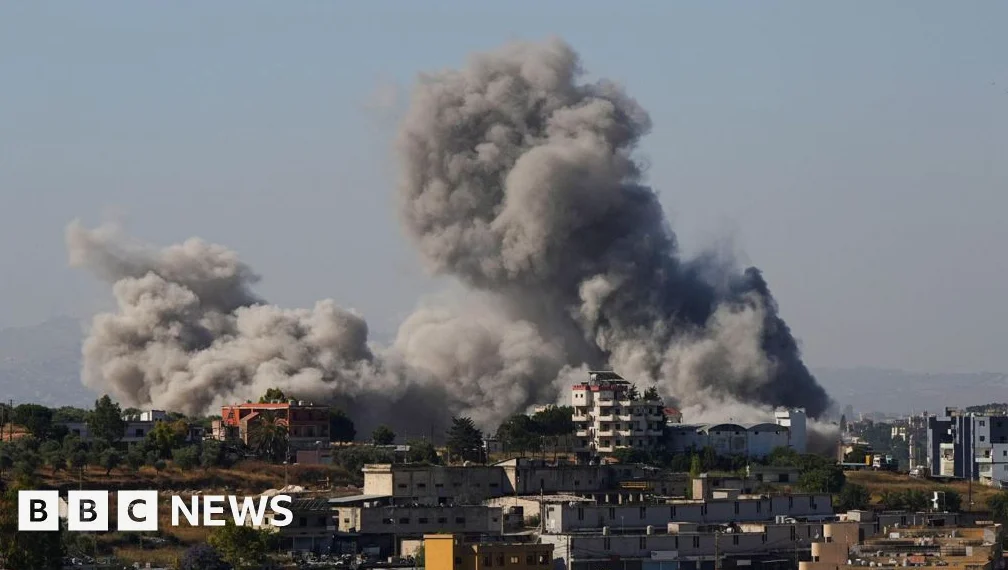
Hours after a U.S.-brokered ceasefire between Israel and Lebanon was announced on Wednesday, the agreement has failed to bring peace to the southern Lebanese border, where Israeli forces and Hezbollah continue exchanging attacks. According to Demócrata, the Lebanese president, Joseph Aoun, suggested the ceasefire could take effect within 24 hours if all parties ratified it, but Hezbollah has explicitly rejected the terms.
Hezbollah’s Rejection and Continued Attacks
Hezbollah has refused to comply with the ceasefire conditions, which include the complete cessation of attacks and the withdrawal of its fighters from southern Lebanon. In a statement through Al Manar TV, Hezbollah leader Naim Qassem called the agreement a “roadmap to annihilate part of the Lebanese people” and vowed not to accept any deal that requires its withdrawal. According to Kronen Zeitung, Hezbollah killed four Israeli soldiers in an attack, as reported by the Israeli military.
Iran’s Islamic Major Guard Corps (IRGC) has also spoken out, stating that regional stability will not be achieved unless Israel withdraws from “occupied areas” in Lebanon. According to TMGM, Qassem further described the ceasefire as a “farce” and warned that northern Israel would remain a target as long as Israeli bombing continues.
Israeli Military Operations Continue
Israel’s military has not halted its operations in southern Lebanon. Yechiel Leiter, Israel’s ambassador to the U.S., stated on social media that Israel is “firmly committed to an immediate ceasefire,” but added that calm would only follow if Hezbollah complies. On Friday, the Israeli military issued an evacuation order in the Tyre area after an attack, according to 경향신문. Avichay Adraee, the IDF’s Arabic-language spokesperson, said that the military had no choice but to respond forcefully after Hezbollah violated the ceasefire.
Lebanon’s Ministry of Health reported that at least 47 people were killed in Israeli attacks on Friday. According to KBS 뉴스, a second high-level meeting between Israel and Lebanon is scheduled at the U.S. Department of State, but key disagreements over disarming Hezbollah are expected to remain unresolved.
Oil Markets and Geopolitical Tensions
The ongoing conflict has raised concerns about energy markets. According to TMGM, West Texas Intermediate (WTI) crude oil futures were trading around $91.00, despite the fragile ceasefire. Analysts warned that renewed hostilities between Israel and Lebanon could disrupt the U.S.-Iran nuclear deal negotiations and exacerbate global energy supply concerns, potentially pushing oil prices higher.
U.S. President Donald Trump has expressed confidence that a deal with Iran will be finalized soon, saying in a post on Truth Social that Washington is “in the middle of my final negotiations to end the war with IRGC.” However, no official progress has been reported on the Iran deal, which aims to negotiate a final treaty to end the war within 60 days.






Comments
No comments yet
Be the first to share your thoughts