

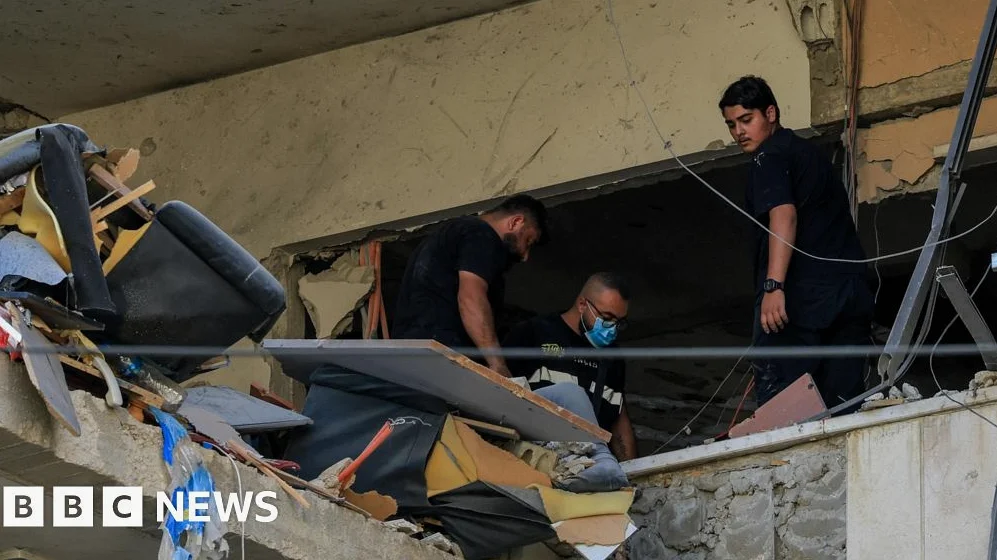
On Sunday night. Israel launched attacks in a Beirut suburb, days after a truce brokered by the United States and France took effect, according to BBC. The attack caused significant damage to a residential building, with four women and four children among the injured, as reported by Lebanese health officials.
Escalation and Responses
The Israeli military stated it was targeting Hezbollah terrorist infrastructure and suggested further strikes were possible, as noted in a statement by an Israeli army Arabic-language spokesman on X. The statement read, “To be continued.” In response to the Israeli strikes, Iran fired missiles at Israel, which it attributed to the increasing attacks in southern Lebanon and Beirut suburbs.
Hezbollah, supported by Iran, claimed it had fired rockets at Israeli artillery positions and troops in response to Israel’s “violation of the ceasefire.” Ebrahim Rezaie, a spokesperson for Iran’s foreign policy committee, pledged a “decisive and painful response” to the Israeli attack on Beirut.
International Reactions and Warnings
US President Donald Trump announced on Truth Social that no troops would be sent to Beirut following a call with Israeli Prime Minister Benjamin Netanyahu. The US instructed Israel to stand down, according to BBC. Qatar, which had been mediating de-escalation efforts, was also informed of this decision.
Netanyahu warned that the duration of the ceasefire depends on developments in Lebanon, as reported by Kronen Zeitung. Before the truce took effect, Israel had carried out significant attacks on Beirut and southern suburbs. Heavy explosions were reported throughout the capital before the ceasefire was implemented at 4:00 a.m.
Additional Strikes and Casualties
Israel also bombed a Lebanese border crossing to Syria, according to Lebanese security circles. The Syrian Observatory for Human Rights reported two Syrian government soldiers killed, while the Syrian state agency SANA reported six fatalities, including civilians and a volunteer from the Syrian Red Crescent.
The Israeli army did not comment on the attacks. The Syrian Observatory noted that Israel’s goal is to disrupt supply routes for Hezbollah, which sources weapons from Iran via Syria and other countries. Rami Abdul Rahman, head of the Syrian Observatory, explained that Israel is trying to “destroy all routes through which Hezbollah smuggles weapons from Syria.”
According to unconfirmed reports, Hezbollah is expected to withdraw behind the Litani River, approximately 30 kilometers north of the de facto Israeli-Lebanese border, as part of the ceasefire agreement.






Comments
No comments yet
Be the first to share your thoughts