

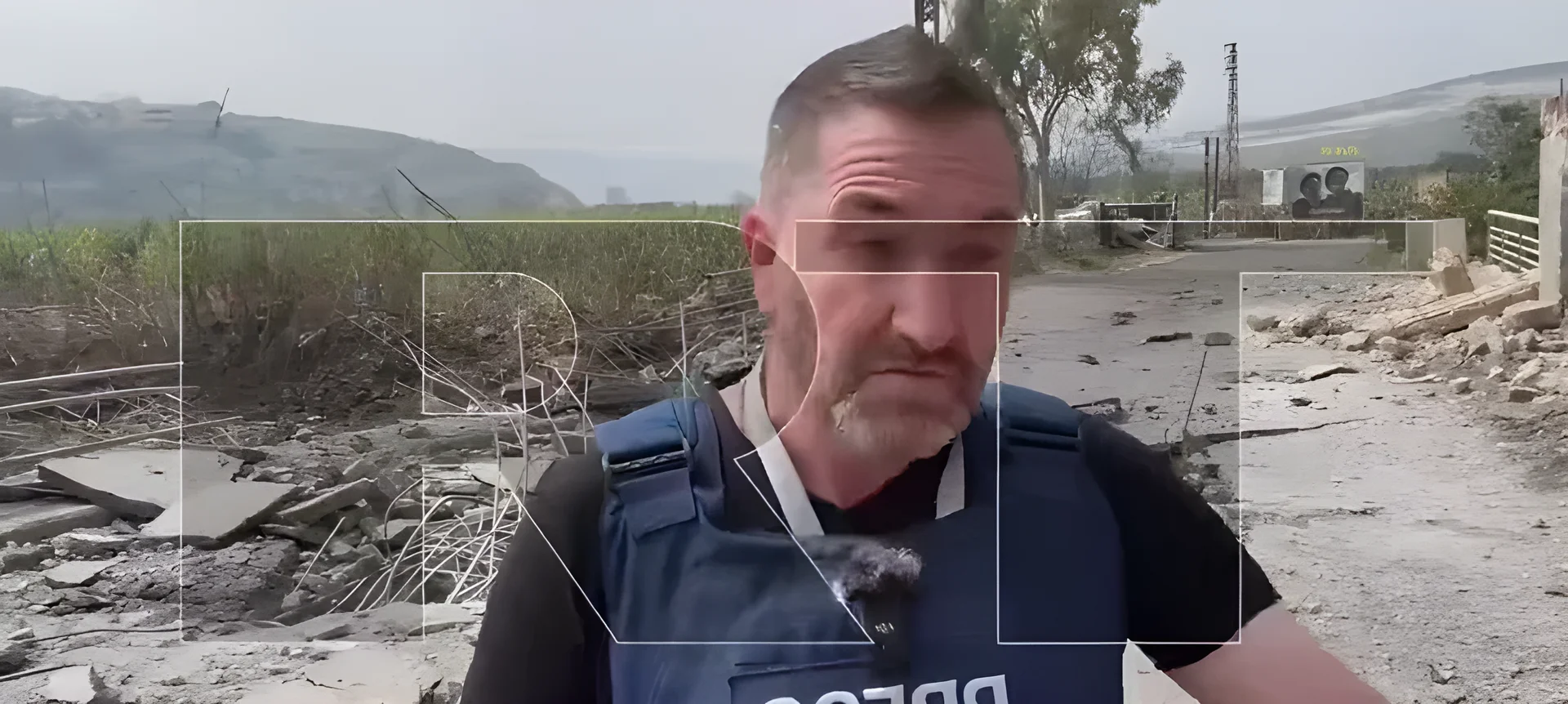
Israeli forces struck near a bridge in southern Lebanon, injuring RT journalist Steve Sweeney and his cameraman as they filmed live, according to the Russian state-backed news outlet. The incident occurred during a military operation in the region, where tensions have been rising between Israel and Hezbollah in recent weeks.
Details of the Attack and Aftermath
According to RT, the strike was carried out by an Israeli aircraft that fired a missile landing less than 10 meters behind the journalists as they were reporting from the scene. The footage, which RT published online, shows the moment of impact as Sweeney ducks for cover. Both journalists were struck by shrapnel and later received medical treatment at a local hospital.
RT shared additional footage showing Sweeney being treated for shrapnel wounds. The cameraman, who was also injured, stated that both were conscious and recovering. The journalists claimed they were wearing press markings and asserted they were deliberately targeted. However, this claim has not been independently verified by other sources.
The video of the incident has circulated widely across social media and news platforms. In a conflict zone, such occurrences are not uncommon, but the fact that a journalist was struck has raised concerns about the safety of media personnel in the region. RT emphasized that the crew was not in a combat zone at the time of the strike, but rather in an area where military activity had been reported.
Context of Escalating Tensions
The strike follows a series of military operations by Israel in southern Lebanon, where tensions have been escalating with Hezbollah for several weeks. The Israeli military has been conducting air strikes and ground operations in the region in response to attacks by Hezbollah, which has been firing rockets into northern Israel.
According to recent reports, at least 15 Israeli strikes have been recorded in southern Lebanon over the past month, targeting suspected Hezbollah positions. These operations have resulted in civilian casualties and significant damage to infrastructure. The United Nations has raised concerns about the humanitarian impact of the conflict, with reports of displaced families and damaged homes.
Hezbollah has consistently denied targeting civilians, but the Israeli military has accused the group of using civilian areas as cover for its operations. The situation has created a volatile environment where the line between combatants and non-combatants is often blurred.
The incident involving RT’s crew has sparked discussions about the risks faced by journalists in war zones. According to the Committee to Protect Journalists, at least 12 journalists have been killed in the Middle East in the past year due to conflict-related violence. The organization has called for greater protections for media personnel in conflict areas.
Implications for Media and Conflict Reporting
The attack on RT’s journalists highlights the dangers faced by media professionals in regions of active conflict. The footage released by RT has drawn attention to the vulnerability of journalists, particularly those working in areas where military operations are ongoing.
Experts say the incident may lead to increased scrutiny of how media organizations operate in war zones. According to a report by the International Federation of Journalists, the number of journalists working in high-risk areas has increased in recent years, with many reporting that they are often forced to work in unsafe conditions.
The incident also raises questions about the accuracy of claims made by journalists in conflict zones. While RT has not provided independent verification of the claim that the journalists were deliberately targeted, the footage has been widely shared, fueling public debate about the situation in southern Lebanon.
Israeli officials have not yet commented on the incident. However, the Israeli military has previously stated that it takes measures to avoid harming civilians and that it conducts operations in accordance with international law. The military has also emphasized that it targets only legitimate military objectives.
As the conflict in southern Lebanon continues, the international community is closely watching the situation. The United Nations has called for a de-escalation of hostilities and has urged both sides to protect civilians and respect international humanitarian law.
The incident involving RT’s journalists is expected to be a point of discussion in upcoming diplomatic meetings between Israel and its allies. The U.S. State Department has not yet commented on the incident but has previously expressed concerns about the impact of the conflict on civilians.
With the situation in southern Lebanon remaining volatile, the risk of further incidents involving journalists or civilians remains high. The international community is urging both sides to exercise restraint and to ensure that media personnel are not targeted in the conflict.






Comments
No comments yet
Be the first to share your thoughts