

 BBC
BBC 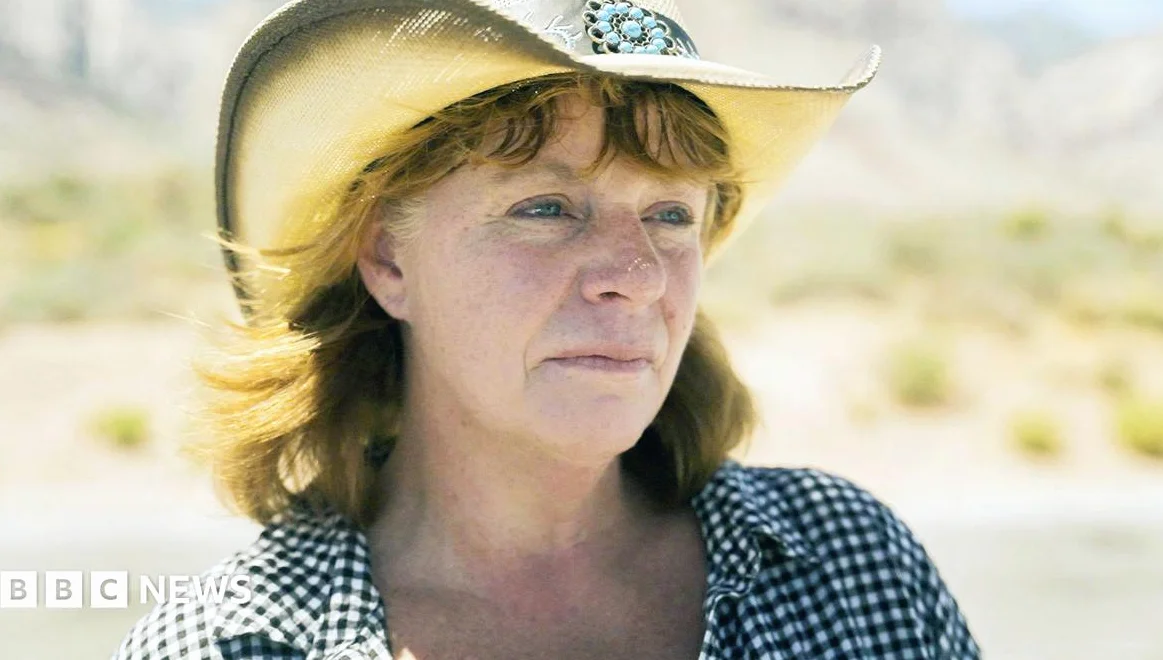
Holly Ratchford still cannot believe that the man who moved into the residential complex she once managed would go on to be accused of involvement in the darkest day in recent US history.
Landlady Recalls Friendly Neighbour
“It’s almost impossible for me to wrap my head around who he said he was, and who he really is. I still struggle with that,” she tells the BBC.
The man, Omar al-Bayoumi – a Saudi in his early 40s – moved to the complex in San Diego, California, with his family in September 1999.
The new resident at number 152 Parkwood Apartments quickly became a regular at Ratchford’s pool parties. “He was always so bubbly and smiling,” she recalls, “and just very, very friendly.”
Connections to 9/11 Hijackers
A few months later, Bayoumi would introduce Ratchford to two apparently unassuming, “polite” men, who would also become her neighbours.
The pair would become infamous for hijacking American Airlines flight 77, and crashing it into the Pentagon, in the 9/11 attacks.
Ratchford has been haunted by her connection to these three men for the past 25 years. She feels she was taken in by Bayoumi from the start.
“Whenever I had parties he would come and be a part of the activities,” she recalls, adding that his family would invite her in for food.
“I enjoyed going over.”
Alleged Support and Legal Proceedings
Bayoumi is alleged to have facilitated the 9/11 plot through the support he provided for the first two hijackers to arrive in the US – Nawaf al-Hazmi and Khalid al-Mihdhar – who lived at Parkwood for several months prior to the attacks.
The federal judge in the 9/11 families’ lawsuit in New York found a year ago that the evidence created “a reasonable inference” that Bayoumi and a Saudi diplomat based in the US had been “co-ordinating with the Saudi government when providing assistance to the hijackers”.
The judge’s ruling has allowed the families’ case to move forward. Saudi Arabia is appealing it and, together with Bayoumi, has always denied the allegations.
Ever since the attacks, Bayoumi has been the subject of reporting and speculation.
Ratchford – who saw him interacting with the hijackers and witnessed him providing a central act of support for them – has given a sealed declaration to the New York court.
But she has never spoken publicly about what she saw.
Finding Holly Ratchford was not easy.
After unwittingly becoming embroiled in the investigation into what the US government has described as “the most egregious criminal act on American soil in modern history”, she moved about as far from humanity as you can get in the United States.
I tracked her down to the high desert in the western US – rattlesnake country. She told me she avoided the news, and definitely did not speak to journalists. But, to my surprise, she agreed to talk.
Her interview with me casts doubt on the version of events Bayoumi has told police, the FBI and the New York court, and features in the BBC Radio 4 podcast, Intrigue: A 9/11 Story, and an upcoming BBC Panorama, 9/11: The Saudi Connection.
In early 1999, Ratchford landed on her feet. Life before then had been untethered – she had moved around, been married, pregnant and divorced before she was 21. But now, aged 27, she had a job she loved and a home.
As the new property manager of Parkwood Apartments, a squat complex of 175 low-rise apartments and townhouses in the San Diego suburbs, she says she excelled. Properties were never empty for long. But it was not the paperwork, nor the healthy pay check, that made the job a dream, it was the people.
Ratchford not only worked at Parkwood, she lived there too. Her clients were also her neighbours. And many were more than that – she says they became her friends.
“I always told my staff: ‘You make them feel like this is their home, and they’ll stay,'” she recalls.
As Ratchford made her mark at Parkwood, she was happy and secure in the world she had built – a world in which she knew everyone and everything.
Then, things fell apart in a dramatic and unexpected way.
Omar al-Bayoumi moved into Parkwood claiming to be a mature student.
“I knew he was going to school. I’m not sure, other than that, what he did,” Ratchford says.
More than two decades later, declassified FBI documents and court filings would reveal that Bayoumi’s studies had, in effect, come to a halt in 1998. He was spending much more time organising religious activities in the Muslim community, which he often videotaped.
His constant filming, and his inquiring questions, aroused suspicions.
“It was a general consensus of people in the San Diego Muslim community that Bayoumi was an operative of the Saudi intelligence service,” Richard Lambert, who led the city’s FBI office investigation after 9/11, tells me.
But it was not Ratchford’s business to pry. What mattered to her was whether he could pay the rent. And he could.
The FBI would later discover he was being paid about $90,000 (£55,600 at the time) a year.
Bayoumi presented himself as an ordinary family man.
The Bayoumi who Ratchford saw was captured on his never-before-broadcast home movies – throwing a ball around with his family by the Parkwood pool, laughing when it drifted into the water.
Another video reveals him on an excursion to Las Vegas with his family. Wearing a floral shirt, he points out the rollercoaster by the New York, New York hotel casino.
“I bought into everything that he told me. I really thought that’s how he was,” Ratchford says.
But that version of Bayoumi is at odds with the man who emerges from other videos.
In summer 1999, Bayoumi filmed the United States Capitol in Washington DC from different angles, noting a “plan”, and turning the camera on himself to deliver a reporter-style commentary.
The 9/11 families’ lawyers allege he was surveilling the building as a potential target for the attacks. The Kingdom of Saudi Arabia maintains it is a tourist video.
In his August 2025 judgement, the New York judge found that “all the Court can conclude” from the video is that Bayoumi “visited Washington DC and that he filmed the city”.
On 3 February 2000, Bayoumi brought two young men into Ratchford’s San Diego rental office. In an obvious hurry, she says, he perched on the filing cabinet as he told her that the two men were from his mosque and were staying with him while they looked for a place to rent.
“There was absolutely nothing unusual about them. They were nice, they were polite,” she recalls.
The two men spoke no English, but Bayoumi took charge. Ratchford says he asked her what the two men would need to show in order to qualify for a Parkwood apartment.
“They didn’t meet the income criteria at all, or the bank account. They had none of that,” she tells me.
Ratchford had rules. It was a quick no.
But the two men did have several thousand dollars in cash. Bank records show that, the following day, Bayoumi took them to the nearest bank and helped them open an account.
Back at Ratchford’s office on the third day, he figured a way around the problematic income criterion. He would co-sign their lease – becoming the legal guarantor for their apartment.
The rental agreement shows Bayoumi’s multiple signatures. He was their guarantor, their friend, their emergency contact, and his Parkwood home was listed as their current address.
Without further delay, the two men mo

Comments
No comments yet
Be the first to share your thoughts