

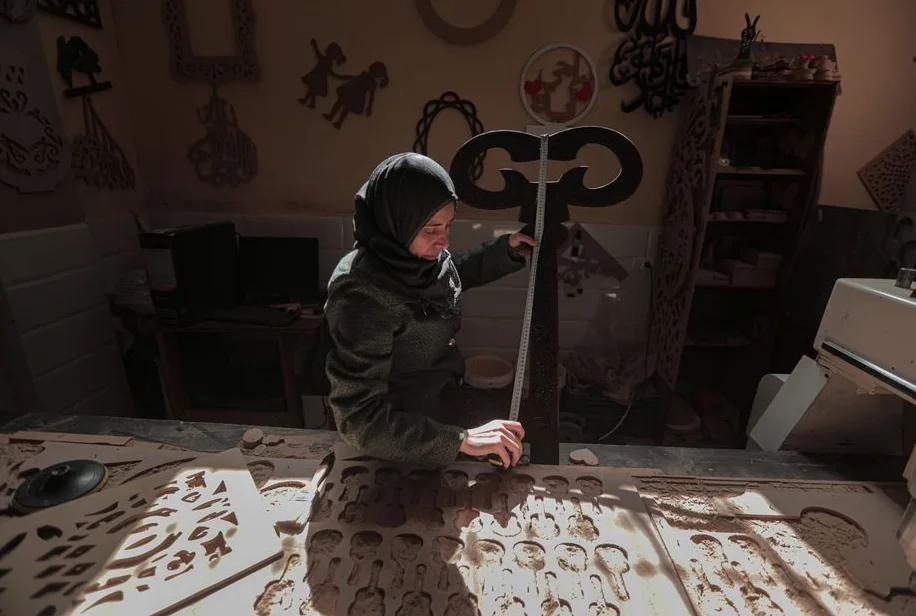
Sliman Mansour was born in Birzeit, near Ramallah, in 1947. He rose to prominence in the 1970s as part of a generation of Palestinian artists, writers, and poets seeking to rebuild a threatened identity through symbols rooted in land and memory.
A Legacy in Art
Over more than five decades, Mansour’s paintings came to embody the story of Palestine. His works often depicted the farmer clinging to his soil, the stone house on a hill, the embroidered thobe, and the smile of a young girl carrying the hope of return.
Mansour studied art in Beirut and Washington, as he went on to exhibit extensively in solo shows and group exhibitions across the Arab world and internationally. His works are held in museums and private collections worldwide.
Artistic Influence and Themes
His visual language drew deeply from the region’s ancient civilisations, Canaanite, Pharaonic, and Assyrian, as well as Islamic and Arab art, particularly calligraphy and geometric motifs. At the same time, his upbringing in Birzeit anchored his work in the everyday life of Palestinian villages: the setting, peasants, traditional homes, and clothing.
Mansour also absorbed influences from global art that carried messages of freedom and resistance, but he blended local forms with a universal appeal, though During the first Intifada, he helped found the New Vision group with fellow artists. They turned to mud, straw, wood, leather, henna, and natural dyes after Palestinian artists boycotted Israeli-made supplies.
This shift, he later said, forged a vital link between post-Nakba art and the work of younger generations.
A Symbol of Resistance
For many Palestinians, Mansour’s canvases were more than images; they were a visual archive of the cause itself — his brush, critics and admirers agree, carried the homeland. His work received numerous awards in recognition of his contribution to Arab and Palestinian culture.
Al Jazeera looks at some of his famous paintings to commemorate the life and legacy of Sliman Mansour, a giant in resistance art.


Comments
No comments yet
Be the first to share your thoughts