

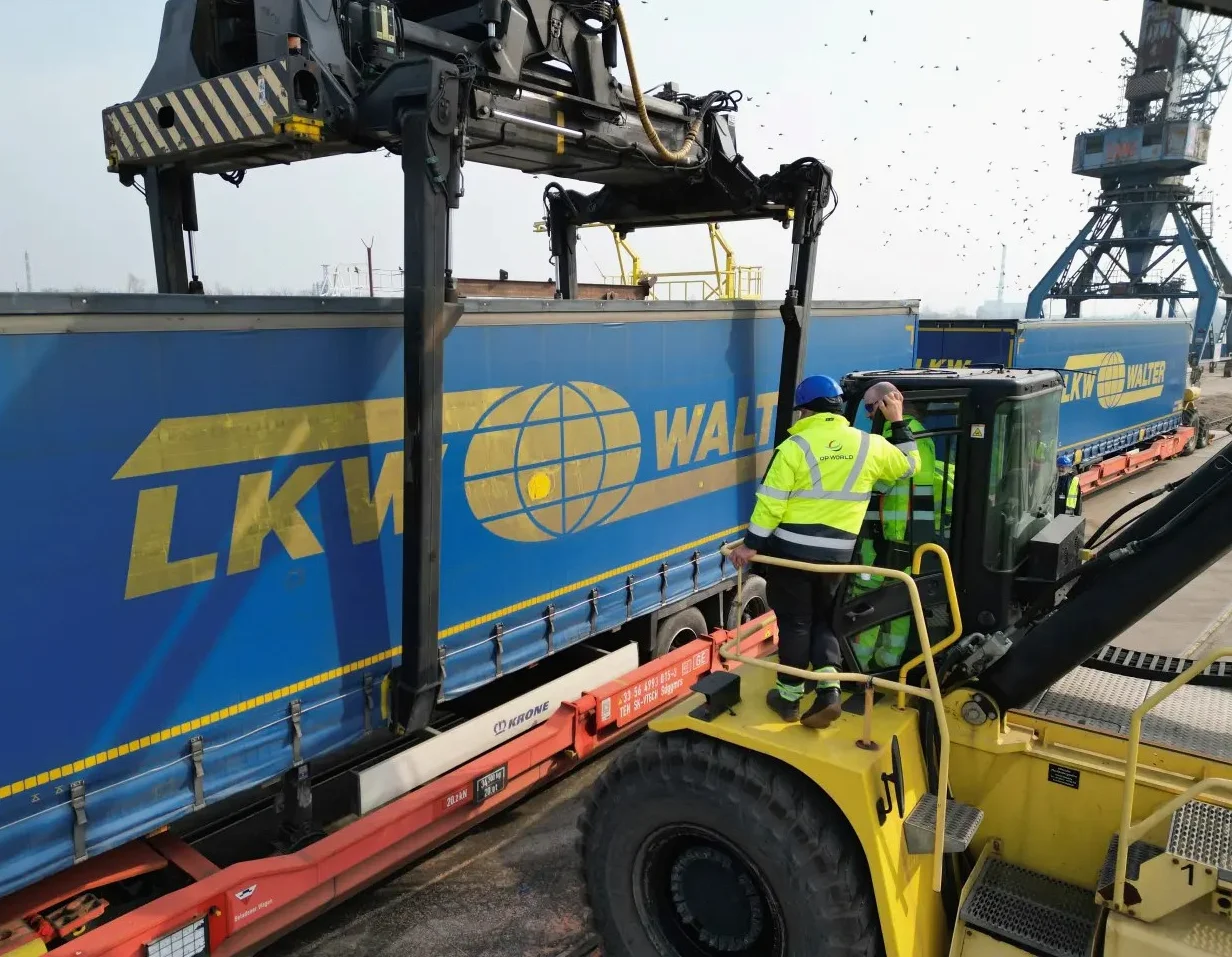
The terminal operated by DP World in Novi Sad, Serbia, has begun offering a new intermodal rail service that links the city to the Herne logistics hub in western Germany, located in the economically vital Rhine-Ruhr region. This development is the first of its kind in Serbia and is expected to reshape the country’s role in regional trade and transportation.
Environmental and Logistical Benefits
The new rail service, operated by Austrian transport company LKW Walter, runs three times per week and offers a faster and more reliable alternative to long-haul road transport. According to LKW Walter, the use of intermodal transport—combining rail and road—can reduce CO₂ emissions by up to 80% compared to road-only transport.
Intermodal transport works by moving containers by rail for the majority of the journey, with trucks used only for the first and last segments. This approach reduces fuel consumption, reliance on drivers, and overall emissions, making it a more sustainable and efficient option for logistics operators.
“By connecting Novi Sad to the Rhine-Ruhr region through a scheduled intermodal service, we are strengthening Serbia’s integration into European supply chains and reinforcing its role as a strategic gateway for trade in Southeast Europe,” said Gokhan Yurteken, General Manager of DP World Novi Sad. “This service will provide our customers with a faster and more predictable route from Serbia to Western Europe, reducing dependence on cross-border road transport, improving schedule reliability, and reducing emissions.”
Strategic Positioning in European Logistics
The Rhine-Ruhr region, one of Europe’s largest industrial and logistics hubs, is a critical market for Southeast European countries. The new rail link from Serbia provides a direct connection to this region, enabling the efficient movement of goods between the Balkans and Western Europe.
According to Vladica Ćulafić, Chief Commercial Officer of DP World Novi Sad, the launch of the service is timely, as long-distance road transport between Serbia and the European Union is facing increasing challenges. These include unpredictable transit times, new European regulations, and stricter rules on driver mobility, such as limits on the number of days drivers can spend in the EU.
“As regulatory requirements for road transport evolve in the European Union, customers are looking for solutions that offer more speed, predictability, and less administrative complexity,” Ćulafić said. “Intermodal rail transport offers all these advantages, while also delivering measurable carbon savings.”
The new service is expected to reduce the logistical burden on companies that rely on road transport, particularly as the European Entry/Exit System (EES) becomes more complex. The EES requires drivers to register their entry and exit from the EU, adding administrative steps that can delay shipments and increase costs.
Future Implications for Trade and Infrastructure
The intermodal rail service from Novi Sad to Herne is likely to have long-term implications for Serbia’s trade strategy and infrastructure development. By offering a reliable and efficient alternative to road transport, the service could attract more international freight companies to use Serbia as a logistics hub.
Analysts suggest that this development could position Serbia as a key player in the broader European supply chain, particularly in the context of growing demand for sustainable transport options. The shift toward rail-based logistics aligns with broader European Union goals to reduce carbon emissions and promote greener transport corridors.
Officials in Serbia have emphasized that the new rail link is part of a larger plan to modernize the country’s transport infrastructure and improve its connectivity with the rest of Europe. Future projects may include expanding the intermodal network to other parts of the Balkans and improving rail links with neighboring countries.
With the service now operational, the immediate challenge for DP World and LKW Walter will be to ensure consistent performance and meet growing demand. The success of the Novi Sad-Herne link could serve as a model for other intermodal connections in the region.





Comments
No comments yet
Be the first to share your thoughts