

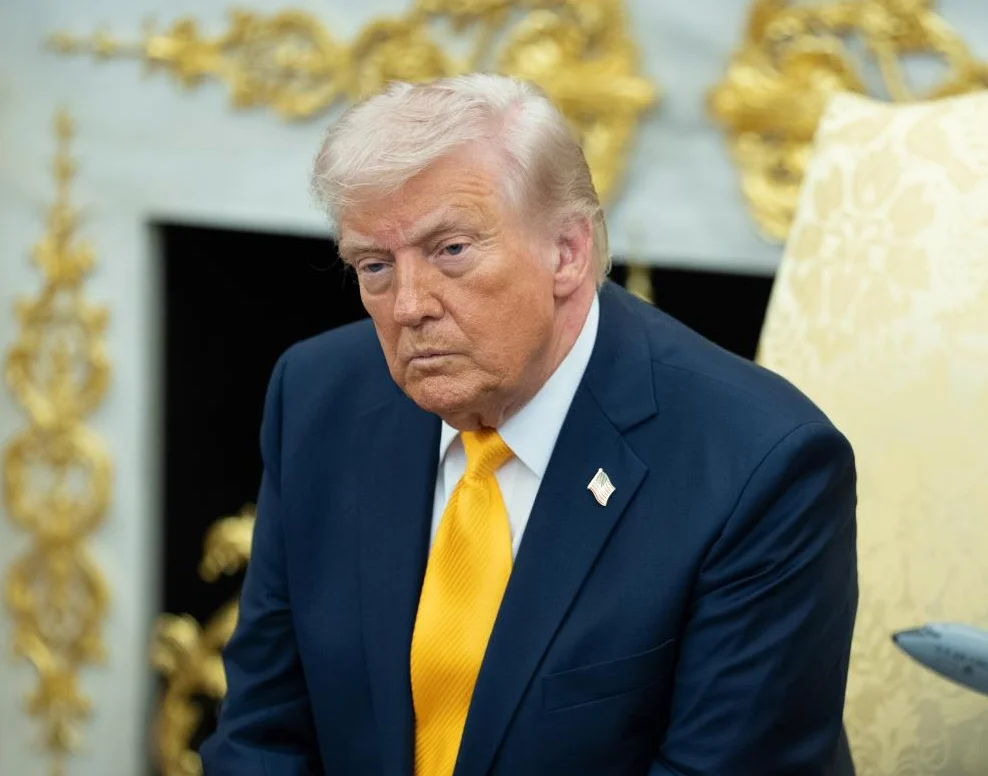
Donald Trump has claimed he was unaware of Israel’s strike on Iran’s South Pars gasfield, a move that has sparked tensions and exposed divisions between the two nations. Speaking in the Oval Office, Trump said he had spoken to Israeli Prime Minister Benjamin Netanyahu following the attacks and had advised him to refrain from further strikes that could escalate the regional conflict over energy infrastructure.
Escalating Tensions in the Gulf
The Israeli strike on the South Pars gasfield, which is shared with Qatar, has raised concerns among US allies in the Gulf. The attack has not only targeted a critical energy resource but has also prompted fears of retaliatory strikes on other energy infrastructure across the region. This includes pipelines and natural gas processing facilities that supply liquefied natural gas (LNG) to economies around the world, particularly in Asia.
Trump’s statement that he told Netanyahu to ‘not do that’ has been met with skepticism by Israeli officials. Netanyahu has denied that Trump was ‘dragged’ into the war by Israel, emphasizing that no one can dictate to the US president what to do. ‘I misled no one,’ Netanyahu said, reinforcing the notion that Israel’s actions were independent of US influence.
The South Pars gasfield is one of the world’s largest natural gas reserves, and its disruption has far-reaching implications for global energy markets. The attack has the potential to impact LNG supplies to countries like Japan, South Korea, and China, which rely heavily on Middle Eastern energy sources.
Trump’s Remarks on Pearl Harbor
During his meeting with Japanese Prime Minister Sanae Takaichi, Trump could not resist referencing the 1941 attack on Pearl Harbor. The president’s remarks were seen as a veiled attempt to draw a parallel between Japan’s historical actions and the current US stance on Iran. This comparison has raised eyebrows among international observers, who question whether such rhetoric is appropriate in the context of current geopolitical tensions.
Trump’s comments were met with a mix of confusion and unease, as Japan has historically been a close ally of the United States. The remark, while seemingly lighthearted, could be perceived as dismissive of Japan’s role in the region and its strategic interests in maintaining stability in the Middle East.
Defense Secretary on War Duration
US Defense Secretary Pete Hegseth has stated there is no timeframe for ending the US war against Iran. This statement comes amid growing concerns about the financial and human toll of the conflict. Hegseth did not deny reports that the Pentagon could seek an additional $200 billion in taxpayer funding to sustain the war effort.
The potential for increased funding highlights the massive financial burden the war is placing on the US government. With no clear end in sight, the administration faces mounting pressure to justify the continued use of military resources in a conflict that was not officially declared.
Sanctions on Iranian Oil
The US Treasury Secretary, Scott Bessent, has indicated that the administration may soon remove sanctions on Iranian oil stranded on tankers at sea. This move is aimed at curbing the soaring prices caused by Iran’s closure of the Strait of Hormuz, a critical chokepoint for global oil shipments.
The removal of these sanctions could have significant economic implications for both the US and the global market. By allowing the flow of Iranian oil, the administration may be seeking to stabilize energy prices and reduce the impact on consumers, even as tensions with Iran continue to escalate.
US Military Not Preparing for Cuba Takeover
The US military is not currently preparing for an invasion of Cuba or actively planning a military takeover of the island, according to the top general overseeing American forces in Latin America. This statement comes amid speculation about the administration’s broader military strategies and potential conflicts in the region.
The general’s remarks provide some reassurance to those concerned about the expansion of US military operations beyond the Middle East. However, the lack of a clear strategy for the war in Iran continues to raise questions about the administration’s long-term goals.
Cost of the Iran War
The financial cost of the US war against Iran has been staggering. According to the Center for Strategic and International Studies (CSIS), the war has already cost the US approximately $12.7 billion by day six. This figure continues to rise at a rate of roughly $500 million per day, with the total expected to surpass $11.3 billion for the first week of the conflict.
The cost of the war dwarfs the annual budgets of several key public health and scientific agencies. The $11.3 billion spent in the first week could fully fund the Environmental Protection Agency ($8.8 billion), the Centers for Disease Control and Prevention ($9.2 billion), or the National Cancer Institute ($7.4 billion). This raises serious questions about the administration’s prioritization of military spending over public health and scientific research.
Adam Gaffney, a professor at Harvard Medical School, has criticized the administration’s approach, stating that the prioritization of militarism over the health and welfare of the American public is ‘disturbing.’ The growing financial burden of the war highlights the need for a more balanced approach to national security and public health.
Markwayne Mullin’s Confirmation
A key Senate committee has advanced Markwayne Mullin’s nomination to lead the Department of Homeland Security (DHS) on a near party-line vote. This comes after Mullin faced questions at his confirmation hearing about his approach to Donald Trump’s immigration enforcement agenda and accusations of encouraging violence.
Mullin has defended his ability to lead DHS and expressed regret for comments he made about a US citizen killed by immigration agents. The confirmation hearing was marked by a tense atmosphere, with a fellow Republican senator accusing him of encouraging violence.
Autism Committee Controversy
The first public meeting of US autism advisers, reshaped by Robert F. Kennedy Jr., was recently canceled with few details provided. This move has led to the creation of a rival organization, prompting questions within the autistic community about their focus and priorities.
The controversy surrounding the autism committee highlights the growing tensions in the field of public health and policy. The creation of a rival organization suggests a need for greater transparency and engagement with the autistic community to ensure their voices are heard.
Other Developments
Tulsi Gabbard, the director of national intelligence, told the Senate intelligence committee that US strikes on Iran have been a strategic success. This statement contrasts with earlier criticisms of the administration’s approach to the conflict.
Kash Patel, the FBI director, admitted under oath that the FBI is buying location data on Americans. This revelation has raised concerns about privacy and the extent of government surveillance in the United States.
As the conflict in the Middle East continues to unfold, the implications for the United States and its allies remain uncertain. The financial and human costs of the war are mounting, and the administration faces increasing pressure to provide a clear strategy for de-escalation and resolution.






Comments
No comments yet
Be the first to share your thoughts