

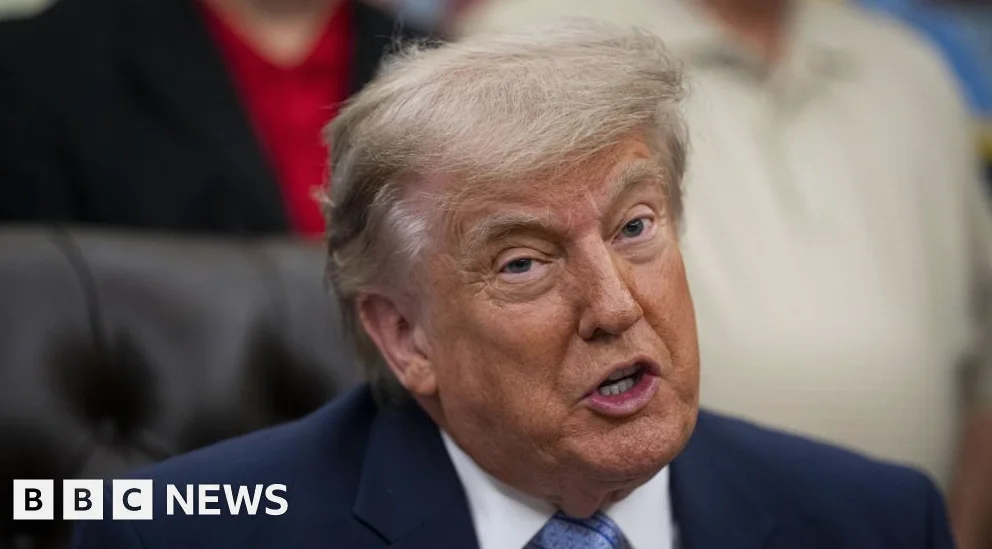
U.S. President Donald Trump said on Saturday that a peace deal with Iran is ‘largely negotiated,’ according to BBC — the statement comes amid ongoing talks between Washington and Tehran to finalize a long-term agreement following a fragile ceasefire that began in early April. Speaking to state television. Iranian foreign ministry spokesman Esmaeil Baqaei confirmed that a 14-point framework is being finalized and could lead to a final agreement within 30 to 60 days.
U.S. Blockade and Centcom Operations
Since the ceasefire. The U.S. has imposed a blockade on Iranian ports, redirecting 100 vessels, disabling four, and allowing 26 humanitarian aid ships to pass since 13 April, according to US Central Command (Centcom). Centcom commander Admiral Brad Cooper said the blockade has been ‘highly effective’ in cutting off trade into and out of Iranian ports, squeezing the country economically.
Trump’s comments about the peace deal came as anonymous U.S. officials briefed media on Friday that the administration was preparing for a new round of military strikes, though no final decision had been made. Trump also canceled attending his son Donald Jr.’s wedding to stay in Washington during what he called ‘an important period of time.’
Pakistan’s Mediation Efforts and Iranian Stance
Pakistan is playing a key role in efforts to speed up U.S.-Iran peace talks, with Army Chief Asim Munir expected to travel to Tehran for consultations, according to Reuters. However, Iran appears to be hardening its stance on a key U.S. demand—removing enriched uranium from the country. Two senior Iranian sources revealed that Supreme Leader Mojtaba Khamenei issued a directive preventing the removal of near-weapons-grade uranium from Iran.
This shift in stance has already impacted global markets, with Brent crude oil prices climbing nearly 2% to $107 a barrel on Thursday. The ongoing tensions are also affecting global inflation, with oil prices spiking amid uncertainty over the region’s stability.
Strait of Hormuz and Regional Economic Impact
Trump claimed the Strait of Hormuz will be reopened as part of the deal, but Iran’s Fars News Agency reported that Tehran has not agreed to fully reopen the strait, stating it would remain ‘under Iranian management’ in the event of a possible agreement. The strait, a vital global shipping route, has become a focal point of the conflict, severely disrupting oil and gas shipments and sending energy prices sharply higher.
In South Korea, one of the world’s largest energy importers, the situation is being closely monitored. Rising energy costs have already impacted refiners, shipping firms, and manufacturers in the country, according to local media. The outcome of the U.S.-Iran negotiations will be key for global markets, particularly in regions dependent on Middle East oil supplies.
Trump has previously described the ceasefire as being on ‘massive life support,’ rejecting Iranian demands as ‘totally unacceptable.’ The U.S. military’s blockade of Iranian ports remains a key point of contention in the peace talks, with both sides reportedly working to finalize a framework agreement.






Comments
No comments yet
Be the first to share your thoughts