

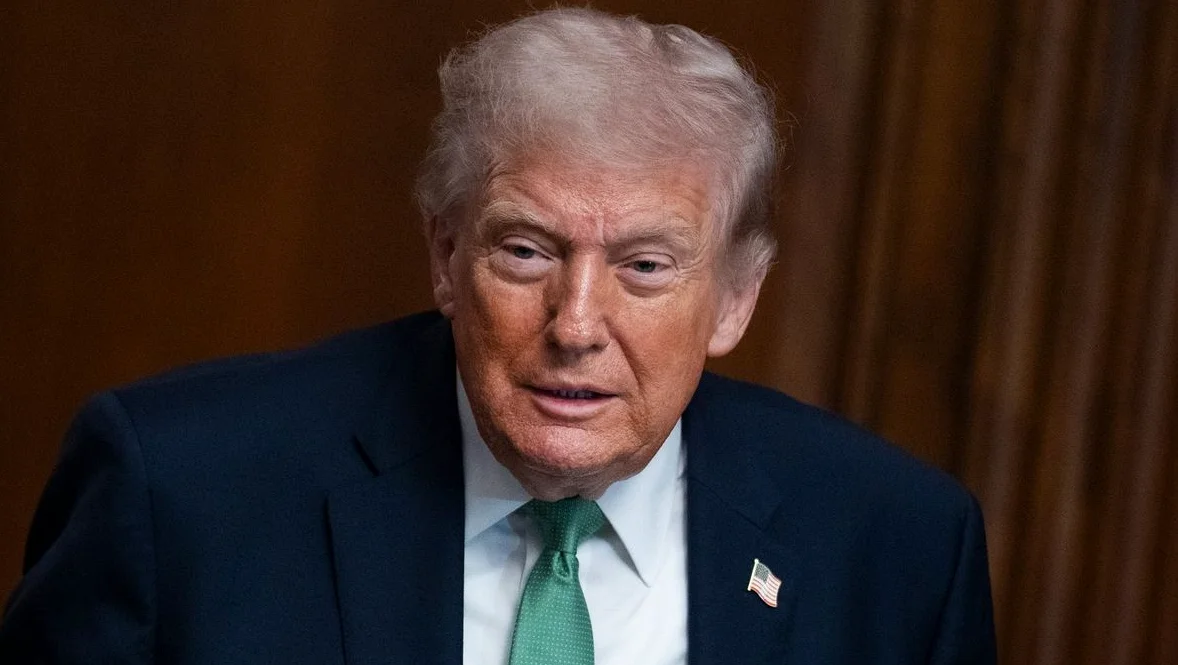
Donald Trump has faced fresh criticism after posting about Israel’s alleged attack on Iran’s South Pars gas field, with some claiming he has lost control of the escalating Middle East conflict. The president took to Truth Social to respond to the reported strike, which reportedly occurred without U.S. knowledge, and warned Iran not to strike at Qatar or face a massive retaliation from the United States.
Escalation in the Middle East
The alleged attack on the South Pars gas field, the world’s largest, has marked a significant escalation in tensions between Iran and its regional adversaries. According to reports, Israel and the U.S. had coordinated attacks on Iran’s missile infrastructure and nuclear sites since February 28, with one strike reportedly killing Iran’s supreme leader. However, the latest attack on the gas field was reportedly carried out by Israel without U.S. approval, a move that has raised questions about the level of coordination between the two countries.
Iran has retaliated by targeting energy sites in several Gulf countries, including Saudi Arabia, Qatar, and Kuwait. A Saudi oil refinery was hit, while Qatari liquefied natural gas (LNG) facilities and two Kuwaiti oil refineries were set ablaze. These attacks have sent global fuel prices soaring, with crude oil prices rising sharply in response to the heightened regional tensions.
Trump’s response to the incident has drawn sharp reactions from both the public and political figures. In his Truth Social post, he stated, “NO MORE ATTACKS WILL BE MADE BY ISRAEL pertaining to this extremely important and valuable South Pars Field unless Iran unwisely decides to attack a very innocent, in this case, Qatar – In which instance the United States of America, with or without the help or consent of Israel, will massively blow up the entirety of the South Pars Gas Field at an amount of strength and power that Iran has never seen or witnessed before.”
Public and Political Reactions
Trump’s comments have sparked a wave of criticism, with some arguing that he has lost control of the war he played a role in starting. Piers Morgan, who reshared Trump’s post on the White House’s Twitter page, said, “Trump is losing control of this war.”
Others echoed similar sentiments, with one user stating, “Trump has fully lost control and his attempts to divert the public from this objective truth only makes him look worse.” Another user wrote, “Trump at perhaps the most dangerous of his presidency – simply, he looks like he’s lost control of events.”
U.S. Representative Don Beyer added, “This is a man who doesn’t know what he has unleashed and is losing his grip.” Some critics have even suggested invoking the 25th Amendment, which would allow the Vice President and a majority of the Cabinet to declare the president as being unable to perform their duties. One user wrote, “He’s in so far over his head. He’s lost control. 25th amendment now. End the war. This is insane.”
Implications for the Region and Beyond
The conflict has far-reaching implications for the Middle East and global markets. The attacks on energy infrastructure have disrupted supply chains, contributing to the surge in fuel prices. This, in turn, has increased the cost of living for ordinary people, with consumers across the globe feeling the impact of higher oil and gas prices.
Analysts warn that the situation could spiral further if Iran continues its retaliatory strikes. The involvement of U.S. allies like Israel in such attacks without U.S. knowledge has raised concerns about the stability of the region and the effectiveness of U.S. foreign policy. According to one report, the South Pars gas field holds vast reserves, and its destruction could have a major economic impact on Iran and the surrounding countries.
The U.S. has not officially confirmed the details of Trump’s post or the nature of Israel’s strike, but the president’s comments suggest that he believes the U.S. should take a more aggressive stance if Iran targets Qatar. This has only added to the uncertainty surrounding the situation and the role of the U.S. in the Middle East.
With tensions at their highest, the next steps remain unclear. The U.S. government has yet to formally respond to the attacks, and it is uncertain whether Trump’s comments will lead to further military actions or a diplomatic resolution. The situation is likely to remain volatile in the coming weeks, with the potential for further escalation.
The conflict also raises questions about the leadership and decision-making processes within the U.S. government. With Trump’s rhetoric and the reactions from critics, the debate over his ability to manage the crisis continues to grow. Whether this will lead to calls for his removal from office remains to be seen, but the current climate suggests that the stakes are high.
The events surrounding the alleged Israeli strike on the South Pars gas field and Trump’s response have highlighted the complexities of managing international conflicts. As the situation unfolds, the world will be watching closely to see how the U.S. and its allies handle the challenges ahead.






Comments
No comments yet
Be the first to share your thoughts