

 BBC
BBC 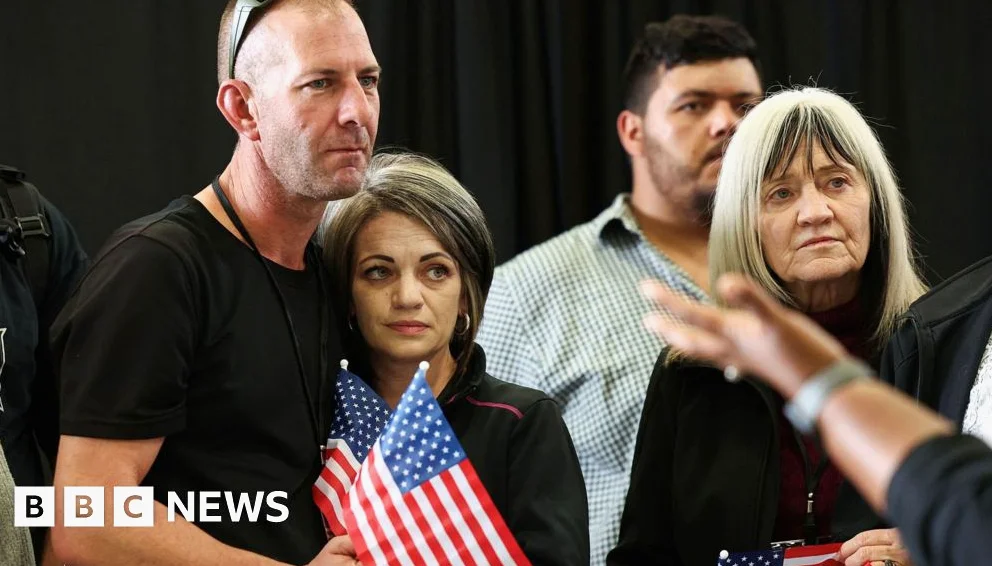
President Donald Trump’s revisions to U.S. refugee policies have significantly altered the demographics of individuals admitted into the country, as revealed by recent data from the Refugee Processing Center. Since October. 4,499 refugees have been resettled in the United States, with only three of them coming from Afghanistan, according to the source.
Shift in Refugee Admissions
The last full fiscal year of the Biden administration, which began in October 2023, saw 125,000 refugees accepted from 85 different countries, and this contrast sharply with the current situation, where the majority of those admitted since October are South African.
Under Trump’s policies. Refugee admissions were halted for most individuals, including those from war-torn regions; However, a specific exception was made for Afrikaners, a white minority group, whom Trump claimed were being persecuted. South Africa objected to this characterization, stating it was inaccurate and misleading.
When announcing the change, Trump stated that the policy would enhance national security and public safety; the priority was given to Afrikaner South Africans and ‘other victims of illegal or unjust discrimination in their respective homelands,’ according to an official announcement.
Rising Tensions Between the U.S. and South Africa
Diplomatic relations between the United States and South Africa have grown increasingly strained since Trump returned to the White House. Last year. South Africa’s ambassador to the U.S. ., Ebrahim Rasool, was expelled after accusing Trump of ‘mobilising a supremacism’ and attempting to ‘project white victimhood as a dog whistle.’.
Later in May. Trump confronted his South African counterpart, Cyril Ramaphosa, in the Oval Office. He claimed that white farmers in South Africa were being persecuted and were facing ‘genocide.’ Ramaphosa sought to refute Trump’s assertions, and John Steenhuisen, the white leader of the Democratic Alliance, supported him.
Steenhuisen told Trump that ‘certainly, the majority of South Africa’s commercial and smallholder farmers really do want to stay in South Africa and make it work.’
In October, the South African government criticized the U.S. decision to prioritize refugee applications from white Afrikaners. It noted that claims of a ‘white genocide’ had been widely discredited and lacked reliable evidence. An open letter was published by prominent members of the Afrikaner community, including academics, businesspeople, and descendants of apartheid-era figures, who rejected the narrative of persecution.
Resettlement of South African Refugees
The first group of 68 South African refugees arrived in the U.S. in May last year. Since then, the numbers have increased significantly, with 2,848 people arriving in the U.S. across February and March of this year. These individuals have been resettled across the United States, with the highest concentration—543 individuals—living in Texas.
South Africa’s response to the U.S. policy has been firm, emphasizing that the claims of persecution against Afrikaners are not supported by evidence. Some signatories of the open letter even called the relocation scheme racist, indicating a growing divergence in perspectives on the issue.
As the U.S. continues to admit a large number of South African refugees since October, the implications for both countries’ diplomatic relations and refugee policies remain under scrutiny.






Comments
No comments yet
Be the first to share your thoughts