

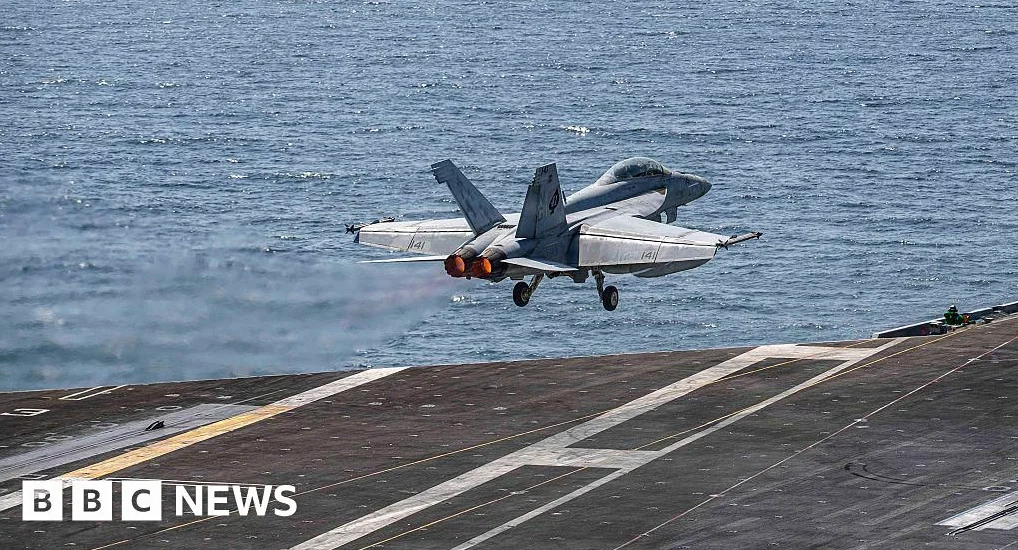
The US has struck Iranian targets for a second time in three days near Bandar Abbas, according to Centcom, amid a fragile ceasefire and stalled negotiations to end the three-month conflict in the Strait of Hormuz. Iranian media reported that explosions were heard to the east of the city. The renewed hostilities threaten the ceasefire and raise concerns about the region’s stability.
Escalation and Mutual Accusations
The US described the latest strikes as “measured, purely defensive, and intended to maintain the ceasefire.” Centcom said the site in Bandar Abbas was attacked as it was about to launch a fifth drone. Earlier this week, the US confirmed a previous round of “self-defence” strikes on southern Iran, targeting missile sites and boats attempting to lay mines in the Strait of Hormuz.
Iran condemned the strikes as “a grave violation of the ceasefire” and vowed that the government “will not leave any act of hostility unanswered.” According to Iranian state media, the Islamic Major Guard Corps (IRGC) claimed it had targeted a U.S. air base in response to the attacks near Bandar Abbas. The location of the air base was not disclosed.
Regional and Global Impacts
On Thursday, Kuwait’s army said its air defences were intercepting “hostile missile and drone threats,” without providing further details. The US also imposed sanctions on the “Persian Gulf Strait Authority,” the Iranian body tasked with collecting payments from ships passing through the Strait of Hormuz. The Treasury Department warned that any ships that pay the authority could also face sanctions.
One-fifth of the world’s liquefied natural gas and oil normally pass through the shipping channel, and its closure has impacted global fuel trade. Meanwhile, West Texas Intermediate (WTI) oil prices, which had risen for four days, halted their upward trend, trading around $102.80 per barrel. The Canadian dollar, sensitive to oil prices, faced downward pressure as a result.
Market Reactions and Diplomatic Efforts
On Monday, US President Donald Trump announced a five-day suspension of military strikes on Iranian power plants and energy infrastructure, which triggered a sharp drop in oil prices and gains in equity and crypto markets. Trump described the talks with Iran as “very good and productive” on his platform and said he had instructed the Department of Defense to hold off on planned attacks.
Financial markets remain cautious. The Euro remained flat against the US Dollar for the second consecutive day, trading at 1.1645 as investors awaited clarity from the US-Iran conflict. Market sentiment improved slightly as hopes of a negotiated end to the war persisted, with Tehran and Washington discussing a proposal to reopen the Strait of Hormuz.




1 Comment