

 The Guardian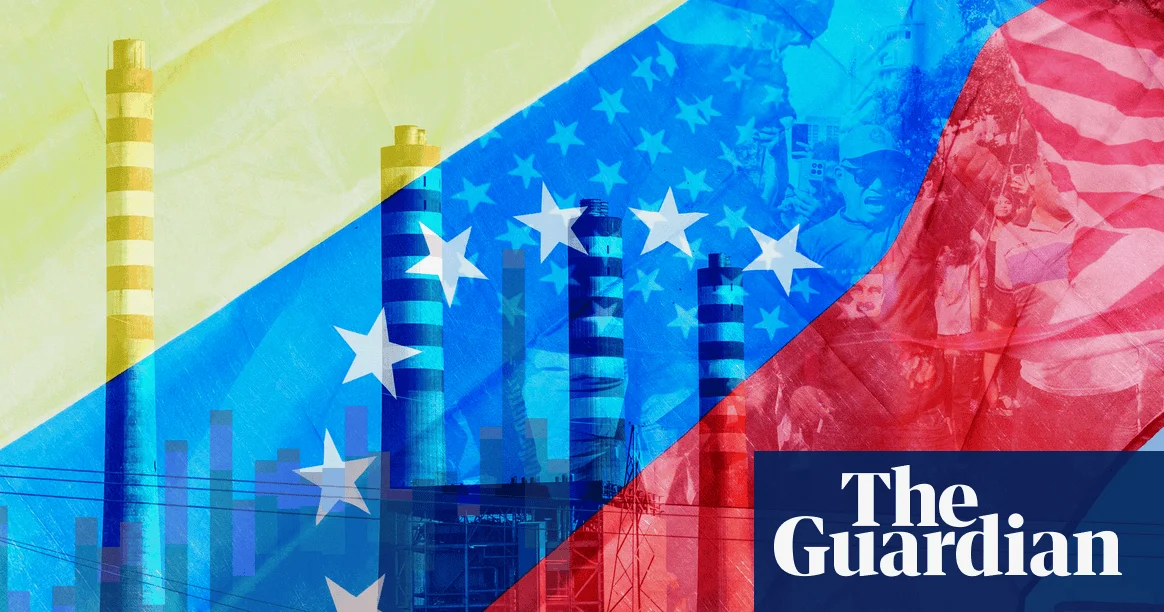
A mid-century US Department of State memo outlined the key factor in the US-Venezuela relationship: oil. ‘All US policies toward Venezuela are affected in greater or less degree by the objective of assuring an adequate supply of petroleum for the US,’ the 1950 document reads.
Oil as a Strategic Priority
Decades later, the US has again emphasized oil in its dealings with Venezuela. After a brazen kidnapping of the country’s leader earlier this year, Donald Trump announced that the US was taking majority control over about a fifth of Venezuela’s oil reserves. The White House described the deal as securing ‘our energy dominance for the next century.’
Venezuela has long been important to the US due to its vast oil reserves — the country, which now holds the world’s largest known oil reserves, provided fuel for US military operations during World War II. Washington and Caracas maintained a generally cooperative relationship in the following decades, with US energy companies heavily involved in Venezuela’s oil industry and reaping significant profits.
Strained Relations Under Chávez
Relations between the two countries began to deteriorate in 1999, when Hugo Chávez became president; a self-professed socialist and anti-imperialist, Chávez forged alliances and made oil deals with China, Iran, and Russia. Venezuela became a natural adversary of the US, aligning itself with Cuba in opposition to Washington.
Relations worsened when Chávez was briefly detained by his own military after a enforcement action on anti-government protests in 2002; the attempted coup lasted two days, and Chávez returned to power, accusing Washington of involvement in the failed takeover. In the years that followed, he deepened Venezuela’s reliance on oil exports and nationalized key oilfields, including those previously operated by US companies.
Under Chávez’s new terms, the state oil company was given control of a majority share, and foreign firms were offered only minority stakes, while Chevron agreed to the less favorable conditions, but ExxonMobil and ConocoPhillips refused and were effectively pushed out of the industry. The two companies engaged in a years-long legal battle with Venezuela for compensation, while the World Bank’s international centre for the settlement of investment disputes awarded them billions of dollars, but Venezuela has never paid the full amount.
Current Tensions and Trump’s Ultimatum
After Chávez’s death in 2013, Nicolás Maduro assumed power and continued an antagonistic policy toward the US — the UN estimated in 2019 that more than 20,000 Venezuelans had died in extrajudicial killings under Maduro’s rule. Key institutions, such as the judiciary, were weakened, and the rule of law deteriorated; the US has long portrayed the Maduro government as illegitimate, and a Washington-led sanctions campaign further exacerbated the country’s economic struggles.
Maduro maintained close ties with Moscow and Beijing, with about 80% of Venezuela’s crude oil exported to China before the US-imposed blockade in December; China, the world’s largest oil importer, accepted shipments as repayment for low-cost loans it had previously provided to Caracas.
Trump has repeatedly called for Maduro to be ousted, accusing him of sending drugs and criminals to the US, though experts say these claims lack evidence. Trump also claimed Maduro was stealing US oil, a reference to Chávez’s earlier nationalizations. In July last year, Washington announced a $50m (£37m) bounty on Maduro’s head, accusing him of being one of the world’s biggest drug traffickers.
Trump’s administration carried out airstrikes against alleged drug traffickers in the Caribbean Sea and seized Venezuelan tankers, while increasing the US military presence in the surrounding waters. In late November, Trump gave Maduro an ultimatum to relinquish power, offering him safe passage out of the country. Maduro refused, telling supporters he did not want ‘a slave’s peace’ and accusing the US of wanting control of his country’s oil reserves.
In January, US forces carried out a pre-dawn raid on Caracas, capturing Maduro and his wife, Cilia Flores, who are now on trial in New York. Venezuela’s acting president, Delcy Rodríguez, initially condemned Maduro’s capture as a kidnapping, but has since indicated a willingness to work with Washington.
Following the abduction, Trump announced the US would take control of Venezuela’s oil industry. In August, after months of secret talks, the US president revealed an agreement to control millions of barrels of oil. A White House press release described the deal as the ‘biggest oil deal in world history,’ granting the US government ‘powerful governance rights’ over the reserves. The press release also claimed that private-sector growth would help drive a democratic transition in Venezuela, though few in Caracas are optimistic. Rodríguez has defended the agreement against claims she is surrendering Venezuela’s natural resources to a foreign power.
Francisco Rodríguez, a prominent Venezuelan economist, criticized the deal as ‘predatory’ and ‘done at gunpoint.’ He stated that Washington’s actions in Venezuela had turned the country into ‘a protectorate in all but name.’ ‘Trying to run a country from the capital of an imperial power has been tried before,’ he said. ‘And it has not ended well.’

Comments
No comments yet
Be the first to share your thoughts