

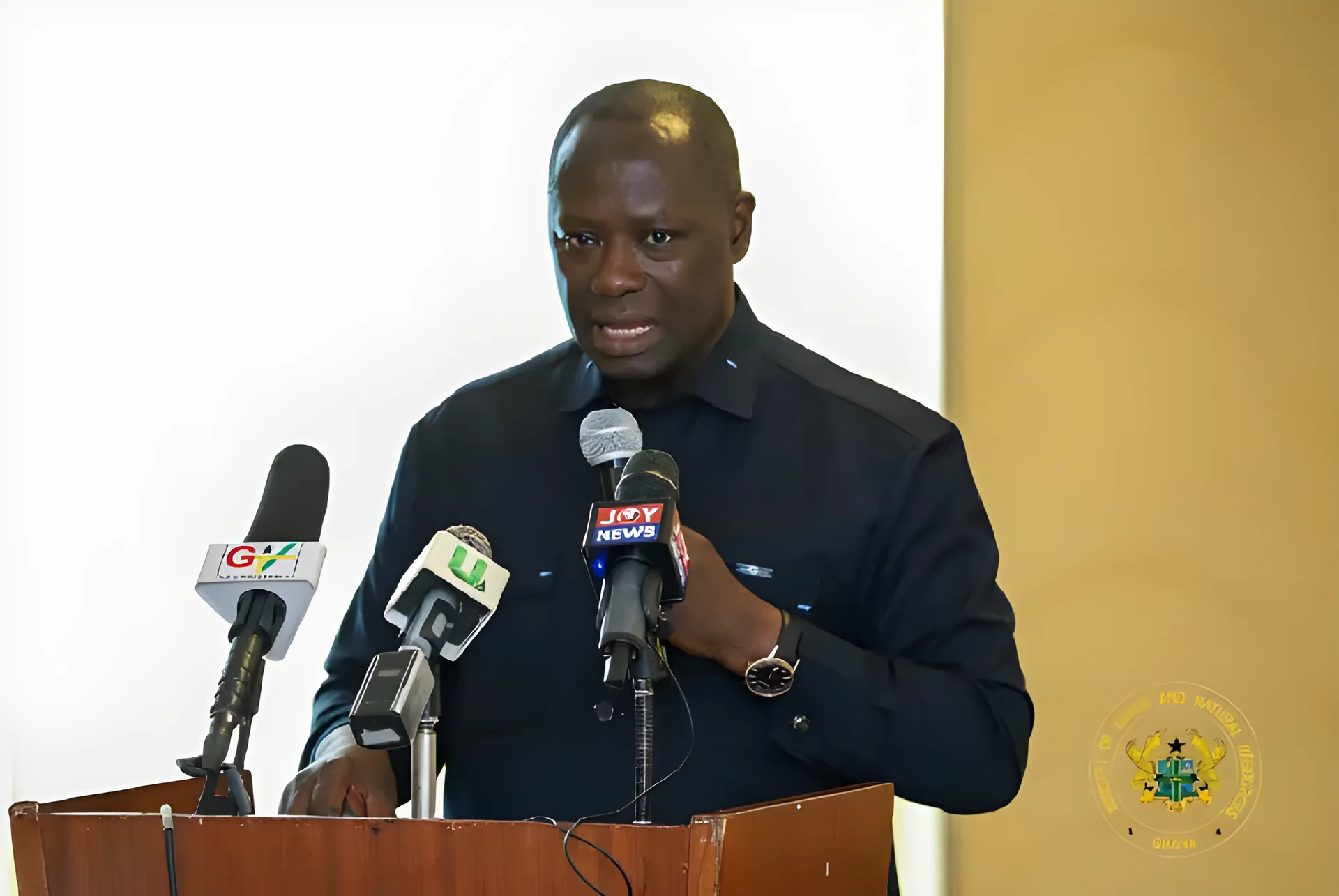
Ghana’s Minister of Lands and Natural Resources, Emmanuel Armah-Kofi Buah, has committed to the full development of the Petroleum Hub project, emphasizing its importance for the country’s energy security and employment opportunities. Speaking on Wednesday, February 25, 2026, Buah assured stakeholders that the government, through the Petroleum Hub Development Corporation (PHDC), is on track to realize the vision of transforming the Jomoro Municipality into a regional energy hub.
Strategic National Priority
During a meeting with a PHDC delegation, Buah highlighted that the Petroleum Hub project is a strategic national priority, capable of repositioning Ghana within the global energy value chain. The minister noted that the government has provided a clear roadmap for the project since taking office, ensuring that the initiative remains on course for implementation.
“The project is not only about energy but also about industrialization and sustainable development,” Buah said. “It will serve as a catalyst for broad-based industrialization in the region.”
The minister also acknowledged the importance of resolving land and regulatory issues to enable the commencement of construction work. He assured that the Ministry of Lands and Natural Resources will continue to collaborate with relevant stakeholders to create an enabling environment for investors.
Private Sector Collaboration and Funding
Dr. Toni Aubynn, CEO of the Petroleum Hub Development Corporation, expressed appreciation for the government’s support and strategic guidance. He confirmed that PHDC is actively engaging with investors to secure forward funding for the first phase of the project, known as Lot One.
“We are working closely with relevant agencies to secure the necessary land and are in active discussions with potential investors to fund the project,” Aubynn said. “This is a critical step in ensuring the success of the Petroleum Hub.”
Aubynn also commended the Paramount Chief of the Western Nzema Traditional Area and the residents of the region for their patience and unwavering support for the initiative. He emphasized the project’s role in guaranteeing Ghana’s energy security and creating sustainable livelihoods for over 700,000 Ghanaians.
The PHDC delegation included key officials such as Deputy CEO for Operations and Technical, Onasis Rosely; Deputy CEO for Finance and Administration, Halimatu Sadia Abdulai; Director of Legal Affairs, Enoch Aboagye Larbi; Director of Operations and Technical, Kwabena Owusu-Abrokwa; and Advisor on Strategy and Sustainability, Dr. Kwame Baah-Nuakoh.
Implications for Ghana’s Economy and Energy Sector
The Petroleum Hub project is part of a broader economic strategy aimed at diversifying Ghana’s energy mix and reducing reliance on imported fuel. If completed, it is expected to generate thousands of jobs and boost local industries through downstream processing of oil and gas.
Analysts have noted that the success of the project will depend on timely resolution of land disputes and regulatory challenges. According to recent reports, delays in these areas have affected similar energy projects in the region, highlighting the need for continued government and private sector collaboration.
The project also aligns with Ghana’s broader energy security goals, which include increasing domestic refining capacity and reducing the country’s vulnerability to global oil price fluctuations. With an estimated $500 million investment, the Petroleum Hub is expected to be completed in phases over the next decade.
As the project moves forward, the government has set a deadline for the completion of key preparatory work by the end of 2027. This includes finalizing land acquisition, securing environmental clearances, and initiating infrastructure development in the Jomoro area.
For ordinary Ghanaians, the Petroleum Hub represents not only an economic opportunity but also a step toward energy independence. The project is expected to reduce the country’s dependence on imported petroleum products, lower energy costs, and provide a stable supply of fuel for industries and households.
The success of the project will be closely watched by both domestic and international investors, as well as civil society groups, who have been vocal about the need for transparency and community engagement in such large-scale developments.






Comments
No comments yet
Be the first to share your thoughts