

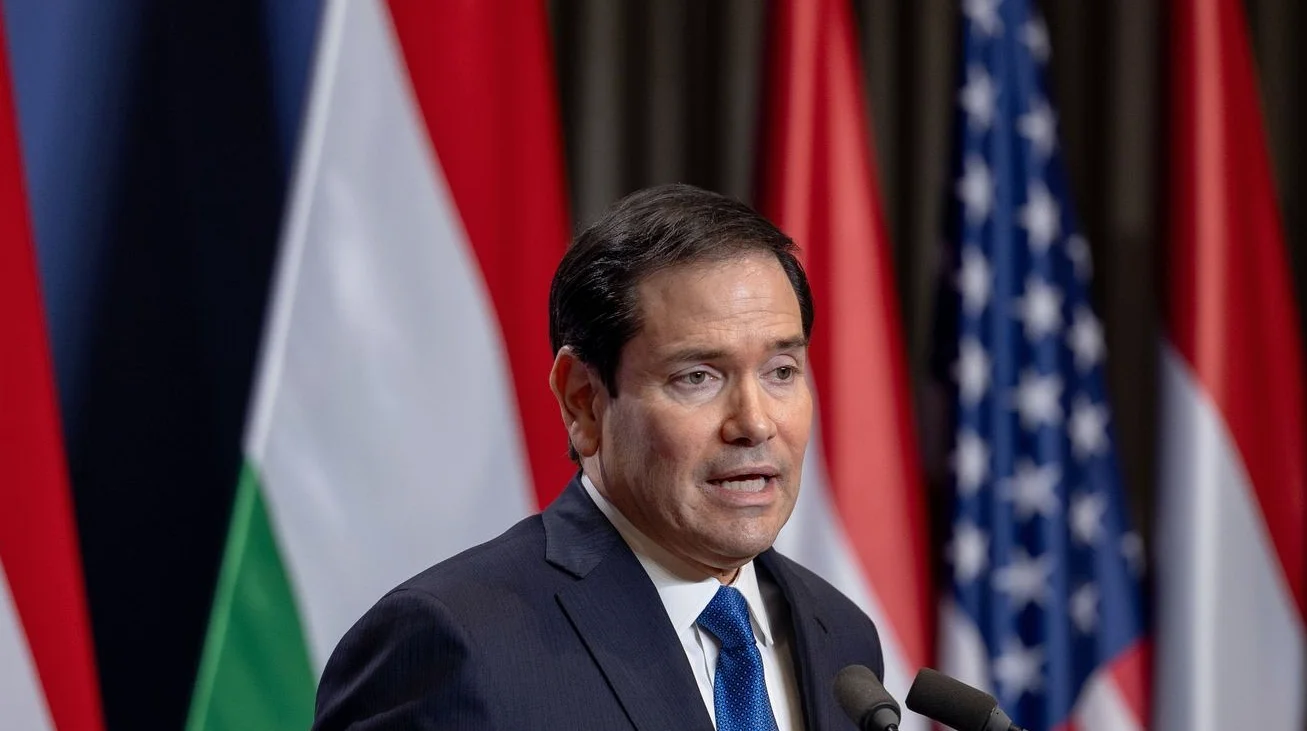
The White House has denied claims that former Senator Marco Rubio stated Israel dragged former President Donald Trump into a war with Iran, following a viral social media post. White House press secretary Karoline Leavitt addressed the controversy on Tuesday, refuting the assertion that Rubio made such a claim.
The Viral Post and Its Origins
A tweet from the Rapid Response 47 account went viral on Monday, featuring a clip of Rubio discussing Israeli actions in the Middle East. The post claimed that the former senator suggested Israel’s actions precipitated the U.S. strike on Iran. The tweet read, ‘The president made the very wise decision — we knew that there was going to be an Israeli action, we knew that that would precipitate an attack against American forces, and we knew that if we didn’t preemptively go after them before they launched those attacks, we would suffer higher casualties.’
This clip was widely shared by commentators critical of the U.S. military action against Iran. However, Leavitt took to X (formerly Twitter) to clarify the situation, stating, ‘No, Marco Rubio Didn’t Claim That Israel Dragged Trump into War with Iran.’
Rubio’s Clarification on the Record
In response to questions about the U.S. strike on Iran, Rubio was seen in a video stating that the operation was not a result of Israeli actions. ‘No… No matter what, ultimately, this operation needed to happen — that’s the question of ‘why now?” he said when asked if Israel had dragged the U.S. into the conflict.
Rubio explained the necessity of the strike, stating, ‘But this operation needed to happen because Iran, in about a year or a year and a half, would cross the line of immunity, meaning they would have so many short-range missiles, so many drones, that no one could do anything about it because they could hold the whole world hostage.’
Leavitt included a separate clip from the same source showing Rubio’s full response, which clarified that the U.S. strike was not a reaction to Israeli actions but a strategic decision based on Iran’s growing military capabilities.
Context of the U.S.-Iran Conflict
The recent U.S. and Israeli strikes on Iran occurred amid growing concerns over the Middle Eastern nation’s missile and drone development. In late April, the U.S. and Israel launched coordinated attacks on Iran, targeting sites linked to its military and missile programs.
In response, Iran launched retaliatory strikes, which reportedly affected multiple countries in the region. The conflict has raised concerns about regional stability and the potential for further escalation. According to the U.S. Department of Defense, the strikes were conducted in response to Iran’s increasing capabilities, which were seen as a threat to global security.
The U.S. military has stated that the strikes were aimed at degrading Iran’s ability to threaten American personnel and interests in the region. However, the conflict has sparked debate over the role of Israel in the situation and whether its actions prompted the U.S. response.
What’s Next in the Region
With tensions continuing to rise, experts are closely monitoring the situation for further developments. The U.S. and Iran have yet to reach a resolution to the conflict, and the involvement of other regional powers adds complexity to the situation.
According to analysts, the next steps may involve increased diplomatic efforts or further military actions. The U.S. has scheduled a series of high-level meetings with its allies in the Middle East to address the crisis. Additionally, Iran is expected to continue its retaliatory measures unless a diplomatic solution is found.
The White House has not yet commented on the possibility of further military actions, but officials have emphasized the need for de-escalation. Leavitt has stated that the administration is focused on protecting American interests and maintaining regional stability.
The controversy over Rubio’s remarks highlights the complexity of the U.S. foreign policy stance in the Middle East and the challenges of managing relationships with both Israel and Iran. As the situation continues to unfold, the impact on regional security and global diplomacy remains a critical concern.





1 Comment