

 BBC
BBC 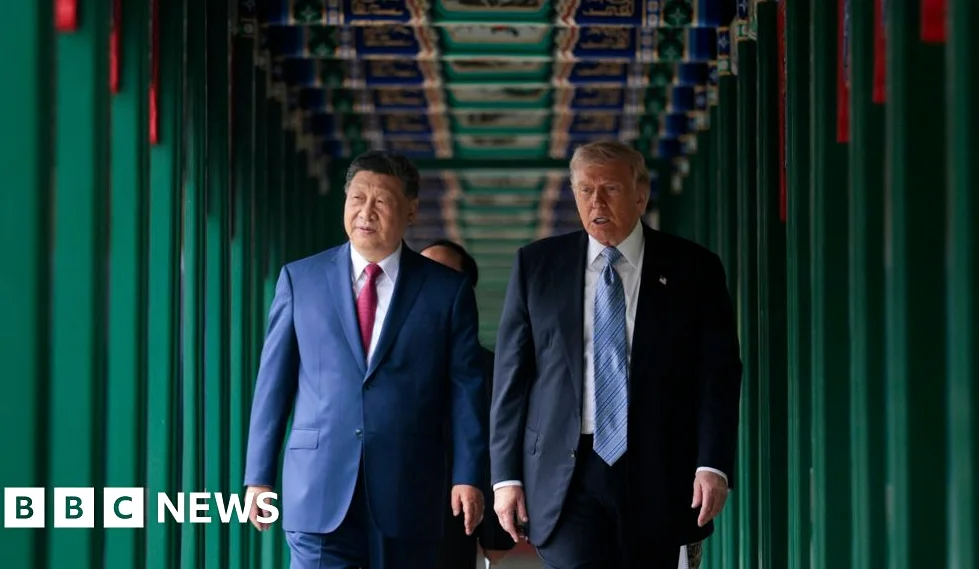
A Symbol of Power and Prestige
U.S. President Donald Trump’s visit to Beijing ended with a tour of Zhongnanhai, the exclusive, heavily guarded 14th Century compound where top Chinese leaders live and work, according to BBC. The visit was marked by pageantry, with limited details on policy agreements between the two nations. This much-anticipated summit followed tensions over trade and the Iran war, yet both leaders appeared conciliatory, with Trump calling his visit ‘incredible.’ Xi described it as a ‘new bilateral relationship’ and promised to send Trump seeds of the Chinese roses they admired during their stroll, to which Trump replied: ‘I love that, it’s great.’
A Historic and Exclusive Location
Zhongnanhai, located about 20km east of Tiananmen Square, is widely regarded as China’s White House. Originally used as a secondary residence for Chinese emperors, the compound is prized for its lakes and manicured gardens. It became the seat of power for China’s Communist government in 1949. Today, it is one of the most politically significant landmarks in Beijing, and an invitation to it for foreign dignitaries is often seen as an honor and a sign of closeness. When Trump asked about other foreign leaders who had been inside the compound, Xi said it’s ‘extremely rare,’ before adding that Russian leader Vladimir Putin had been there. Belarus’s president Alexander Lukashenko also visited Zhongnanhai last year.
Shared Praise and Unspoken Agreements
U.S. presidents have previously visited the compound too, including Barack Obama, George W. Bush, and Richard Nixon during his historic 1972 trip. During Trump’s tour on Friday, he paused to admire ‘the most beautiful roses anyone has ever seen’ and trees, which Xi said were 200 to 400 years old. ‘They live that long?’ Trump asked. ‘Yes, there are also 1,000-year-old trees in other places,’ Xi replied. Hours before their walk in Zhongnanhai, Fox News aired a pre-recorded interview with Trump, in which he praised Xi as ‘warm’ and ‘very smart.’
Xi had pledged not to provide Iran with military weapons, Trump told Fox News host Sean Hannity. ‘But at the same time, he said they buy a lot of their oil there, and they’d like to keep doing that,’ Trump added. ‘He’d like to see Hormuz Strait open.’ While Chinese authorities have not commented on Trump’s claims, its foreign ministry released a statement saying Beijing has been working tirelessly to help end the conflict—an acknowledgment that officials are working behind the scenes to nudge Iran toward the negotiating table.
China is the largest buyer of Iranian oil and the country’s biggest trade partner. So the Trump administration had hoped Xi would use this economic and political tap into to nudge Tehran towards the negotiating table. Despite the fragile trade truce on the agenda, Iran emerged as a more pressing matter in recent months. But Trump told Fox News that the trade talks had gone ‘better than last time.’ He also said the business leaders he had brought along to Beijing were there to ‘make deals’ and ‘bring back jobs.’
Trump said China had agreed to buy U.S. oil, 200 Boeing jets and ‘a lot of our farm product’—though later on Friday China’s foreign ministry sidestepped questions about agricultural deals and the Boeing purchases. China has emphasized what it calls ‘a series of new consensuses’ but it has not explained what those agreements are. Analysts say Beijing’s global standing has grown in recent years as it expanded trade with countries beyond the U.S. to protect itself from Trump’s tariffs. The U.S. president’s visit follows that of world leaders from Britain, Canada, and Germany who have been keen to do business with Beijing.
A second summit has appeared on the calendar after Trump invited Xi to the White House in September. ‘You’re gonna walk away hopefully very impressed, like I’m very impressed with China,’ he said on Friday, after his tour ended.
Comments
No comments yet
Be the first to share your thoughts