

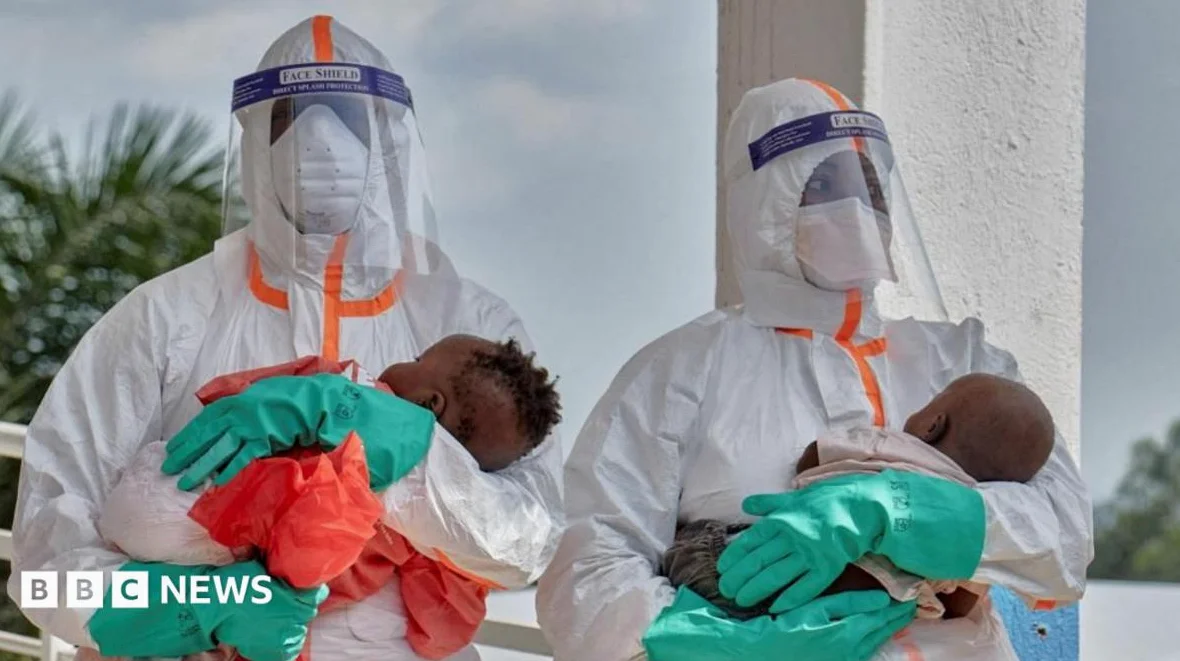
According to the World Health Organisation (WHO), the current Ebola outbreak in the Democratic Republic of the Congo (DRC) has claimed over 1,000 lives, making it the deadliest in the country’s history. As of Monday, the DRC health ministry reported 2,473 confirmed cases, with at least 737 patients currently in isolation or hospitalisation. The outbreak, which was declared on May 15 after several deaths were recorded in the northeastern Ituri province, has surged faster than any previous Ebola outbreak on record.
Escalating Death Toll
The death toll has now exceeded 1,000 in less than 10 weeks — a rate faster than the 2013,2016 West African epidemic, which took about eight months to reach the same number of deaths. Jean Kaseya, the director general of the Africa Centres for Disease Control and Prevention, warned on Tuesday that if current trends continue, this outbreak could become the worst in history. “If we don’t stop the outbreak very soon, it will be worse than what we had in West Africa and eastern D.R.C.,” he said at an emergency conference for African leaders.
According to the WHO, the current outbreak has already surpassed the previous largest in the DRC — the 2018,2020 epidemic, which had nearly 3,500 recorded cases and almost 2,300 deaths. During the past week alone, the outbreak reached its highest weekly total with 567 cases and 296 deaths, according to WHO data. The organisation warned these figures highlight the “exceptional pace of transmission.”
Challenges in Containment
Thierno Balde, the WHO incident manager for the Bundibugyo strain in the DRC, told reporters that despite efforts to contain the virus, “the outbreak remains ahead of us and we are still in a phase of catching up.” The virus spreading in the DRC is the Bundibugyo strain, which is the rarest of the four known to affect humans and currently has no approved vaccines or treatments. Kaseya added, “These are people dying. They are dying because we don’t have vaccines, we don’t have medicine, we don’t have funding.”
Compounding the situation, the WHO cited factors like insecurity, population displacement, and cross-border movement as major challenges in containment efforts. The outbreak has spread to multiple provinces, including Ituri, North and South Kivu. The latter provinces are partially controlled by the Rwanda-backed M23 armed group. According to the WHO, these conditions “complicate response operations and increase the risk of further geographical spread.”
There have been 20 confirmed cases in Uganda and one in France, while two DRC cases were treated in Germany. According to the Africa Centres for Disease Control and Prevention, the outbreak has already recorded more than 800 confirmed cases and nearly 200 deaths. Jean Kaseya warned that the outbreak could last as long as a year and infect thousands of people if current transmission rates continue.
Lack of Effective Tools
Currently, no approved vaccines or treatments exist for the Bundibugyo strain. However, the BBC reported that vaccines are being developed in the UK and Singapore. Over the last 50 years, the Ebola virus has killed 15,000 people across Africa, according to the WHO. The deadliest outbreak occurred between 2014 and 2016 in West Africa, where the virus killed over 11,000 people out of at least 28,000 cases in Guinea, Liberia, and Sierra Leone.
With the current outbreak showing no signs of slowing, the WHO has urged immediate action to prevent further spread. “The Ebola outbreak is escalating at an alarming pace. We must act now,” Kaseya said on X. “If we do not stop it today, this will become the worst outbreak the world has ever documented.”






Comments
No comments yet
Be the first to share your thoughts