

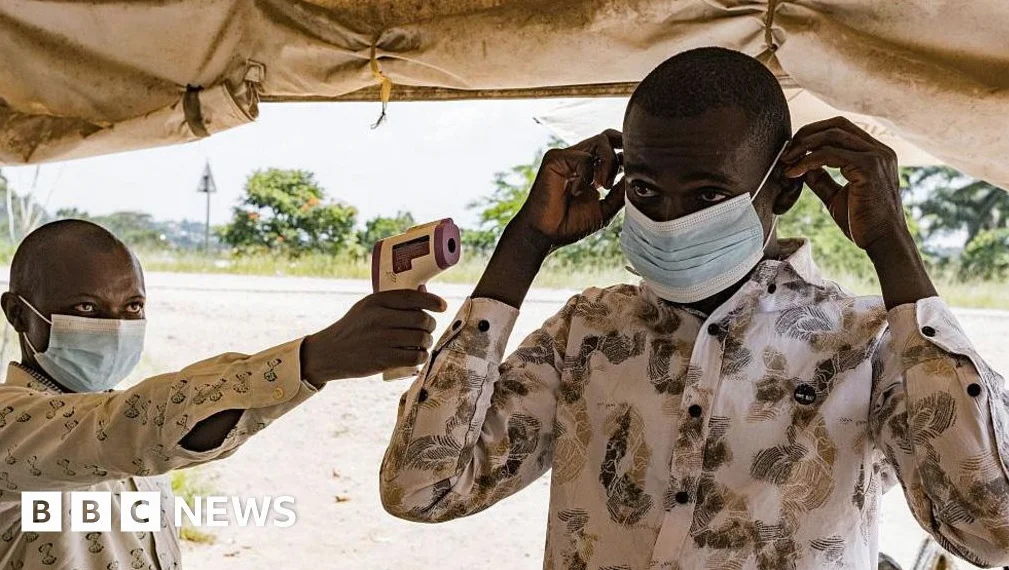
According to the World Health Organization (WHO), it could take up to nine months before a vaccine against the Bundibugyo species of Ebola is ready for use, the agency warned on Wednesday. Two possible “candidate vaccines” are currently under development, but neither has gone through clinical trials yet, Dr. Vasee Moorthy, a WHO advisor, said.
Confirmed Cases and Rising Concerns
WHO Director-General Dr. Tedros Adhanom Ghebreyesus reported there have been 600 suspected cases of Ebola and 139 suspected deaths. These numbers are expected to rise as the virus is difficult to detect early. Out of these cases, 51 have been confirmed in the Democratic Republic of Congo (DRC), where the first case was reported, and two in neighboring Uganda. Both Ugandan cases had traveled from DRC, and one has died.
Tedros stated that after meeting on Tuesday, the WHO’s emergency committee concluded the situation is “not a pandemic emergency.” He explained, “WHO assesses the risk of the epidemic as high at the national and regional levels and low at the global level.”
Challenges in Containing the Outbreak
The confirmed cases in DRC are concentrated in the eastern Ituri and North Kivu provinces, with the epicenter in Ituri. The first known case was a nurse who developed symptoms and died on 24 April in Bunia, Ituri’s provincial capital. The nurse’s body was repatriated to Mongwalu, one of two gold-mining towns where the majority of cases have been reported.
Trish Newport, a Medecins Sans Frontieres (MSF) emergency programme manager, described the strain on local health facilities, stating they are “full of suspect cases” and lack the space to accommodate more patients. Local health workers have also reported being overwhelmed despite the recent arrival of personal protective equipment.
“We are full of suspect cases. We don’t have any space,” one facility reportedly told MSF. Araali Bagamba, a lecturer in Bunia, noted that people are now avoiding physical contact, such as handshakes, to reduce the risk of transmission. “It’s our habit to shake hands all the time… [but] the habit has changed,” she said.
Development of Potential Vaccines
There is no approved vaccine for the Bundibugyo species of Ebola, which has not been seen for more than a decade. However, experimental vaccines are in development. One candidate vaccine currently under development is said to be the equivalent of the only approved vaccine currently available, which targets the Zaire species. According to Moorthy, it could be six to nine months before this vaccine is ready.
The second possible vaccine is based on the same platform as the AstraZeneca vaccine used for Covid-19. It is currently being manufactured, but there is no animal data to support its effectiveness. Moorthy said it is possible that doses could be available for clinical trials in two to three months, but the outcome will depend on the results of animal trials to determine whether it can be considered a promising candidate vaccine for Bundibugyo.
The Bundibugyo species is known to have caused two previous outbreaks, in Uganda in 2007 and DRC in 2012, killing about a third of those infected. While less deadly than other Ebola species, its rarity means there are fewer tools to combat it. There are also no specific drugs available to treat Bundibugyo, which complicates treatment efforts.
Following criticism from the U.S. that the WHO was “a little late” in identifying the outbreak, Ghebreyesus suggested these comments may stem from a lack of understanding. He emphasized the challenges in identifying the outbreak in a complex setting.
Initial symptoms of Ebola are similar to those of other common diseases in DRC, such as malaria and typhoid, making early detection difficult. The eastern part of the country is also dealing with years of conflict, which adds further challenges to containing the virus.






Comments
No comments yet
Be the first to share your thoughts