

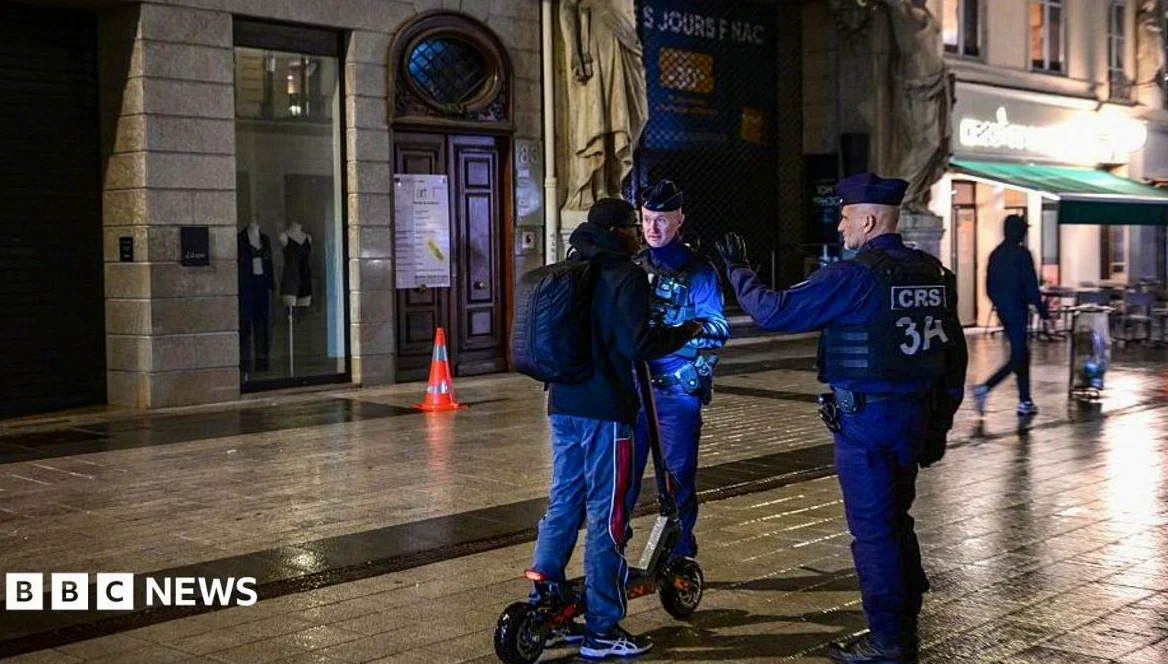
Prime Minister Sébastien Lecornu said the government was “fully resolved to restore public order” and called for “local and partial” curfews in areas most affected by the unrest. In Paris, the curfew was enforced in Place de la République and the shopping district of Les Halles from 11 p.m. to 6 a.m. Similar restrictions were announced in Marseille, Nice, Lyon, and Lille, with some curfews targeting minors.
The protests, which began with student-led demonstrations over school conditions, escalated into widespread violence involving trade unions and other groups. Over 500,000 people took to the streets, with more than 2,500 arrests and nearly 1,000 police and gendarmes injured. At least 3,000 businesses were looted or damaged, including public buildings such as the 19th-century town hall in Limoges, which was set on fire and partially collapsed. “No one was killed and that is a miracle,” Lecornu said.
Interior Minister Laurent Nuñez admitted that police had “lost control” in some cities during the protests. He attributed the failure to a “lack of anticipation” and insufficient police numbers, acknowledging that intelligence had predicted 200,000 demonstrators but the actual turnout was more than double that. Nuñez tendered his resignation on Sunday, but President Emmanuel Macron refused it, demanding instead that he “take all necessary steps to ensure transparency over planning and intelligence failures.”
Macron blamed “troublemakers from far-left fringe groups” for the violence, stating, “Nothing justifies it, nothing explains it, nothing excuses it.” He added that “those who sought to bring down the Republic will be held accountable.” Meanwhile, far-right presidential candidate Marine Le Pen criticized Macron’s administration as “exhausted, disoriented and seemingly incapable of doing anything other than commenting on its own powerlessness.”
The damage from the riots is estimated at “hundreds of millions of euros,” according to Alain Di Crescenzo, head of France’s Chambers of Commerce and Industry. Shop owners in Marseille reported “deep distress” and fears for their survival. The government announced a partial unemployment fund for those affected by the riots and a law to recover damages from those responsible. “There will be a law that will be put in place to find ways of making sure that those who have damaged properties will have to pay,” Lecornu said.
Macron’s government has faced growing criticism for its perceived detachment from public concerns. The president attended a Céline Dion concert and embarked on a Gulf tour to secure oil supplies, fueling anger among citizens struggling with rising living costs. Political scientist Sylvain Brouard said Macron “looks like a spectator” and that people are expecting “solutions.”
Comments
No comments yet
Be the first to share your thoughts