

 BBC
BBC 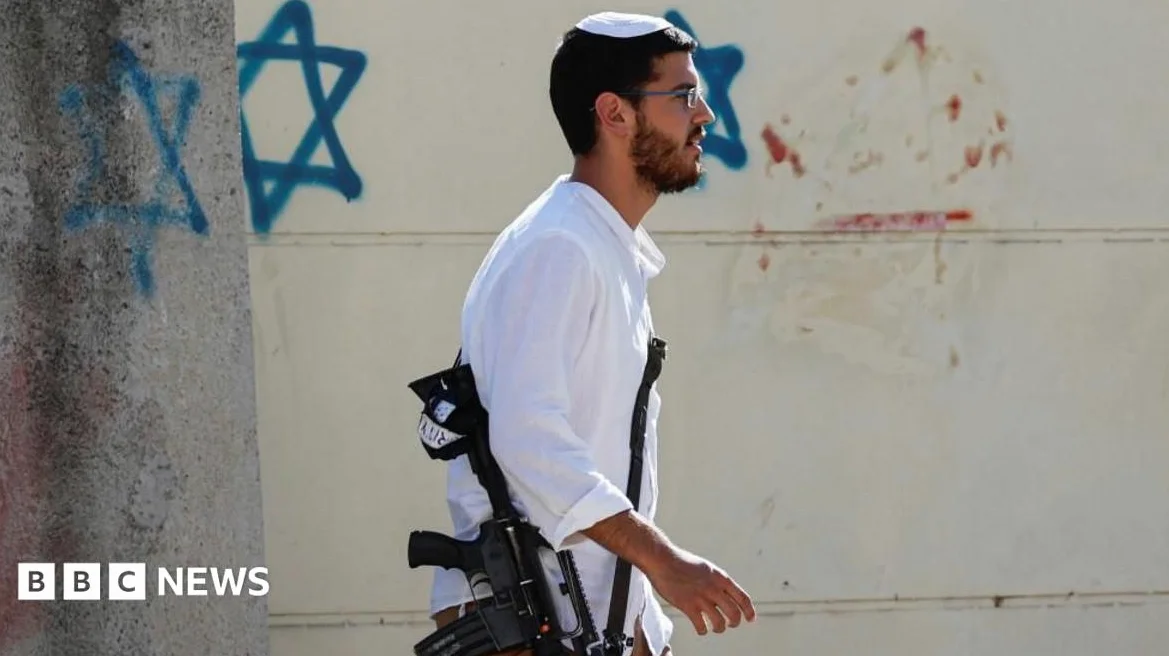
Thirty ‘pioneer families’ have returned to the West Bank settlement of Kadim, two decades after it was closed by a previous Israeli government, according to the regional settlers’ council. They arrived on Thursday, riding a wave of Jewish nationalism driven by Israel’s current government.
Settlers Return with Military Support
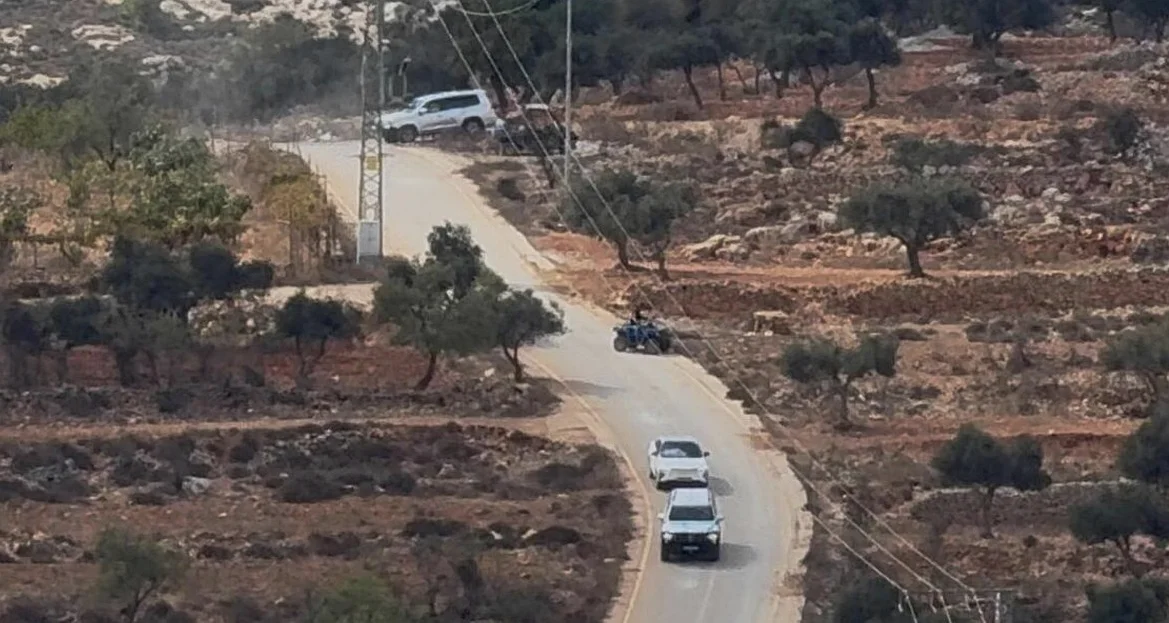
The settlers arrived in small groups, some under military escort, with Israeli flags fluttering from their vehicles as they passed Palestinian villages and farmlands. Some families brought trailers filled with bedding, furniture, and building materials. Kadim, located on a hillside outside Jenin, was evacuated in 2005 as part of Israel’s unilateral Disengagement Plan, which also saw the removal of settlers from Gaza and three other northern West Bank settlements.
At the time, the four settlements were considered too isolated and costly to protect, with little strategic value. In recent weeks, white trailer homes have reappeared on the hilltop, signaling the return of families. Media were not allowed to enter the settlement for the opening ceremony.
International Law and Political Rhetoric
All Israeli settlements and settler outposts are illegal under international law, and outposts are also illegal under Israeli law, though many receive state support. Israel’s far-right Finance Minister Bezalel Smotrich, speaking at the opening ceremony, said, ’21 years after the crime of expulsion from northern Samaria, we have completed the correction […] and have returned to the settlement of Kadim.’
Smotrich was joined by Israel’s Justice Minister, the Speaker of the Knesset, and Yossi Dagan, head of the regional settlers’ council, who vowed that settlers would one day return to Gaza as well. The current government overturned a 21-year ban on Jewish settlements around Jenin.
Kadim is the last of the 2005 evacuated settlements to reopen. Ganim, Sanur, and Homesh have already been formally opened, with families moving in. However, these are small in comparison to the Israeli government’s broader settlement project. Since taking power in late 2022, the government has approved more than 100 new settlements across the West Bank, including 19 in the northern West Bank.
Local Reactions and Rising Tensions
Palestinian residents are watching the new push on settlement expansion with fear. A Palestinian vegetable farmer, who has lived in the same house for 53 years, expressed concern. ‘Back then, the settlers were living alongside us, and we coexisted peacefully,’ he said. ‘Now, watching them return, I’m fearful.’
He recalled how the settlers were forced out in 2005, saying, ‘They drove my nephews away from their vegetables and citrus trees, telling them ‘you have no place here, don’t come back.’ He added, ‘There’s no more displacement left in me. We’re living with a sense of resignation. It’s a life of fear.’
Hagit Ofran, director of the Settlement Watch programme at Peace Now, said the rapid construction in Jenin is part of a wider race by the Israeli government to expand settlements in the West Bank before Israeli elections in October. One such settlement is Emek Dotan, formally opened last Sunday and now home to almost two dozen Jewish families.
Teacher Samer Jaber, living in a small Palestinian hamlet near Emek Dotan, described the encroachment: ‘Groups come and stand opposite our houses, filming us,’ he said. ‘They try to enter our homes. And they go house by house, shining powerful floodlights directly through all the windows at two or three in the morning.’
Samer, who is partially blind and has a leg injury, added, ‘Fear dominates everything. We are completely defenceless. All of them have weapons. I’m bringing concrete blocks to close off this side of the house because I’m afraid for my children.’
He reflected on the lack of international attention: ‘Europe has no time for us, America is preoccupied with Iran, China has no interest. Russia is busy with Ukraine, the United Nations is finished, and the Arab countries have their own internal problems.’ He concluded, ‘Democratic systems are over, they’re finished. Civilisation, progress and modernity are lies.’
Alongside the new settlements, two new Israeli military bases are being constructed near Jenin, with high concrete walls, watchtowers, and barbed wire. A military outpost is also being built on seized Palestinian land beside Jenin Refugee Camp—the first Israeli military base to be built on land under full Palestinian Authority control since the 1993 Oslo Accords.
The Israel Defence Forces confirmed that construction of the outpost in Jabriyat had been ordered ‘in accordance with operational needs.’ Palestinian Authority Governor for Jenin, Kamal Abu al-Rub, expressed concern that the land seizure around the refugee camp signals a plan to house settlers there, right in the heart of a Palestinian city, dividing it up like Hebron or Jerusalem.
He described the past two decades without settlers around Jenin as ‘bliss.’ ‘Now, we live in the hell orchestrated by them and their assaults,’ he said. ‘It limits our movement. They cut off roads, bulldoze lands and cut down trees.’
The pace of change has been rapid. A few weeks ago, the area was home to a café and dozens of Palestinian shops and businesses, now reduced to rubble after being demolished by the Israeli army. The countdown to Israeli elections in October is marked by the number of Palestinian buildings demolished and new settler caravans.




Comments
No comments yet
Be the first to share your thoughts