

 BBC
BBC 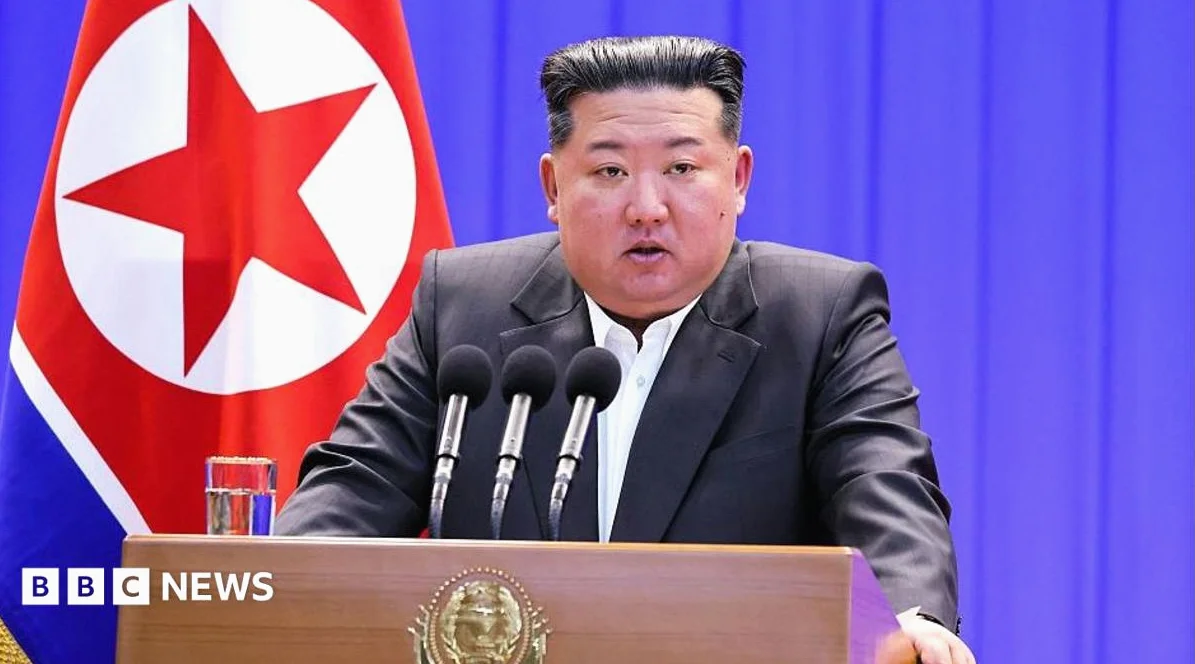
North Korea has built a new two-storey uranium enrichment facility, the head of the world’s nuclear watchdog said this week, according to the BBC, and the new building is part of the main Yongbyon nuclear complex and reportedly capable of housing up to 28 centrifuge cascades used to enrich uranium.
Expansion of Nuclear Infrastructure
In a report published late last month, the International Atomic Energy Agency said Pyongyang has also begun operating an expanded annex at another enrichment site, as these findings point to a steady expansion of the North’s sanctioned nuclear infrastructure. The agency, which has no inspectors in North Korea since it was expelled in 2009, relies on satellite imagery for assessments.
The IAEA director Rafael Grossi said in a statement earlier this week, ‘The continuation and further development of the DPRK’s nuclear programme are clear violations of relevant UN Security Council resolutions and are deeply regrettable.’
Concerns Over Concealed Sites
The IAEA first referred to the existence of the building in June, although Grossi had mentioned the possibility earlier in the year. In June, the agency said that North Korean leader Kim Jong Un visited a ‘newly inaugurated nuclear materials production factory’ on 3 June, which it identified as the Yongbyon enrichment facility.
Kim had praised the country’s ‘greatly expanded production capacity,’ adding that this would ‘offer the possibility of carrying out larger plans,’ according to the agency’s report. Despite running one of the poorest countries in the world, Kim spends millions each year developing a secretive nuclear arsenal, and a 2022 report by a non-proliferation think-tank put this figure at $640 million.
Edward Howell, a lecturer at the University of Oxford, told the BBC, ‘What makes North Korea’s nuclear programme so concerning is that many of its facilities are unknown, concealed, and thus difficult to target.’ Beyond Yongbyon, Howell added, other facilities exist, such as Kangson. He noted that the embeddedness of North Korea’s nuclear doctrine within its foreign and domestic policy means that more concealed production sites should be expected.
Indications of Further Expansion
The agency also said there were indications that operations had started at another enrichment facility in Kangson, near the capital Pyongyang, in January this year, and an annex had first been constructed in Kangson in 2024, it said. In April, the IAEA reported that North Korea appeared to be stepping up its ability to make nuclear bombs, saying they were monitoring the apparent expansion of Yongbyon.
The North’s nuclear programme has accelerated under Kim, who has overseen a record number of missile tests; the country has fired numerous intercontinental ballistic missiles (ICBMs) since it began testing its long-range system in 2017. It has conducted six nuclear weapons tests so far, the last of which was in September 2017.
In August, South Korea’s president, Lee Jae Myung, proposed talks with North Korea on officially ending the war between the two countries, adding that this could serve as a forum for discussing ‘effective ways to halt the advancement of the North’s nuclear capabilities.’ North Korea has yet to respond to the proposal.
North Korea declared itself a nuclear power in 2022 and vowed never to relinquish its weapons, of which it is estimated to possess dozens. Lee previously said Pyongyang was producing 15 to 20 more warheads annually, telling the BBC last year he would back a deal between US President Donald Trump and Kim to freeze production.

Comments
No comments yet
Be the first to share your thoughts