

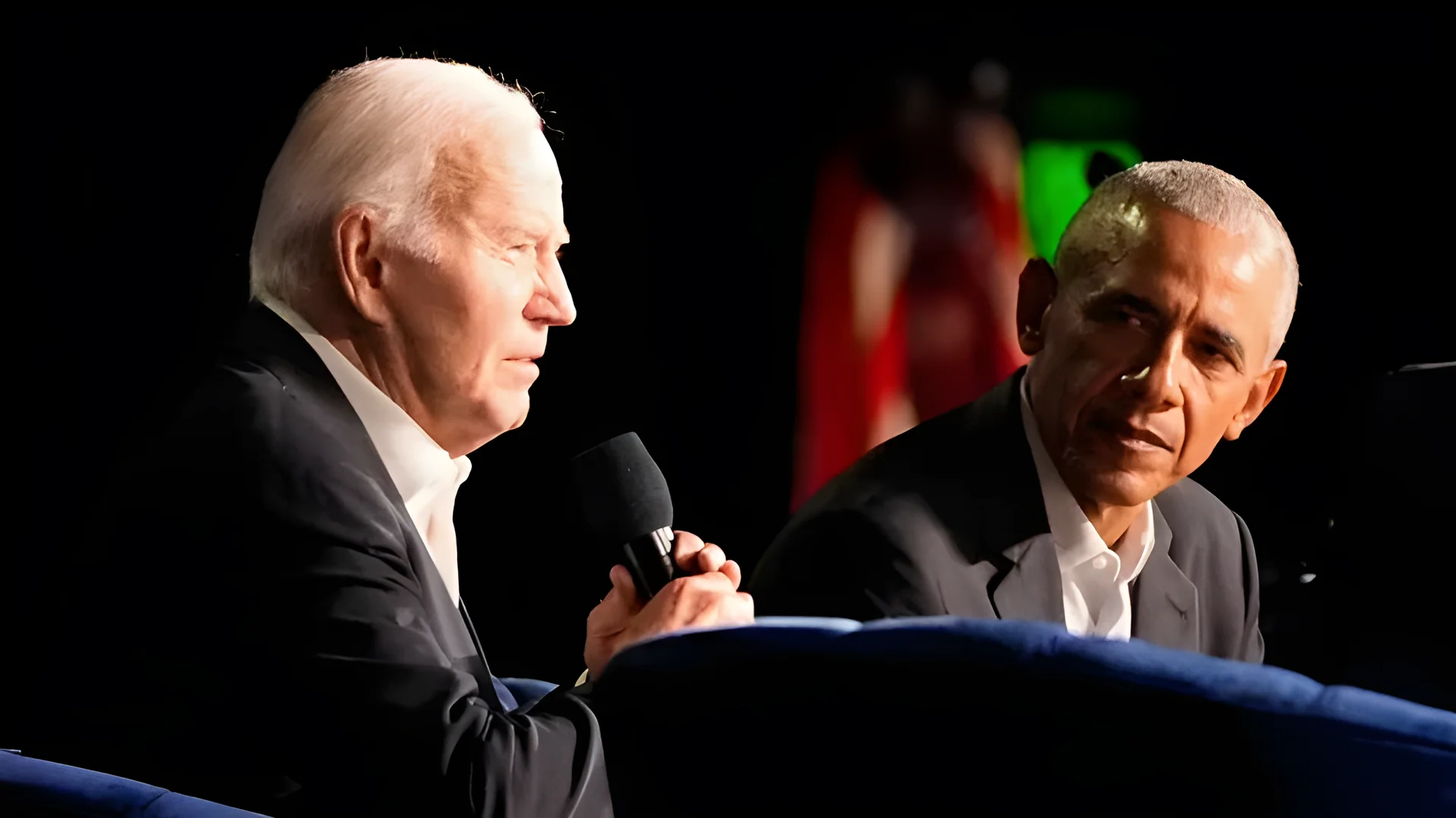
Former President Barack Obama delivered a pointed critique of the Trump administration during a eulogy at the funeral of Rev. Jesse Jackson in Chicago, though he did not directly name former President Donald Trump. Obama described the current political climate as one marked by ongoing assaults on democratic institutions, a statement that many interpreted as a veiled reference to Trump’s policies and rhetoric.
Context of the Eulogy and Political Climate
The funeral took place on Friday at the historic Mount Morris Park in Chicago, attended by a wide array of political figures, civil rights leaders, and celebrities. The event featured speeches from former President Joe Biden, former President Bill Clinton, and Rev. Al Sharpton, among others. Jackson, who was 84 when he passed away last month, had long been a prominent figure in the fight for civil rights and was a key influence in the political careers of both Obama and Biden.
Jackson died after a long battle with progressive supranuclear palsy, a rare neurodegenerative disorder. His family released a statement confirming his death and expressing gratitude for the outpouring of support. Jackson had been a former Democratic presidential candidate and was widely respected for his work in advancing the rights of Black Americans and other marginalized groups.
Obama’s comments were widely seen as a response to the political tensions that have characterized the Trump administration. In his speech, Obama said, “We are living in a time when it can be hard to hope. Each day we wake up to some new assault on our democratic institutions. Another setback the idea of the rule of law. An offense to common decency.”
He continued, “Every day you wake up to things you just didn’t think were possible. Each day, we’re told by those in high office to fear each other, and to turn on each other. And that some Americans count more than others. And that some don’t even count at all. Everywhere we see greed and bigotry being celebrated and bullying and mockery masquerading as strength.”
Political Reactions and Legacy of Jackson
Obama’s remarks were notable for their intensity and were interpreted as a direct challenge to the Trump administration. He later acknowledged the difficulty of maintaining hope in such a climate but emphasized the legacy of Rev. Jackson.
“This man, Rev. Jesse Jackson, inspires us to take a harder path. His voice calls on each of us to be heralds of change, to be messengers of hope,” Obama said, referencing his 2008 presidential campaign slogans.
Former Vice President Joe Biden followed Obama with a shorter but equally forceful critique of the Trump administration. “We got an administration that doesn’t share any of the values that we have,” Biden said, adding that Jackson “knew who we were at our best, that he simply refused to let us off the hook as a party, as a nation, or as individuals.”
Biden also referenced the “battle for the soul of the nation,” a phrase he often used during his presidency. He said Jackson “helped lead us closer to fulfilling our nation’s promise of restoring the nation’s soul.”
Former President Bill Clinton, who had awarded Jackson the Presidential Medal of Freedom in 2000, also attended the funeral but did not mention Trump in his speech. Clinton’s remarks focused on Jackson’s contributions to civil rights and his role in shaping the political landscape.
Trump, however, did not attend the funeral. In a post on Truth Social, Trump paid tribute to Jackson but also criticized Obama. “He had much to do with the Election, without acknowledgment or credit, of Barack Hussein Obama, a man who Jesse could not stand,” Trump wrote. He also expressed condolences to Jackson’s family.
Obama had previously been the subject of controversy when a racist video was shared online and later re-posted by Trump. The video depicted Obama and his wife, Michelle Obama, as apes. The video was later taken down after widespread criticism from members of both political parties.
As the political climate continues to evolve, the words of Obama and Biden at Jackson’s funeral have been widely circulated and analyzed. Analysts note that the speech reflects a broader trend of political leaders using eulogies and public events to address national issues and critique their opponents.
Looking ahead, the upcoming elections and the continued discourse around civil rights, democratic institutions, and the rule of law will likely remain central topics in the national conversation. The legacy of Rev. Jesse Jackson, as highlighted by Obama and Biden, serves as a reminder of the ongoing struggle for equality and justice in America.





Comments
No comments yet
Be the first to share your thoughts