

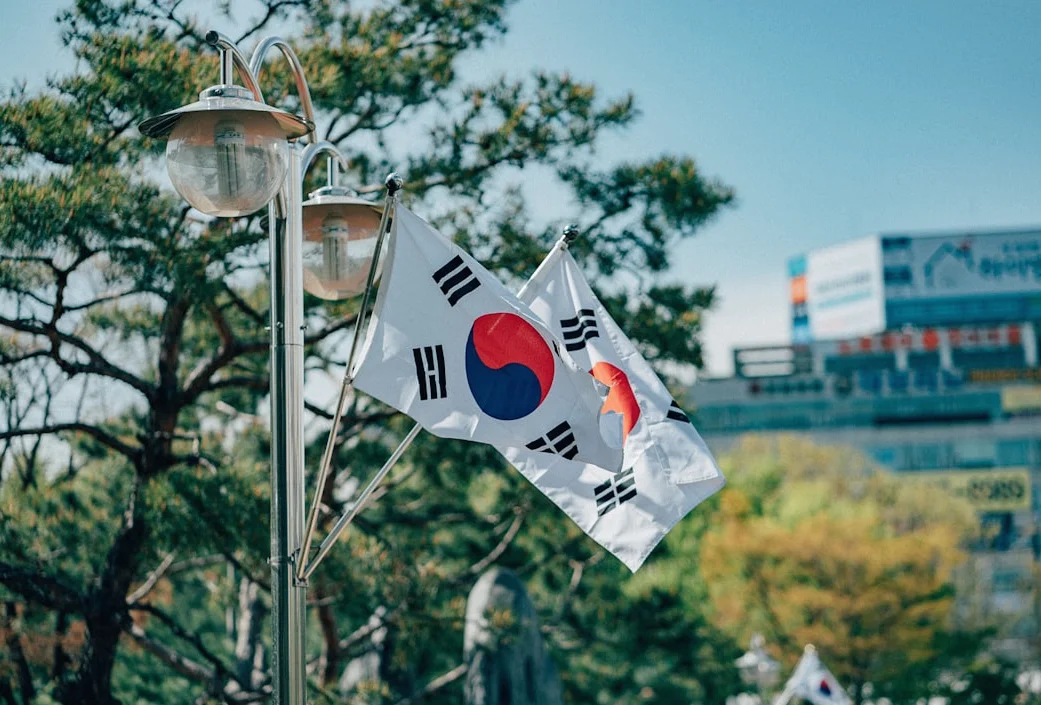
Iranian Foreign Ministry spokesperson Esmaeil Baghaei warned South Korea on Monday that any involvement in the United States’ military actions against Iran could lead to ‘serious consequences.’ The statement followed reports that Seoul is considering contributing to a US naval blockade of the Strait of Hormuz, a critical shipping route for Iranian oil exports.
Threats and Diplomatic Ties
Baghaei emphasized that Iran and South Korea share more than 64 years of diplomatic relations based on mutual respect and that Tehran values the friendship. However, he warned that if South Korea joins the US in its military actions at a time when Iran is ‘defending itself from US aggression and war crimes,’ there will be consequences.
Beyond military involvement, Baghaei stated that any military presence or participation by another country in the Gulf and Strait of Hormuz would be seen as ‘direct support for the aggressor’ and could lead to ‘serious consequences.’
‘No sovereign and responsible country should succumb to US pressure and intimidation and become complicit in acts of aggression and horrific crimes against the great Iranian nation,’ he added.
South Korea’s Position and US Pressure
Seoul has not responded directly to the Iranian warning. A South Korean Ministry of Foreign Affairs statement on Monday said the country is communicating with the international community over the situation in the passageway.
The pressure on South Korea comes after US President Donald Trump, in an interview and online posts in mid-August, revealed that he had spoken with South Korean President Lee Jae Myung and asked for ‘a little hand’ in the US-Israel war on Iran. According to media reports, the two leaders had a phone conversation on May 17.
Trump’s social media posts suggested that Seoul had declined the request, with a message that read ‘No, thanks!’ However, as South Korea now knows, saying no to Trump has repercussions. On August 16, Trump announced that the US would significantly scale back its annual joint military drills with South Korea—scheduled to begin the next day.
The Ulchi Freedom Shield (UFS) exercises, which typically last more than 11 days, were reduced to five. Trump claimed the drills were ‘costly’ and sent a ‘hostile’ signal to North Korean leader Kim Jong Un, with whom he is attempting to build a relationship. South Korean Foreign Minister Cho Hyun said in parliament that there was no prior warning from the US.
Trump also questioned why South Korea would refuse his request when thousands of US soldiers are stationed on the Korean Peninsula. The US also canceled another military exercise scheduled for September, although South Korea’s military had been notified of the change in June. Washington cited constraints due to the war on Iran as the reason.
Economic and Political Implications
President Lee Jae Myung, a liberal leader advocating for a more restrained defense posture, has opted for negotiation. His office released statements expressing hope for ‘meaningful dialogue’ with Trump. However, Washington has reportedly ‘ratcheted up pressure’ on Seoul.
A South Korean presidential official told Yonhap news agency that Seoul could consider a military contribution to international efforts to ensure free navigation in the passageway, provided it does not affect the country’s defense readiness. The official noted that South Korea is considering cooperation with France, the UK, and other allies in sending noncombat and search-and-rescue forces.
The South Korean military has also begun reviewing assets and troops for potential deployment, including maritime patrol aircraft, explosive ordnance disposal teams, and unmanned mine detection systems. Such a move would likely be unpopular. Opposition leaders and some within Lee’s ruling Democratic Party have spoken out against a possible deployment. Many South Koreans have also protested against the US-Israel war on Iran.
South Korea became a key US ally following the Korean War of 1950, with Washington supporting Seoul’s economic and military development in the years after. Some 29,000 US soldiers have been stationed on the Korean Peninsula since the war’s end. In return, South Korea has supported several US military campaigns, including the Iraq War, and is designated an important non-NATO ally.
Relations were tested in 2025 when the US imposed a 25 percent tariff on South Korean goods, which was later reduced to 15 percent after negotiations. South Koreans were also alarmed by ICE raids at a Hyundai plant in Georgia in September 2025, which led to the arrest of hundreds of South Koreans.
Trump’s October 2025 state visit to Seoul marked a significant diplomatic moment, and President Lee has since visited the US. Lee is also working to resume dialogue between Washington and Pyongyang.
South Korea is now grappling with an economic crisis. The country relies on the Strait of Hormuz for 60 to 70 percent of its crude oil imports, and the war has led to soaring inflation and a 17-year low for the Korean won. While Seoul has an interest in restoring free passage through the strait, a military deployment would require parliamentary approval under Korean law. Some members of the governing party have already expressed opposition to such a move.


1 Comment