

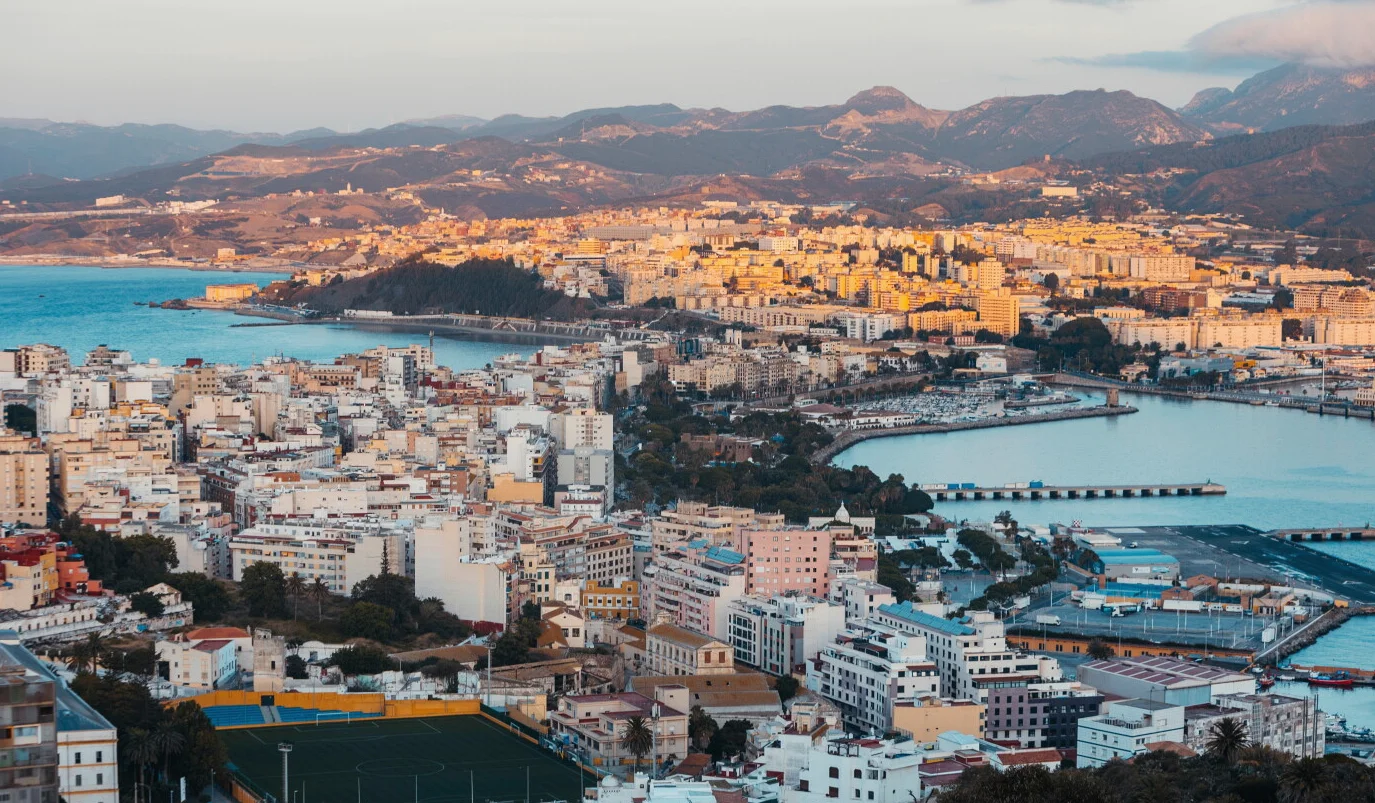
More than 50,000 migrants surged into the Spanish enclave of Ceuta last week, according to Al Jazeera, and While most have since returned to Morocco, several thousand remain in Ceuta this week. The event intensified diplomatic tensions between Madrid and Rabat, highlighting the fragile political situation in the region.
Historical Background of Ceuta and Melilla
Ceuta and Melilla are the last remnants of Spain’s colonial empire in North Africa — Ceuta was first under Portuguese rule in 1415 and became part of Spain in 1580, according to Al Jazeera. Melilla was conquered by a Spanish nobleman in 1497. These cities were initially established as Christian outposts during the Reconquista, a centuries-long effort to reclaim the Iberian Peninsula from Arab and Muslim rule, as noted by DIE ZEIT.
Yolanda Aixelà Cabré, an anthropologist at IMF-CSIC in Barcelona, explained that after the decolonization of Africa, Ceuta and Melilla remained the only European-held territories on the African mainland. These enclaves, although geographically in Africa, are considered part of the EU’s external border; For Spain, maintaining these enclaves is symbolic of its imperial past and its historical narrative of civilization versus barbarism.
Recent Migration Surge and Political Tensions
In the past week, more than 1000 young Marokkaners and migrants overcame the border fortifications in both Ceuta and Melilla, according to FAZ, while In Ceuta, the population nearly doubled in a single day, with approximately 73,000 people crossing the border. This surge has been described as one of the most significant migration crises for Spain and a severe stress test for the EU.
Marokko has long claimed sovereignty over both Ceuta and Melilla; the current tensions mirror a similar incident in 2021, when more than 8000 Moroccans entered Ceuta after Moroccan border guards withdrew, according to FAZ. This history shows how migration can be weaponized as a political tool in the region.
Spanish Prime Minister Pedro Sánchez described the recent influx as an attack on Spanish sovereignty, according to the Berliner Morgenpost. The crisis also exposed the limitations of Spain’s immigration policies, including a mass amnesty for migrants that encourages further migration on the assumption of future amnesties, as noted by the Middle East Forum.
Security and Geopolitical Implications
Ceuta and Melilla are strategically significant as the only land borders between the EU and Africa, and the border is heavily fortified with barbed wire, watchtowers, and video surveillance. Despite these measures, migrants continue to attempt dangerous crossings, with many losing their lives in the process.
The recent crisis has also sparked internal political debate in Spain. Some Spanish media and commentators have speculated about conspiracy theories involving Jewish or Israeli involvement in orchestrating the migration surge, according to the Middle East Forum. However, no evidence has been presented to support these claims, and the allegations have been widely criticized as antisemitic.
Internationally, the crisis exposes the EU’s reliance on authoritarian administrations in North Africa for migration control, while Marokko is particularly significant due to its historical claims on the former Spanish colony of Western Sahara and its strategic position along the Mediterranean. This dynamic complicates European efforts to manage migration while maintaining diplomatic stability in the region.






Comments
No comments yet
Be the first to share your thoughts