

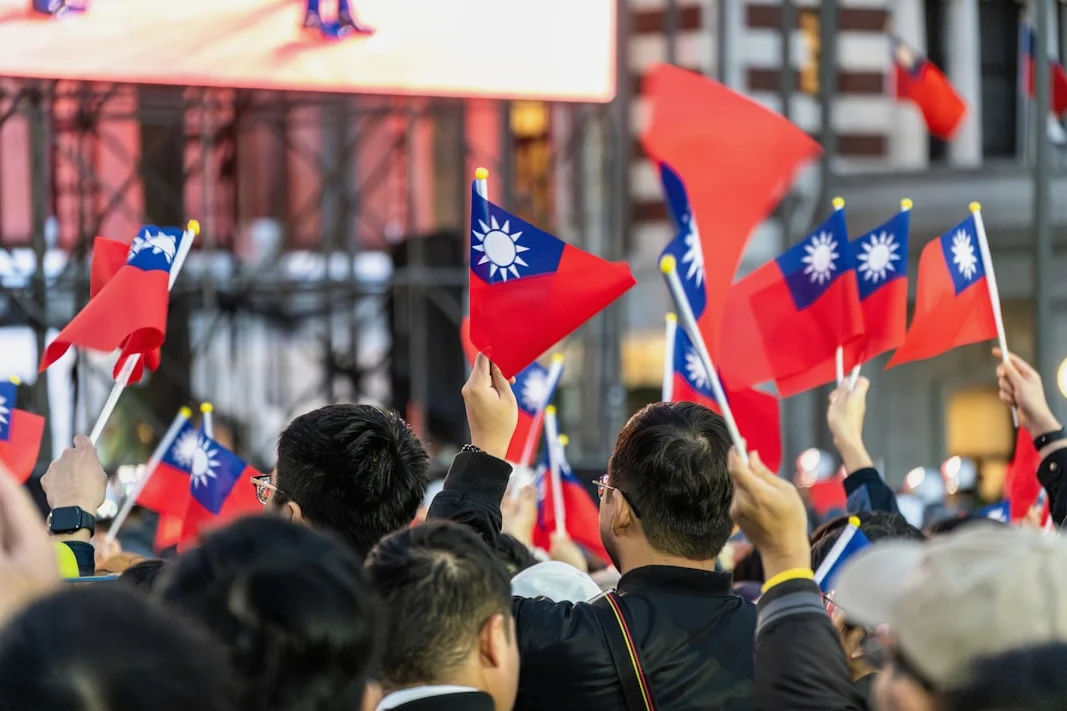
US President Donald Trump’s warning to Taiwan against declaring independence from China has prompted a response from the island’s government. During a state visit to Beijing, Trump said he was against the idea of Taiwan declaring independence and questioned the rationale for the US to send military support in the event of an invasion. ‘I’m not looking to have somebody go independent and, you know, we’re supposed to travel 9,500 miles to fight a war. I’m not looking for that,’ he told Fox News. ‘I want them to cool down. I want China to cool down,’ he added.
Taiwan Stands by Sovereignty
Taiwan’s foreign ministry responded to Trump’s comments, reiterating that the island is a ‘sovereign democratic country.’ In a statement, it thanked the US for its support in peace efforts but emphasized that ‘Beijing has no right to claim jurisdiction over Taiwan.’ The ministry also pledged to ‘continue to deepen cooperation with the United States, maintain peace through strength, and ensure that the security and stability of the Taiwan Strait are not threatened or undermined.’
Chinese Government’s Position
A spokesperson for Chinese President Xi Jinping said earlier in the week that Taiwan is ‘the most important issue in China-U.S. relations’ and key to future dealings between the two countries. China views Taiwan as a breakaway province that must be brought under the control of the mainland, and Xi has not ruled out the use of force. Xi reportedly warned Trump during the summit that missteps on the issue could cause ‘conflict.’
US Policy and Arms Sales
The United States recognizes only Beijing and does not support formal independence for Taiwan, but historically has stopped short of explicitly opposing independence. Under US law, the US is required to provide weapons to Taiwan for its defense, though it has been ambiguous on whether US forces would come to the island’s aid. Trump said he would speak to Xi about US arms sales to Taiwan, a departure from Washington’s previous stance that it would not consult Beijing on the matter. Ahead of the summit, Taiwan’s parliament approved a $25 billion defense spending bill to fund US weapons.
Taiwan’s Presidential Office noted that ‘multiple reaffirmations from the US side, including President Trump and Secretary of State Marco Rubio, that the consistent US policy and position toward Taiwan remain unchanged.’ A spokesperson, Karen Kuo, said in a statement that ‘Taiwan looks forward to continuing to work with the US under the firm commitments of the Taiwan Relations Act.’
Comments
No comments yet
Be the first to share your thoughts