

 BBC
BBC 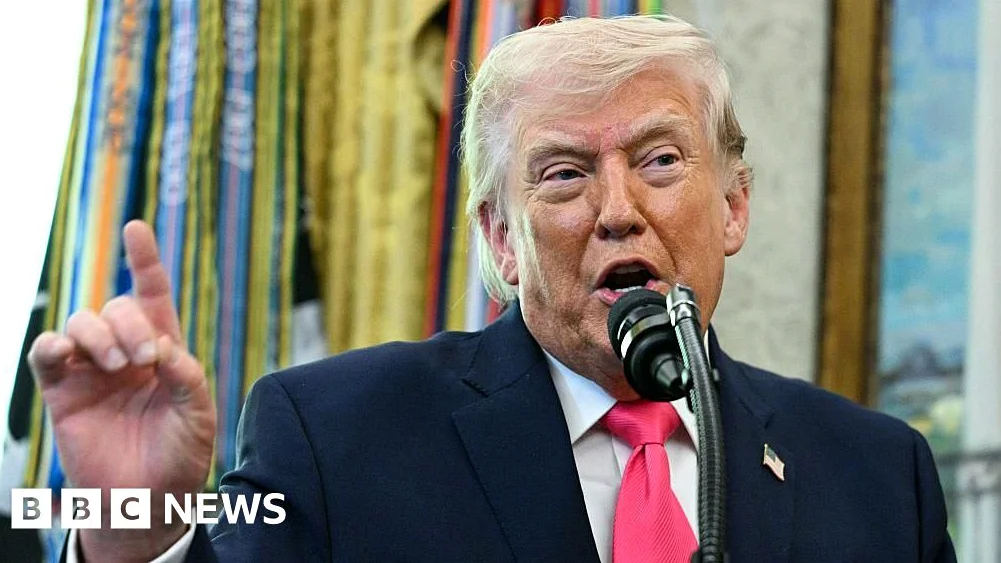
Donald Trump’s decision to extend the pause on attacks against Iran’s energy infrastructure for an additional 10 days has introduced new uncertainty into a conflict that has already stretched nearly four weeks, according to the BBC. This is the second time the U.S. president has delayed a threatened escalation, a tactic he has used to send signals, distract attention, and buy time for the administration.
Strategic Delays and Market Signals
The latest delay in the potential “obliteration” of Iran’s energy facilities comes at a time when global markets are sensitive to geopolitical tensions. The pause was announced minutes after trading closed on Wall Street, suggesting that Trump may be seeking to calm financial markets by projecting a positive outlook on diplomatic solutions, the BBC reports.
The White House has not provided a detailed explanation for the extension, but analysts suggest the move allows time to explore political options amid a complex and evolving situation. The U.S. has already placed about 2,000 U.S; Marines on route to the Middle East from Japan, and several thousand U.S. paratroopers are heading to the region from California, according to the Pentagon. The military is also reportedly considering the deployment of an additional 10,000 troops, though this has not been officially confirmed.
These troop movements suggest that the U.S. is preparing for multiple scenarios, whether a diplomatic breakthrough or a more aggressive military response. The pause may also be a way to pressure Iran into negotiations, as Trump has previously warned that the U.S. would continue to “blow them away” if no deal is reached.
Diplomacy in the Shadows
Diplomatic efforts between the U.S. and Iran are reportedly ongoing, with messages exchanged through intermediaries, particularly Pakistan — While both sides have presented maximalist demands, there are indications of a potential meeting in Pakistan. However, diplomats remain skeptical about the effectiveness of these talks, with one describing the situation as involving “a lot of smoke and mirrors.”
Despite the skepticism, the White House insists that the talks are progressing. However, the extended pause in attacks has given the U.S. more time to prepare for any military action, whether it involves the energy sector or other strategic locations in Iran. The administration has not ruled out a ground invasion, though this remains unconfirmed.
The current conflict. Which began with discussions about regime change and demilitarizing Iran, has shifted toward a more immediate focus on control of the Strait of Hormuz, a critical waterway for global oil trade. Iran has maintained restrictions on the strait for the past ten days, and the deadline extension allows it to continue doing so; this has significant economic implications, as the strait handles about 20% of the world’s oil supply.
Economic and Regional Implications
The closure of the Strait of Hormuz has already disrupted global trade, with shipping routes rerouted and oil prices fluctuating; the extended pause in U.S. attacks may not resolve these issues but could provide a temporary reprieve for international markets. However, the situation remains volatile, with the potential for further escalation if diplomatic efforts fail.
For ordinary people. The impact of the conflict is felt through rising fuel prices, supply chain disruptions, and economic uncertainty. The situation has also raised concerns about the stability of the Middle East, where tensions with other regional powers, such as Saudi Arabia and Israel, are also growing.
The U.S. military presence in the region is increasing, with more troops expected to arrive in the coming weeks. This buildup has raised concerns about the likelihood of direct military conflict, though no official statements have confirmed an imminent invasion of Iran. The administration has not ruled out any options, leaving the situation in a state of limbo.
Trump’s rhetoric has remained strong, with the president warning that Iran faces a “worse nightmare” if no deal is reached; However, the pause in attacks has not led to immediate concessions from Iran, suggesting that both sides remain entrenched in their positions.
As the deadline approaches, the world is watching closely to see whether diplomacy can yield results or if the conflict will escalate further; the coming days will be critical in determining the future of the region and the global economy.





Comments
No comments yet
Be the first to share your thoughts