

 BBC
BBC 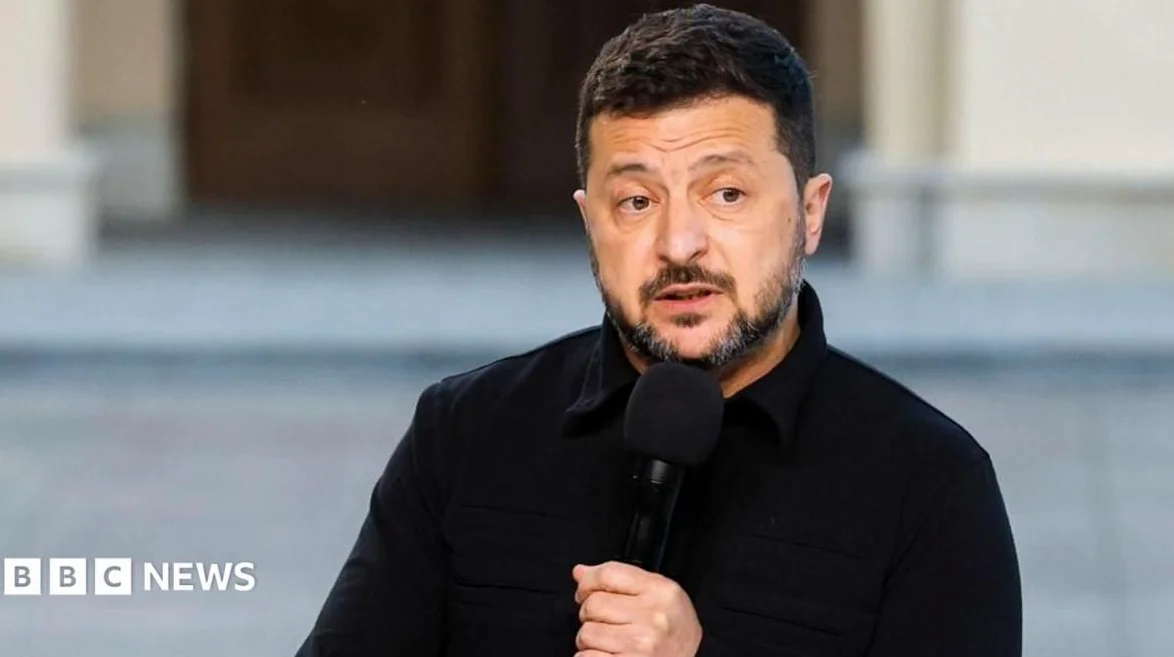
Ukrainian President Volodymyr Zelensky said he expects the war with Russia to continue into the winter after meetings with Donald Trump’s top envoys in Kyiv, according to the BBC. The discussions did not result in a major breakthrough after Steve Witkoff and Jared Kushner traveled to Ukraine for the first time since Russia’s full-scale invasion. The previous day, the pair had held talks with Russian President Vladimir Putin in Moscow.
Substantive Talks in Kyiv
Witkoff said he was “encouraged” by what he described as “substantive” and important discussions in Kyiv, and Zelensky emphasized that he wanted a just peace with no opportunity for renewed aggression by Russia. Following hours of closed-door talks on Sunday, Zelensky told reporters that officials from Ukraine, Europe, and America would meet in the near future to continue discussions. He also called for a trilateral meeting with Russia and the US.
“We’re confident there’ll be a good resolution here,” Witkoff said, adding that the negotiators had “made a lot of progress in Moscow,” referring to the pair’s discussions with Putin on Saturday.
Challenges in Negotiations
When asked about the Moscow talks, Kushner said the US team “went through a lot of the ideas that hadn’t worked to date” and “tried to think about” what elements are needed for “durable peace.” Putin asked many questions during the conversation, according to Kushner. Witkoff noted that the envoys had met Putin before traveling to Kyiv as they “needed to hear where he stood.
Zelensky emphasized that if the war continues into the winter — “which is what it looks like for now”, Ukraine will need air defense and energy support. Ukraine has relied on American-made Patriot interceptors to combat Russian ballistic missiles, but the US has used much of its stockpiles during its war with Iran.
In past years, Russia has focused its attacks on energy infrastructure during the winter months; Zelensky said Ukraine needs to develop its own anti-ballistic system, but added that the US will increase production next year, which they are “counting on.”
Logistics and Security Measures
The US envoys had traveled to Kyiv by train after flying to Poland, Zelensky told the media, stating it was not possible for them to land their plane despite preparations. Putin and Zelensky agreed to halt strikes on each other’s capitals for three days while the negotiators carried out their trip; Zelensky greeted Witkoff and Kushner at Kyiv’s St Sophia Cathedral, near where a Russian drone hit the headquarters of Ukraine’s security services on Friday.
Overnight, Russian and Ukrainian forces continued to exchange strikes, with Ukraine confirming they struck an oil refinery, an airfield, and two air defense systems, Earlier, Ukraine’s Air Force reported that Russia attacked Ukraine with 108 long-range drones and small cruise missiles. The country’s air defenses downed 82 drones and six missiles, but 11 locations were hit, with debris falling at a further seven sites.
Saturday’s talks in Moscow lasted three hours and were held behind closed doors in the Kremlin, according to Russian state media. Putin’s adviser Yuri Ushakov described the talks as “constructive, extremely frank.” He said they spoke about resolving the war, economic issues, and potential “mutually beneficial Russian-American projects.” Ushakov also noted the Russian army’s “tangible advances in the combat zone” and that there was an acknowledgment that talks needed to address “the root causes of the conflict.”
Despite an escalation of Russian missile and drone strikes on Ukrainian cities, including Kyiv, Russian ground forces have made very slow advances for most of the conflict, incurring enormous casualties. Russia still controls about one-fifth of Ukrainian territory, areas it seized back in 2022 — the talks come after Russia and Ukraine have intensified aerial attacks in recent months.
Comments
No comments yet
Be the first to share your thoughts