

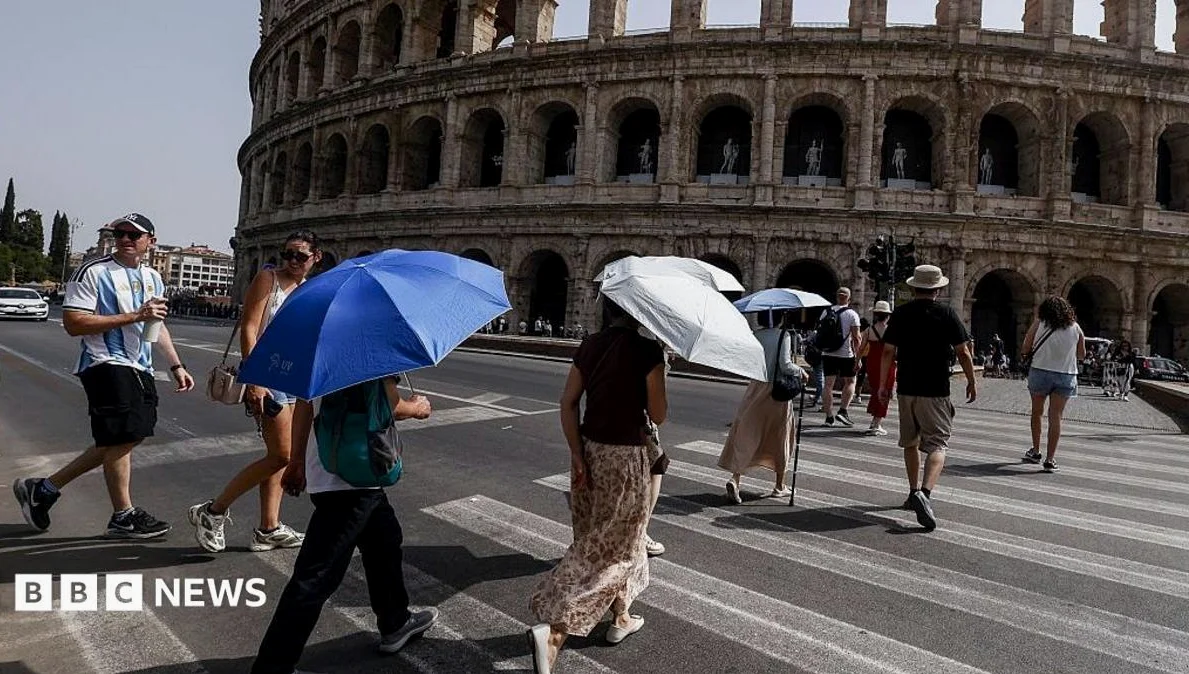
August 2023 was jointly the hottest month on record globally, according to the European climate agency, as Spain experienced temperatures up to 38ºC this week; the heat wave in Spain came after one of the rainiest winters in 50 years, highlighting the increasingly erratic weather patterns linked to climate change.
Record-breaking heat across the globe
The European climate agency confirmed that August 2023 tied with previous months for the highest temperatures ever recorded. Scientists warn that as long as fossil fuels continue to be burned, these records will keep being broken and extreme weather events will worsen more quickly than societies can adapt. “Until we stop burning fossil fuels these records will continue to tumble, and the extremes will worsen faster than we are able to adapt,” according to BBC climate expert Justin Rowlatt.
Crucially, the extent of future warming remains within human control, though current trends suggest continued temperature increases; the European data highlights the urgency of global efforts to reduce emissions and adapt to the changing climate.
Spain experiences unseasonable heat
Spain, which typically sees such high temperatures in July and August, is now experiencing record heat in early May. The country’s national meteorological agency, AEMET, reported that western Andalusia would be the hottest region, with temperatures reaching 34ºC in Córdoba, 35ºC in Seville, and 32ºC in Jerez de la Frontera. Extremadura will also see high temperatures, with Mérida reaching 35ºC and Cáceres 32ºC.
Inland and southern areas are expected to see the most intense heat, while the northern coast will remain relatively cooler, as AEMET predicts 21ºC in San Sebastián, 23ºC in Oviedo, and 20ºC in A Coruña on Wednesday, with slight increases by Thursday. The Mediterranean coast and northern Spain will see less extreme temperatures, with Valencia reaching 27ºC by Wednesday and possibly 30ºC by Thursday.
Weather patterns and long-term trends
The heat is attributed to the advance of an anticyclonic dorsal, which will bring mostly clear skies and widespread temperature increases across the Iberian Peninsula and the Balearic Islands. Rain is expected only in the extreme north of the peninsula, according to weather forecasts; Nighttime temperatures are also rising in some areas of southern Spain and the Mediterranean coast, significantly higher than in previous days.
These extreme weather events reflect the broader pattern of climate change-induced shifts in weather; the contrast between an exceptionally rainy winter and a scorching spring in Spain illustrates the volatility expected as global temperatures continue to rise. Scientists and climate experts are calling for stronger action to mitigate and adapt to these changes, emphasizing the need for international cooperation and policy reform to address the growing crisis.





Comments
No comments yet
Be the first to share your thoughts