

 The Guardian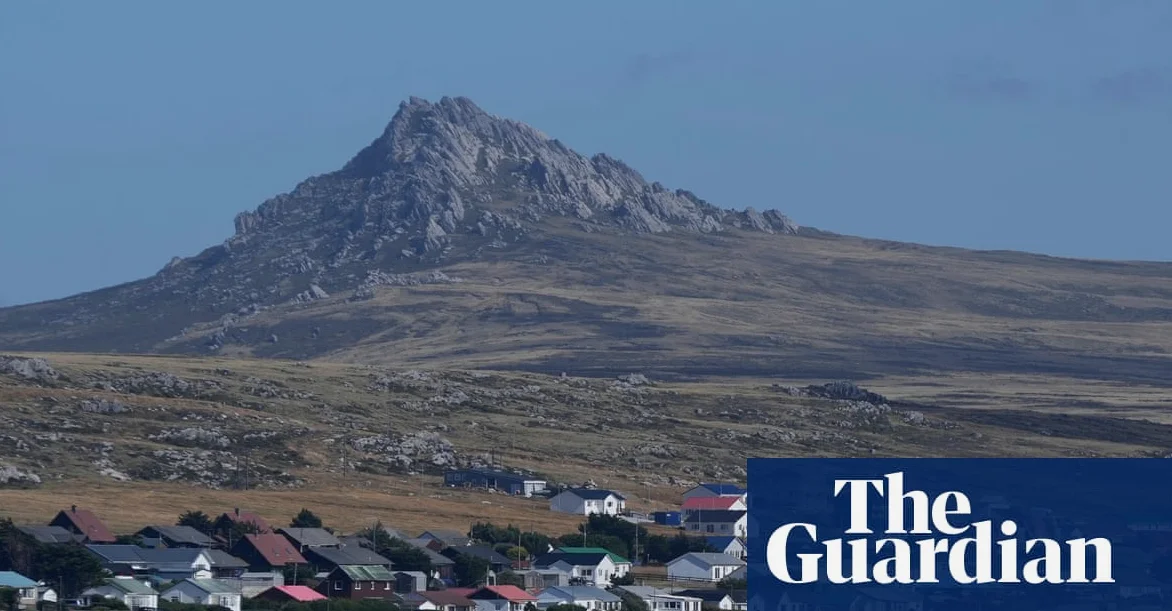
Trump’s Vindictive Tendencies Fuel Falklands Claim
Donald Trump has long embraced vengeance, declaring himself as “your retribution” during a 2023 Conservative Political Action Conference (CPAC) speech as he began his campaign for the White House. Argentina and remnants of the former British empire were likely not on his mind at the time; However, recent global events have aligned with Trump’s vindictive mindset to the advantage of Argentina’s president, Javier Milei.
Milei recently announced his intention to reopen Argentina’s claim to the Falkland Islands,known as the Malvinas in Argentina—during a televised address. The centuries-old dispute over the islands’ sovereignty has been dormant since 1982 when Argentina’s military dictatorship invaded the territory, leading to a brief but bloody conflict with Britain. Britain reclaimed the islands after troops dispatched by then-Prime Minister Margaret Thatcher—ironically admired by Milei,stormed the territory and forced Argentina’s surrender.
Trump’s Resentment Over Iran War Feeds Falklands Move
Trump’s animus toward Britain, under former Prime Minister Keir Starmer, stems from their refusal to support his decision to go to war with Iran; this grievance, combined with a broader sense of betrayal by allies, has fueled Trump’s reconsideration of U.S. support for British sovereignty over the Falkland Islands. Milei quickly capitalized on Trump’s comment that he was “reviewing” the U.S.’s long-held neutral stance on the territory’s sovereignty, which effectively recognizes British control.
Trump’s fixation on payback runs deep and wide, with potential global repercussions. He recently expressed his sense of wounded affront in an interview with a rightwing British cable channel, saying, “Your country was not there to help me,” and detailing how Britain’s former leader failed to provide military support when he asked for it. Trump also hinted that his resentment could be capitalized on to secure more financial commitments from the UK for defense spending and NATO contributions, following recent comments by British Chancellor John Healey about missing spending targets.
Trump’s Retribution Affects Global Alliances
The so-called “special relationship” between the U.S. and Britain, strengthened through alliances during two world wars and the Cold War, is now under strain; Britain is far from the only ally feeling the heat of Trump’s wrath. The U.S. recently cut short annual joint military exercises with South Korea by six days due to Trump’s irritation over their refusal to join the fight against Iran. Trump has also threatened to bomb Oman, a U.S. ally for 200 years, if it impedes his efforts to reopen the Strait of Hormuz, which Iran has closed to most commercial shipping.
Threats of retribution have also been directed at Spain and Italy, with the latter’s prime minister, Giorgia Meloni, being a former Trump ally. The White House announced the withdrawal of 5,000 U.S. troops from Germany after its chancellor, Friedrich Merz, rebuffed pressure to join the Iran conflict and criticized Trump’s handling of it. Such moves highlight the potential for Trump’s retribution to destabilize long-standing alliances and global relationships.
Despite the turbulence, Milei remains on Trump’s good side. Last year, the U.S. administration extended a $20 billion loan guarantee to stabilize Argentina’s struggling economy, but it was contingent on Milei’s party defeating the leftist opposition in upcoming congressional elections,a condition they met. This time, however, there are no guarantees, and Milei’s political future may be as uncertain as the geopolitical terrain under Trump.
Milei’s speech referenced “the winds of change,” a phrase with historical significance, but In 1960, British Prime Minister Harold Macmillan used the term to signal the end of British colonial rule in Africa. Milei suggested that Britain is on a path of decline, citing multiple crises of a migratory, demographic, and economic nature. He did not mention his own waning political popularity, a factor that may have also influenced the 1982 invasion of the Falklands, as opposition to the military dictatorship grew amid human rights abuses.
In 1982, Britain was facing its own domestic challenges, including immigration tensions, race riots, and economic decline — Margaret Thatcher, elected to reverse these issues, saw a political upturn after the Falklands conflict. Unlike Thatcher, however, Britain’s newly installed Labour Prime Minister, Andy Burnham, must now contend with the unpredictable and destabilizing influence of Trump, whose retribution could rework the global order once more.



Comments
No comments yet
Be the first to share your thoughts