

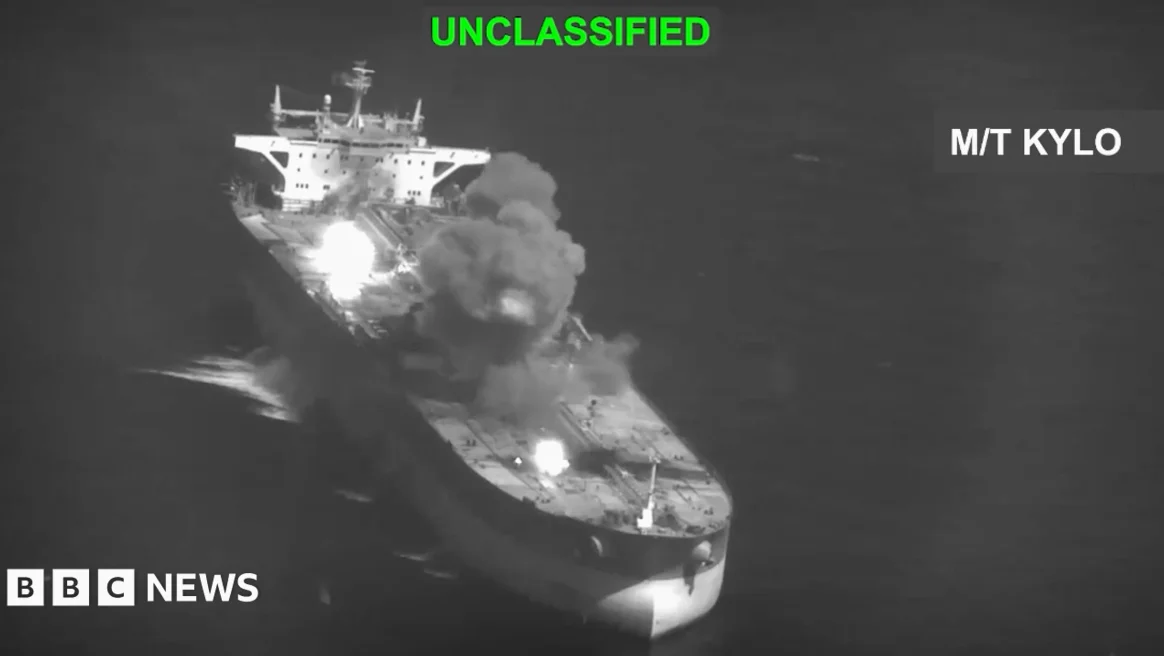
The U.S. military struck three Iranian oil tankers after Centcom said two of its warships had been targeted earlier in the day, according to BBC; Iran retaliated against six ships in the region, according to Iranian state media. The latest escalation comes after a monthlong pause in direct attacks between the U.S. and Iran, according to NPR.
U.S. and Iran continue cycle of attacks
According to the U.S. military, it struck two Iranian rocket launchers on Sunday that were preparing to fire sea mines into the Strait of Hormuz. Iran responded by firing ballistic missiles at U.S. forces and helicopters at an air base in the United Arab Emirates, and targeted bases in Jordan, according to NPR. The Jordanian military said it had shot down eight missiles that entered the country’s airspace.
Iranian state media reported that there were no casualties in Saturday’s attack on the tanker near Kharg Island; Kharg Island hosts Iran’s main terminal to export oil, through which about 90% of the country’s crude oil comes. The crews aboard the two attacked tankers in the Gulf of Oman were taken to shore in lifeboats, Irib reported; One of those tankers was empty and the other was carrying a load of oil.
Centcom claims the tankers fund Iran’s proxies
U.S. Central Command (Centcom) said the three Iranian oil tankers it hit were part of a multi-billion-dollar shadow network that funds the Islamic Major Guard Corps (IRGC) and its regional proxies. Centcom also said it “successfully evaded” multiple attacks from the IRGC earlier in the day, which targeted a U.S. aircraft carrier and guided-missile destroyer — no American troops were harmed, it said.
Hours after the attacks, Iran’s IRGC retaliated against six ships in the region — three oil tankers in the Strait of Hormuz and three vessels affiliated with the U.S. in other areas, according to Irib. The U.S. military has been working to clear sea mines from the Strait of Hormuz’s international shipping routes, according to Centcom, though Iran, however, said a supertanker had struck two naval mines in the Strait of Hormuz over the weekend, according to NPR.
Conflict reaches 100-day mark with no end in sight
The U.S. and Israeli war on Iran reached the 100-day mark Sunday, with global officials and experts still lacking clear signs that an agreement to end the conflict permanently is at hand, according to The Soufan Center. Even as the U.S. and Iran continue to trade drafts of a memorandum of understanding (MOU) that will guide future negotiations, it remains unclear whether any of the outstanding issues have been fully resolved.
Doubt was further cast on the negotiation process on Sunday when Israeli strikes targeting Hezbollah in Beirut, Lebanon, prompted Iran to launch four waves of missiles at Israel. The exchange marked a significant escalation in hostilities, the most severe since the ceasefire took effect in April; Iran has also been attacking U.S. naval vessels, commercial ships, and Arab Gulf targets in an effort to retain control over the Strait of Hormuz.




Comments
No comments yet
Be the first to share your thoughts